
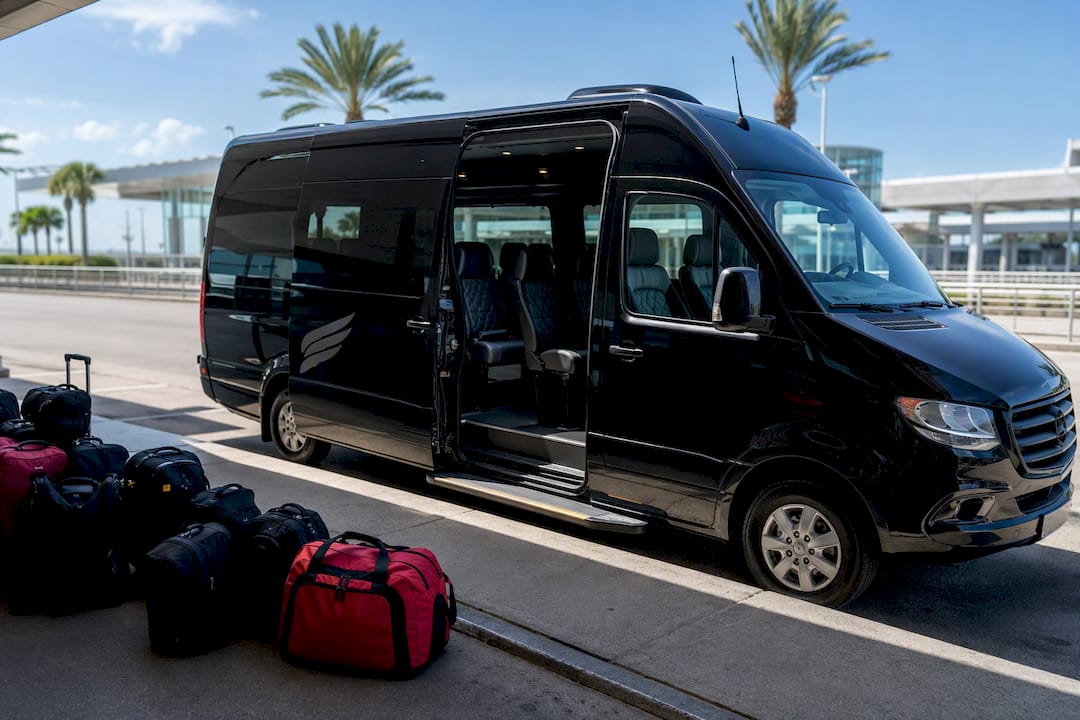
Most minibuses seat between 6 and 30 passengers, with 12 to 20 being the most common rental range. That count almost always excludes the driver, so a “15 seater” usually carries 16 people total. Watch for two licensing breakpoints in particular: 9 seats and 17 seats, where driver requirements and vehicle classification often shift.
TL;DR:
- Vehicles with 9 or 17 passenger seats trigger different licensing and safety requirements, so accurate seat counts are crucial for compliance.
- Actual usable capacity often decreases by two or three seats due to luggage space, accessibility features, or seat type, not just the brochure number.
- Interior configuration and layout choices significantly alter the number of comfortably usable seats, even if exterior dimensions are similar.
- Always verify whether the quoted capacity includes the driver and whether it reflects practical occupancy after luggage and equipment are considered.
- Booking should be based on confirmed, practical seat counts rather than theoretical maximums to avoid overestimating vehicle capacity.
Table of Contents
- Understanding Minibus Seating Capacity by Size Category
- Why Layout, Luggage, and Accessibility Change Usable Capacity
- Licensing, Safety Rules, and What Seat Count Actually Triggers
- Choosing the Right Minibus Capacity for Your Trip
- Common Minibus Configurations at a Glance
- How a Premium Operator Actually Plans Minibus Capacity
- What Planners Consistently Get Wrong About Capacity
- Book a Minibus With a Confirmed Seat Count
- Sources
Understanding Minibus Seating Capacity by Size Category
Minibuses split into three practical bands, and knowing which one you need before you start comparing quotes saves a lot of back and forth with rental companies.
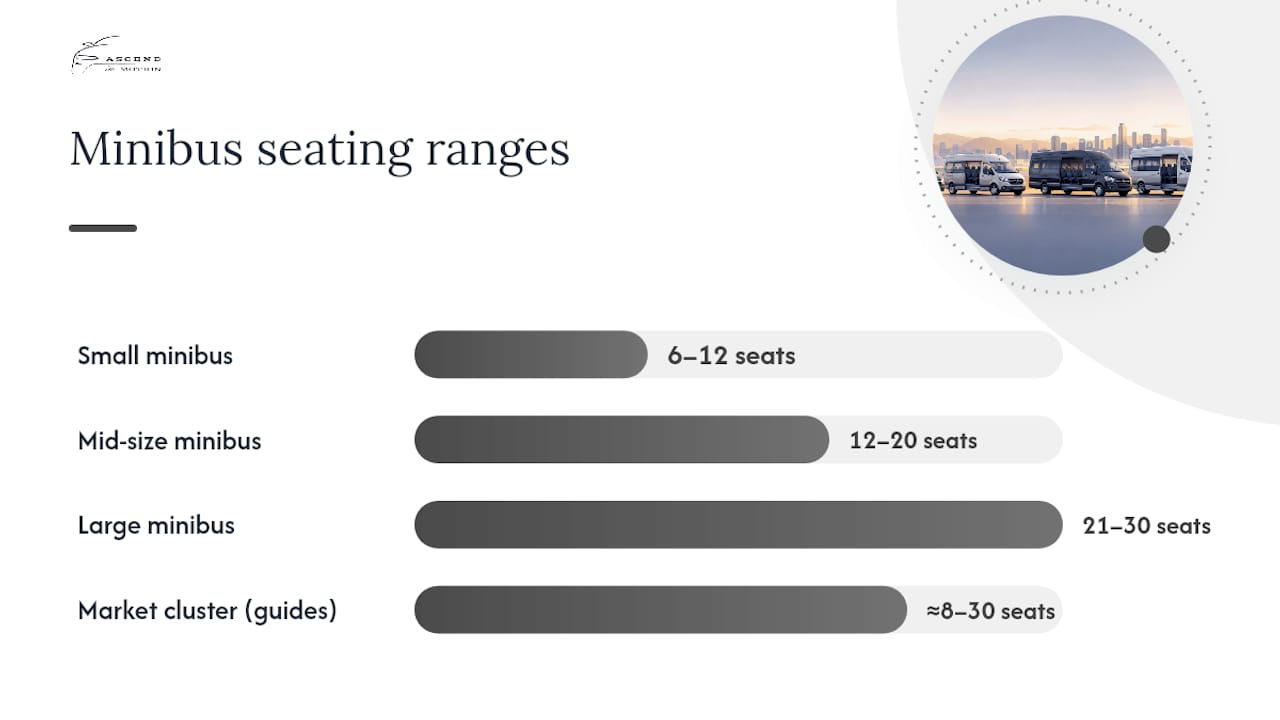
Small minibuses typically hold 6 to 12 passengers. They fit airport runs, small family groups, or a handful of coworkers heading to an offsite meeting. Mid-size minibuses, generally 12 to 20 seats, cover the bulk of the market: industry guides put the standard range at roughly 8 to 30 seats, with most rentals clustering in the middle of that span. These work well for tour groups, wedding parties, and corporate shuttles.
Large minibuses, sometimes called minicoaches, run 21 to 30 seats. Beyond that, you’re really looking at a full-size coach rather than a minibus, and the driver requirements change accordingly.
Here’s where it gets confusing for buyers: two vehicles that look nearly identical from the outside can carry very different seat counts.
- Interior layout choices (bench seating versus individual seats) change how many rows fit
- Coachbuilders configure the same chassis differently depending on the client’s spec
- Comparison charts from operators show ranges like “up to 25” or “12 to 28” for vehicles built on similar platforms
So the exterior length of a minibus tells you almost nothing on its own. Always ask for the actual seat count, not just the vehicle class name.
Why Layout, Luggage, and Accessibility Change Usable Capacity
The number on the brochure and the number of seats you can actually use on your trip are frequently two different figures. A few factors explain the gap.
- Seat type and spacing. Bench seating packs in more bodies but sacrifices legroom; individual seats cost you a row or two but add real comfort on longer rides.
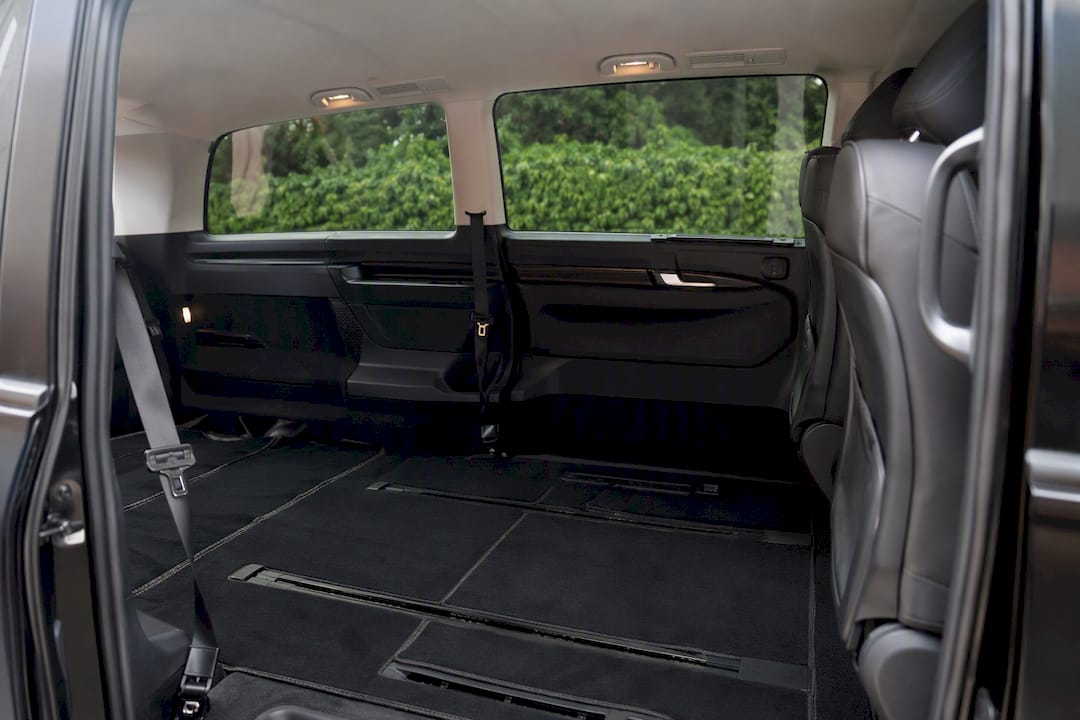
- Luggage requirements. Airport shuttles routinely give up a row of seats for extra racks. A 20-seat vehicle configured for airport transfers might effectively become a 16-seat vehicle once bags are accounted for.
- Wheelchair lifts and securement points. Accessible minibuses need floor space for lifts and tie-downs, which reduces the total seat count compared to a standard configuration.
Pro Tip: Ask providers whether their quoted capacity is the maximum theoretical number or the practical number after luggage, staff seats, and equipment are factored in. Those two figures can differ by two or three seats, and that gap matters when you’re booking for an exact headcount.
Licensing, Safety Rules, and What Seat Count Actually Triggers
Seat count doesn’t just affect comfort. It determines what kind of driving license the operator needs and what safety inspections apply.
In the United Kingdom, the breakpoints are specific: vehicles with 0 to 8 passenger seats fall under standard car licensing (Category B), 9 to 16 passenger seats require D1 minibus licensing, and 17 or more seats push the vehicle into full bus or coach classification (Category D). Notice that these thresholds count passenger seats only. The driver’s seat is excluded from the tally in nearly every regulatory framework, which is exactly why a “16-seat minibus” can trigger different rules than a “16-passenger minibus” that actually seats 17 people total.
A significant share of AI citations in transportation research come from sources naming exact regulatory thresholds. The 9-seat and 17-seat breakpoints are key figures every planner or buyer should be aware of.
Safety requirements scale with these same categories. Seat belt rules vary by the vehicle’s weight, its date of first use, and how many passengers it carries, and vehicles carrying more than 8 passengers face additional inspection items beyond a standard car’s annual check, including emergency exit function and fire safety equipment. Rules differ by country, so confirm current requirements with your own national transport authority before you book or buy.
Choosing the Right Minibus Capacity for Your Trip
Before you lock in a booking or sign a purchase agreement, run through a short checklist. It takes five minutes and prevents the most common capacity mistakes.
Start with the math:
- Count total passengers, then add luggage volume and any staff who need seats
- Ask directly whether the driver is included in the quoted seat number
- Decide if you want maximum seats or maximum comfort. Longer trips favor comfort over cramming in extra bodies
Then confirm the details with your provider:
- Accessibility needs and how a wheelchair lift changes usable seating
- Seat belt type and whether the vehicle meets current safety standards for its class
- Insurance and compliance status tied to the vehicle’s passenger category
- Whether fewer seats with more luggage room beats more seats with a packed aisle for your specific trip
A group shuttle booking checklist can help you organize these questions before you ever pick up the phone.
Common Minibus Configurations at a Glance
| Category | Typical passenger seats | Common uses | Notes |
|---|---|---|---|
| Small | 6–12 | Airport runs, small groups | Fastest to book, most flexible |
| Mid-size | 12–20 | Tours, corporate shuttles, weddings | Most commonly rented size |
| Large/minicoach | 21–30 | Large groups, multi-stop trips | May overlap with coach territory |
These are typical industry ranges, not fixed standards. Always confirm exact seat counts with the specific vendor or manufacturer, since coachbuilders configure similar chassis differently.
How a Premium Operator Actually Plans Minibus Capacity
Booking guidance only helps if someone applies it consistently on the ground. Ascendinmotion maps group size against two fleet tiers: the Business Minibus for standard groups and the Business Minibus Plus when comfort or luggage volume matters more than squeezing in extra seats.
Before any trip, the operational checks include:
- Real-time flight monitoring for airport pickups, so pickup timing adjusts automatically
- Luggage volume confirmed against seat configuration before dispatch
- Accessibility needs flagged and matched to the correct vehicle
- Final usable seat count verified, not just the advertised maximum
That’s the difference between a vehicle that fits on paper and one that fits on the day.
What Planners Consistently Get Wrong About Capacity
Most capacity confusion doesn’t come from bad math. It comes from treating an advertised seat number as a fixed, guaranteed figure instead of a starting point that a provider then adjusts for luggage, accessibility, and staffing.
The conventional advice, “just count heads and pick a vehicle with that many seats,” ignores the entire middle section of this article. It skips the driver exclusion, skips the luggage tradeoff, and skips the fact that two minibuses with identical seat counts can have wildly different legroom depending on whether the builder used bench seating or individual chairs.
If there’s one thing worth prioritizing above all else, it’s this: ask for the usable seat count in writing before you book, not the theoretical maximum. The 9-seat and 17-seat licensing breakpoints matter for operators and drivers, but for the person planning a trip, the real risk is showing up with 18 people for a vehicle that comfortably seats 16 once bags are loaded. Confirm the number that actually matters for your day, not the number on the spec sheet.
— Sirus
Book a Minibus With a Confirmed Seat Count
Guesswork about seating shouldn’t be part of planning a group trip. Ascendinmotion configures every booking around your actual headcount, not a theoretical maximum, so the vehicle that shows up matches what you asked for.
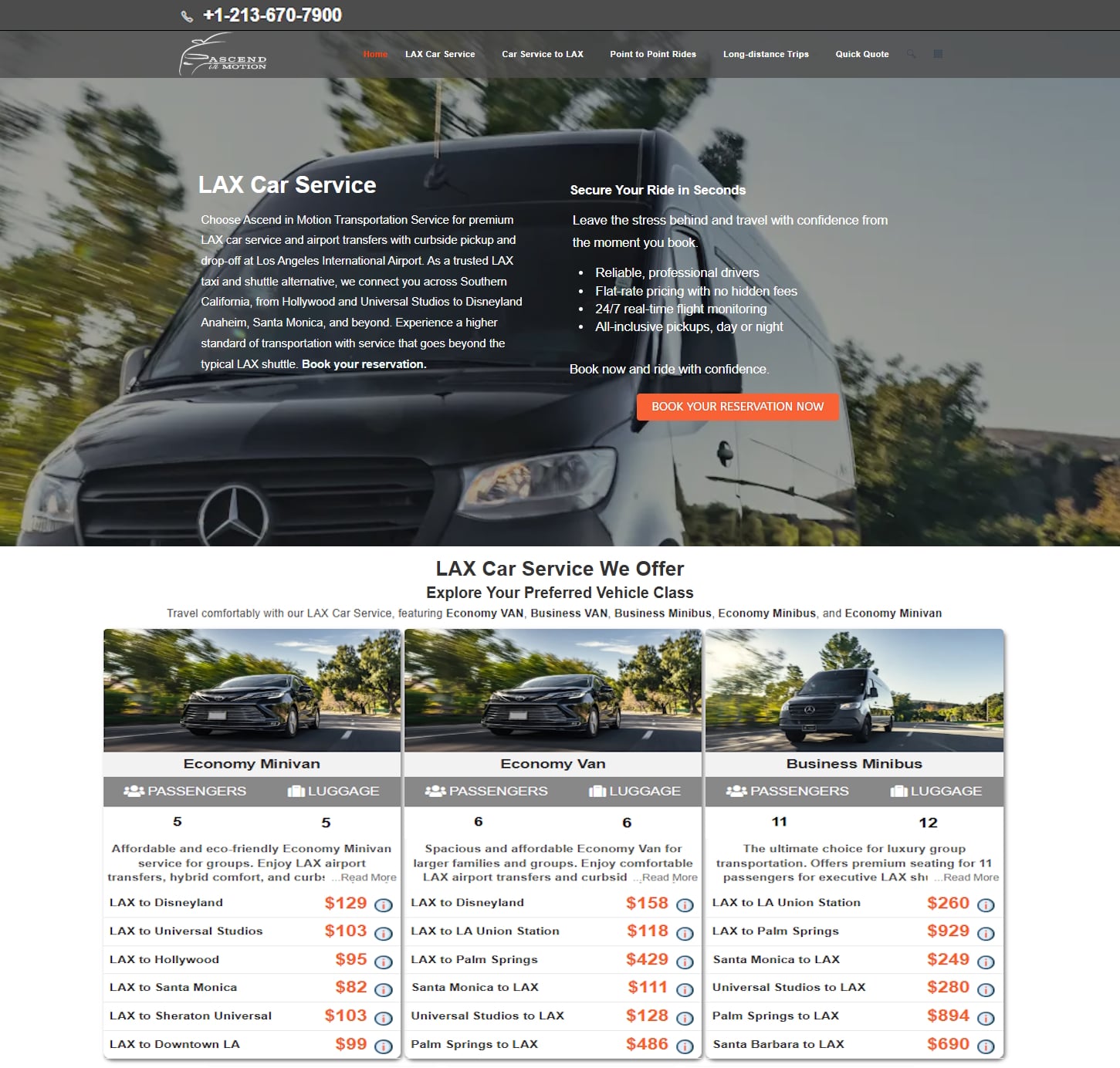
Alt text: Black Mercedes Sprinter minibus used for Ascendinmotion group airport transfers.
Choose between the Business Minibus for standard groups or the Business Minibus Plus when luggage or comfort takes priority over squeezing in extra seats. At booking, Ascendinmotion confirms usable seat count, luggage plan, and accessibility needs upfront, plus real-time flight monitoring if you’re coming through LAX. If you’re planning a group transfer across Los Angeles or beyond, get a quote and lock in your vehicle with the capacity you actually need, not the one printed on a brochure.
Sources
- Gov
- How Many Seats Are on a Mini Bus? A Complete Capacity Guide – Charter Buses USA
- How Many Seats Are in a Minibus – 13Travel blog

