
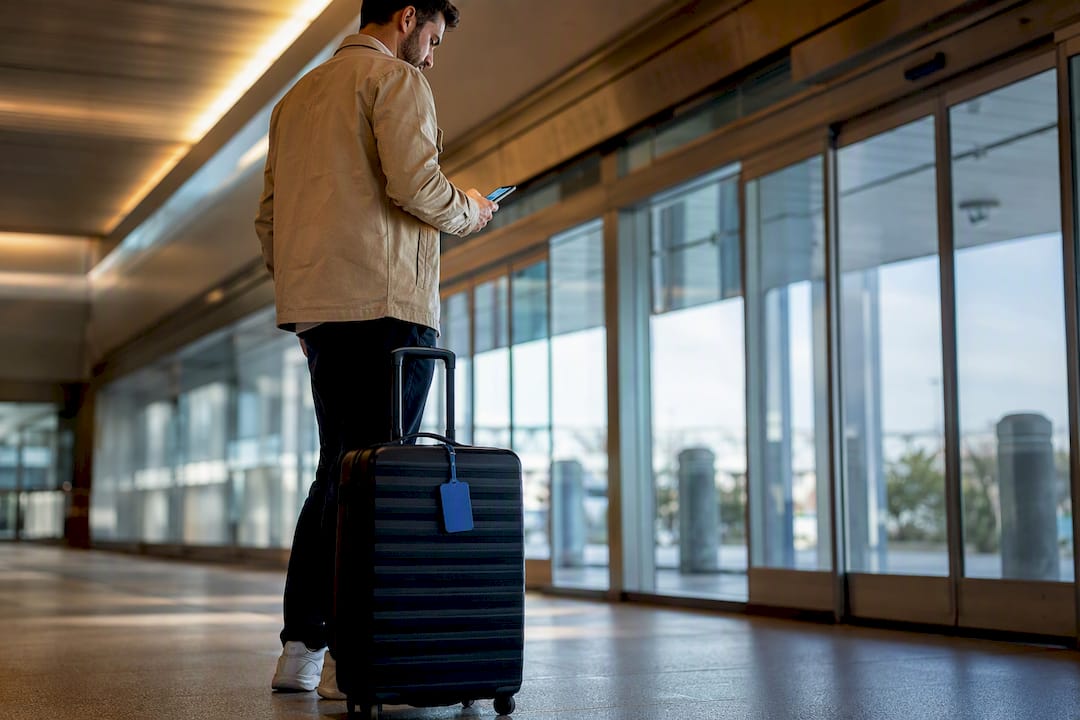
Wait time fees kick in once your driver has marked themselves “arrived” and a short grace period runs out, typically a few minutes for standard rides and a longer grace period for premium options. After that, you’re billed per minute until you get in the car. Rates and thresholds shift by city and service type, and both major apps let you dispute a charge or request a refund directly in the app.
TL;DR:
- Wait time fees start after a short grace period, which varies by city and ride type, and are billed per minute of delay after arrival.
- Common thresholds include a 2-minute grace period for standard rides and 5 minutes for premium or black-style trips, with higher rates during peak times.
- Exception policies exist for canceled trips, disability waivers, shared rides, and regional exemptions, but riders should request waivers proactively.
- Disputing incorrect wait fees requires quick action through the trip receipt, with screenshots and evidence helping to resolve disputes faster.
- Avoid fees by being ready at the curb before requesting a ride, using scheduled or premium options when timing matters, and adjusting pickup location to GPS accuracy.
Table of Contents
- What A Wait Time Fee Actually Is And How Apps Track It
- Typical Thresholds And Rate Patterns You’ll See
- Exceptions, Waivers, And When You Won’t Be Charged
- How To Dispute A Wait Time Fee And Get A Refund
- GPS Glitches And Other Reasons Your Bill Looks Wrong
- How To Avoid Or Reduce Wait Time Fees
- How Private Car Services Handle Waiting Differently
- Where Wait Time Fees Show Up Beyond Rideshare
- The Legal Side Of Wait Time Fees
- How Wait Fees Shape Driver Pay And Rider Habits
- What Actually Works: Be Ready, Speak Up, Dispute When Needed
- A Predictable Alternative To Per-Minute Wait Charges
- Sources
What A Wait Time Fee Actually Is And How Apps Track It
A wait time fee is compensation for the driver’s time while you finish grabbing your bags, wrapping up a phone call, or hunting for your keys. It exists because a driver sitting outside your building for eight minutes is a driver not earning money on another trip. That idle time has a cost, and platforms pass part of it to the rider who caused the delay.
The trigger is simple in theory: the app logs the moment the driver arrives at the pickup pin, starts a grace-period countdown, and then begins charging once that window closes. In practice, Uber’s help center explains that the fee accrues per minute after arrival is logged and the grace period ends. A few things shape how this plays out on your bill:
- The clock starts from a GPS-based arrival event, not from when you personally see the car.
- Charges accumulate per minute, so a four-minute delay costs roughly double a two-minute delay.
- Grace periods, per-minute rates, and even whether the fee applies at all vary by city and by ride type.
Typical Thresholds And Rate Patterns You’ll See
Most riders run into one of two standard windows. Lyft’s policy documentation sets a 2-minute grace period for regular rides and extends that to 5 minutes for premium or black-style vehicles, giving those riders more breathing room before the meter starts. That gap exists because premium bookings often involve luggage, business attire, or a slower walk from a lobby.
Location changes everything here. The same source notes that certain markets, Canada among them, don’t apply wait time fees at all for some ride types, which means the rules you learned in one city won’t necessarily hold in another.
Quick reference on common thresholds:
- Standard rides: a short grace period, then per-minute billing
- Premium or black-style rides: a longer grace period
- Busy periods or high-demand zones: rates often higher per minute than off-peak hours
- Some countries or service tiers: no wait time fee charged at all
News coverage backs up how fluid these rules are. The Points Guy reported that one major platform quietly expanded wait time fees to cover far more rides than before, catching regular riders off guard. That kind of policy shift is exactly why checking your app’s current help page before a trip beats relying on what you remember from last year.
Exceptions, Waivers, And When You Won’t Be Charged
Not every delay results in a fee. Several built-in exceptions exist specifically to protect riders who need more time or who cancel before a driver ever starts waiting.
- Canceled trips. If you cancel and a cancellation fee applies instead, Uber’s policy confirms you won’t also be charged a separate wait time fee. The two charges don’t stack.
- Disability waivers. Riders whose disability affects how quickly they can board are eligible for a waiver or refund. Lyft’s help center outlines a request process through the app’s support channel, and once approved, the waiver typically applies going forward, not just to a single past charge.
- Shared or pooled rides. Multi-stop and shared ride types often follow different wait rules than standard point-to-point trips, since a driver may already be idling for another passenger.
- Regional exemptions. As covered above, some countries simply don’t charge wait time fees for certain services, regardless of how long the pickup takes.
If you have a mobility need that isn’t yet on file with the app, request the waiver before your next ride rather than after a charge appears. It’s faster to prevent the fee than to reverse it.
How To Dispute A Wait Time Fee And Get A Refund
Disputing an incorrect charge is straightforward if you act while the details are fresh. Both major apps route wait time complaints through the trip receipt screen rather than a general support inbox, so start there instead of searching for a phone number.
- Open the specific trip in your ride history and select the option to report an issue with the fare.
- Choose the reason that matches your situation, such as “I was charged a wait time fee I don’t think is right.”
- Add context: your flight status if you were arriving from an airport, screenshots of in-app messages with the driver, or timestamps showing when you actually reached the car.
- Submit and wait for a response, which typically arrives within a few business days according to platform support pages.
Pro Tip: Screenshot the trip’s map and timeline as soon as the ride ends, before the app archives it. That single image often settles a dispute faster than a written explanation, because it shows exactly where the “arrived” pin dropped relative to where you actually were standing.
If the in-app dispute doesn’t resolve things, or the refund never lands, contacting your payment provider is the next step, especially for a charge you can clearly show was an error.
GPS Glitches And Other Reasons Your Bill Looks Wrong
Most disputed wait time fees trace back to a location mismatch, not a driver actually waiting longer than the receipt says. GPS accuracy in dense urban areas or parking structures can place the “arrived” pin a block away from where you’re actually standing, which starts the clock earlier than it should.
Early arrival adds another wrinkle. A driver who shows up before your scheduled pickup time doesn’t get to start the wait timer immediately; the grace period is still tied to the scheduled time, not the driver’s arrival time. Before assuming a fee is wrong, run through a few quick checks:
- Confirm the driver’s name, plate, and car model match what the app shows.
- Request a photo of the vehicle if you’re unsure which car is yours in a crowded pickup zone.
- Message the driver through the app rather than stepping away to call, since in-app messages create a timestamped record you can reference later.
How To Avoid Or Reduce Wait Time Fees
The cheapest wait time fee is the one you never generate. A little planning removes most of the risk entirely.
- Be at the curb before you request the ride, not after. Requesting from inside a terminal or building adds minutes you’ll pay for later.
- Communicate your ETA through the app the moment you see the driver is close, especially if you’re finishing a security line or elevator ride.
- Book scheduled or premium options when you need a guaranteed window. The longer grace periods on premium tiers exist for exactly this reason.
- Add buffer time for luggage or mobility needs. If you’re checking bags or moving slower than average, request the ride a few minutes later than you normally would rather than rushing to beat a shrinking clock.
Pro Tip: If you’re consistently getting hit with wait fees on the same route, like a parking garage pickup, try adjusting your pin to the actual curb where you’ll be standing instead of the default map location. That one change fixes a surprising number of recurring GPS mismatches.
How Private Car Services Handle Waiting Differently
Per-minute billing works fine when you’re stepping outside your apartment. It gets riskier at LAX, where flight delays, customs lines, and baggage claim chaos routinely eat past a five-minute grace period. Chauffeur and booked-vehicle services generally take a different approach: industry guidance on waiting charges shows free-time allowances in the 15 to 30 minute range are standard in booked transportation, a far wider cushion than app-based rides offer.
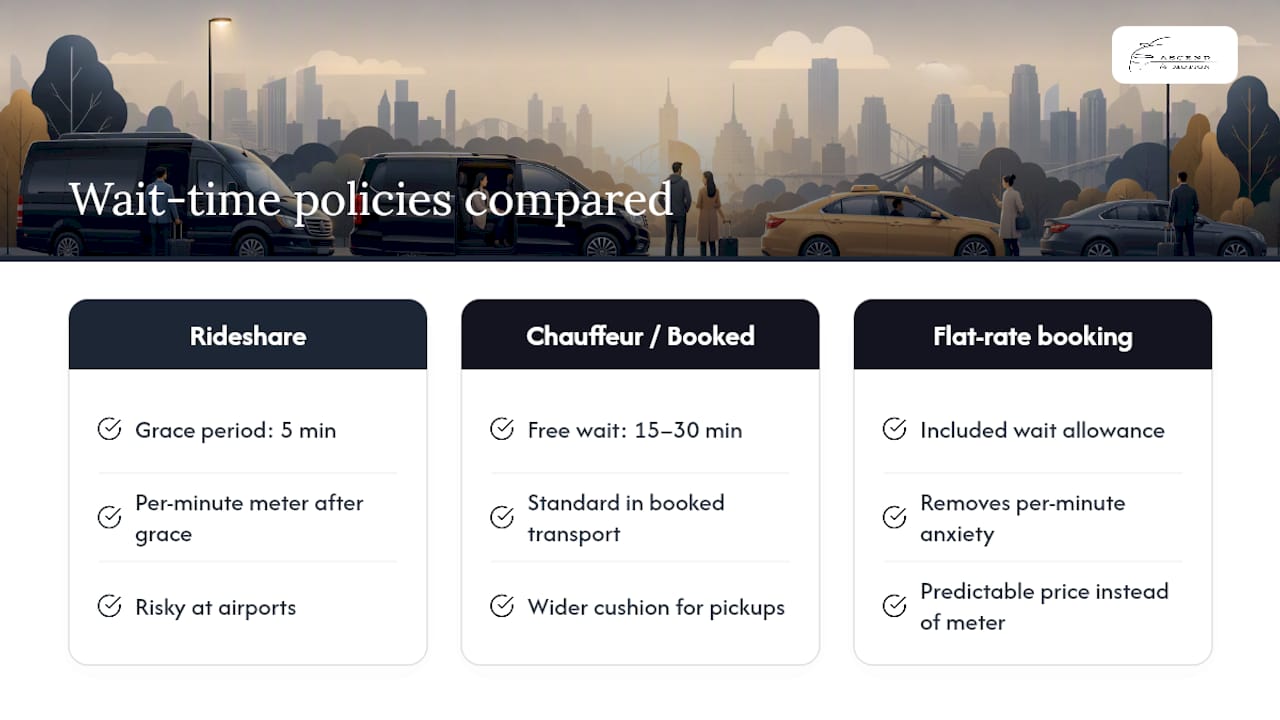
That gap matters most for airport pickups, group travel, and scheduled transfers, where a flight lands late or a group takes twenty minutes to clear security. A flat-rate booking with built-in wait allowance removes the per-minute anxiety entirely. Ascendinmotion’s terms and conditions spell out how included wait time and flat-rate pricing work for exactly these scenarios, giving travelers a predictable number instead of a running meter.
Where Wait Time Fees Show Up Beyond Rideshare
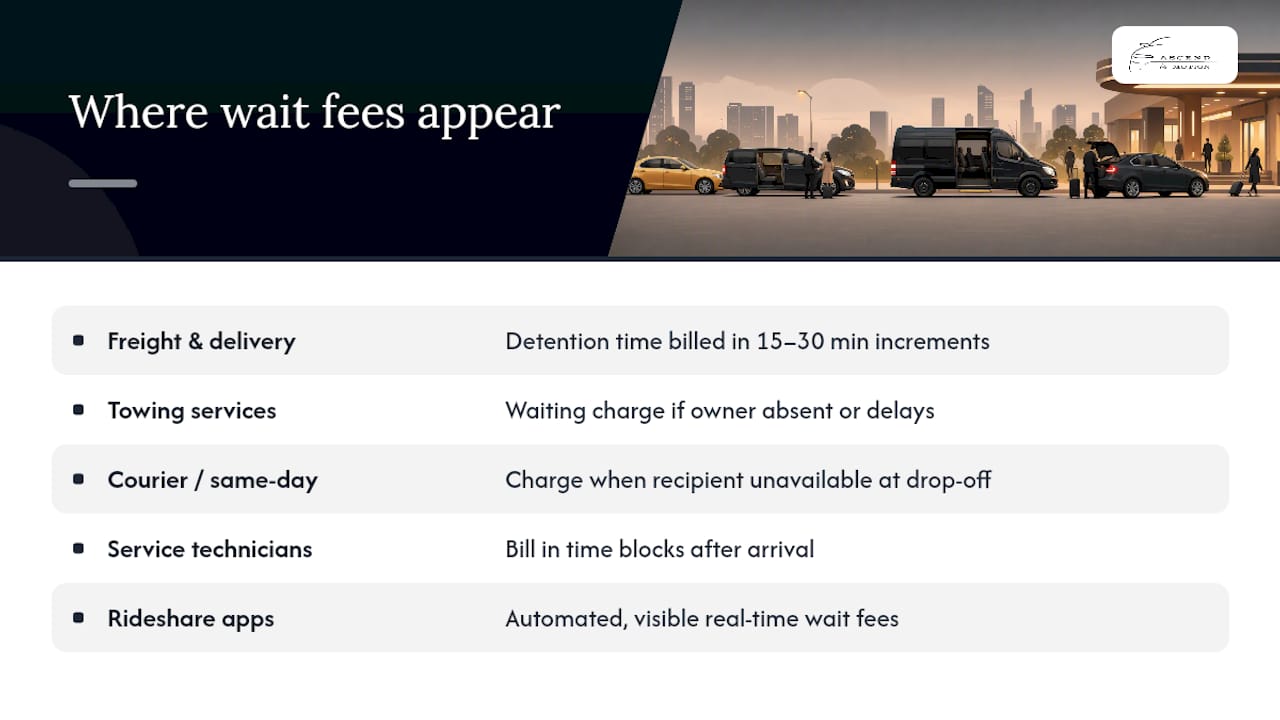
Rideshare apps didn’t invent the concept of charging for idle time. Freight and delivery companies have billed “detention time” for decades, charging shippers when a truck sits at a loading dock past its scheduled window. A driver waiting two hours at a warehouse dock is lost revenue for the carrier, so that cost gets passed through in the invoice, often calculated in 15 or 30 minute increments after a free period expires.
Towing services follow a similar logic. If a tow truck arrives and the vehicle owner isn’t present, or paperwork takes unusually long, many towing companies add a waiting charge on top of the base fee. Courier and same-day delivery services do the same thing when a recipient isn’t available at the drop-off point, and optimizing dispatch scheduling is one of the more effective ways logistics operators reduce these costs across an entire fleet rather than one delivery at a time.
Even outside transportation, service technicians (plumbers, appliance repair, movers) frequently bill in similar blocks once they’ve arrived and the client isn’t ready. The common thread across every industry: someone’s time has value, and a fee is the mechanism for recovering that value when a customer causes the delay. Rideshare apps just made the practice far more visible by automating it and showing the charge in real time on a phone screen.
The Legal Side Of Wait Time Fees
Wait time fees aren’t heavily regulated the way, say, airline tarmac delay rules are, but they still fall under general consumer protection principles that apply to any disclosed service fee. Platforms are generally required to disclose fee structures clearly before a rider accepts a trip, and most consumer protection frameworks treat an undisclosed or hidden fee very differently from one spelled out in a help center article.
The disability waiver process referenced earlier isn’t just good customer service, it reflects accessibility obligations that many jurisdictions apply to public-facing transportation services, requiring accommodations for riders whose disability affects boarding time. That’s part of why both major apps built a formal waiver request path rather than leaving it to case-by-case customer support judgment.
Because rules vary by country and even by city, and because platforms update policies without much fanfare (as the earlier reporting on expanded wait fees showed), the practical legal takeaway for riders is narrower than it might seem: check your specific market’s current help center page rather than assuming a rule you read once still applies. Fee disclosure requirements are a baseline protection, not a guarantee that terms stay fixed over time.
How Wait Fees Shape Driver Pay And Rider Habits
Wait time fees exist because unpaid waiting is a real cost to drivers, and the incentive works both directions. For drivers, the fee recovers income they’d otherwise lose sitting outside a building instead of accepting another trip nearby. For riders, the fee is a nudge toward being ready on time, and it visibly changes behavior once people get charged even once.
Riders who’ve been hit with a wait fee tend to start requesting rides later, closer to when they’re actually ready to walk out the door, rather than the moment they start getting dressed. That shift is subtle but consistent: a fee that stings even a small amount tends to correct the exact behavior it was designed to discourage.
On the platform side, the broader expansion of wait time fees reflects a push to make per-trip economics work better for drivers, since idle time was historically an unbilled cost baked into the fare. Whether that fully offsets driver frustration with waiting is a separate question, but the fee structure itself is a direct response to a real earnings gap that existed before these charges became standard.
What Actually Works: Be Ready, Speak Up, Dispute When Needed
The riders who avoid wait fees almost entirely share one habit: they request rides only when they’re genuinely steps from the door, not when they’re hoping to be. Beyond that, checking your ride’s arrival status and messaging the driver the moment plans shift solves most disputes before they start.
If a charge still looks wrong, use the in-app dispute path immediately, while the trip details and your memory of events are both still sharp. For predictable pickups, especially airport runs, a flat-rate booking with built-in wait time removes the guesswork altogether.
— Sirus
A Predictable Alternative To Per-Minute Wait Charges
If you’ve read this far, you already know the frustration: you’re doing everything right and still watching a meter run because a flight was late or a bag took an extra ten minutes at baggage claim. Ascendinmotion is built around flat-rate pricing with built-in wait allowances, so an LAX pickup delayed by customs or a slow jet bridge doesn’t turn into a surprise line item on your bill.
Ascendinmotion tracks your flight in real time and adjusts pickup timing automatically, which matters most for solo travelers, families with luggage, and corporate clients who need one predictable number instead of a running per-minute clock. The fleet runs on chauffeur-driven black minivans and Mercedes-Benz Sprinters, suited for everything from a single rider to a full group heading to Disneyland, Universal Studios, or a Las Vegas trip.
If your next flight into LAX has a track record of delays, or you’re coordinating pickup for a group where timing is never exact, book your pickup with a flat rate that already accounts for the wait.
Sources
- Wait time fees and refunds | Riders | Uber Help
- Wait time fees | Lyft Help
- Lyft quietly adds wait time fees to most rides

