
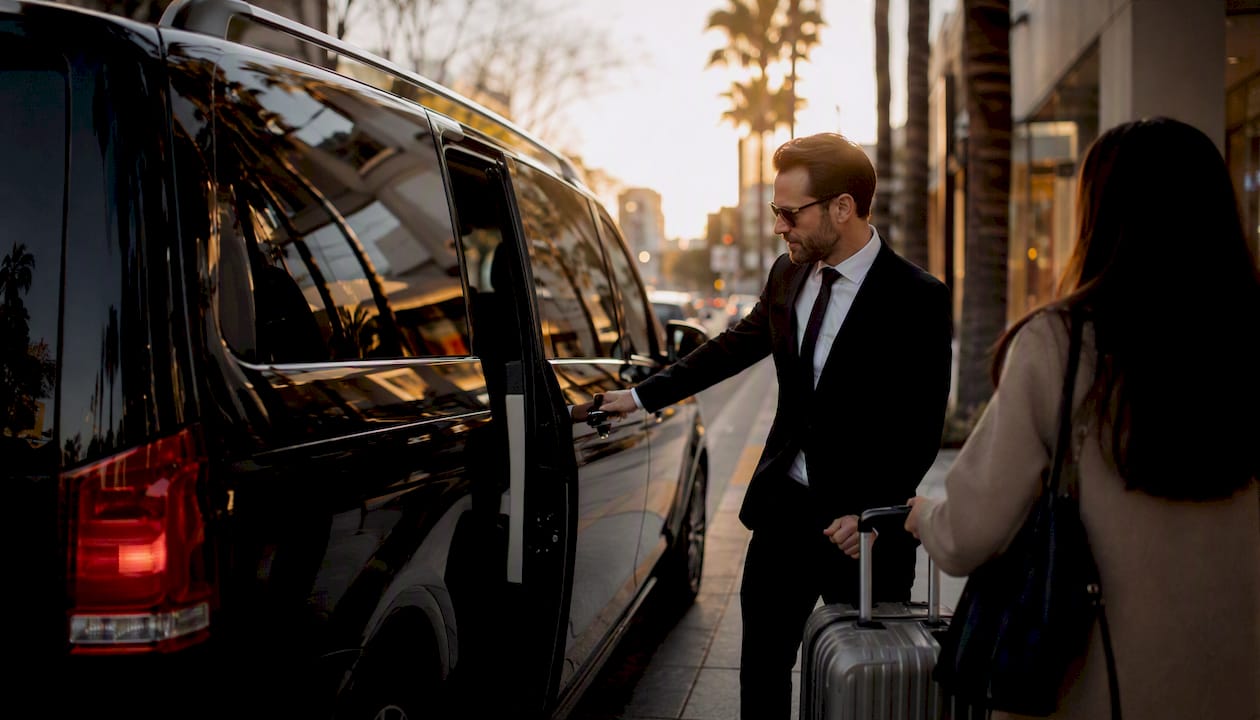
For most travelers, the fastest off-peak option is a taxi or rideshare, the cheapest is public transit, and the most predictable is a flat-rate private car service like Ascendinmotion. Here is the short version before the details:
- Rideshare (Uber): ~$51 average fare, 20–40 minutes off-peak, subject to surge
- Taxi: $45–$55 plus tip, metered, 20–40 minutes
- Private flat-rate car (Ascendinmotion): Fixed price, flight monitoring included, no surge
- Shared shuttle/van: fares typically range from $20 to $30 per person, slower due to multiple stops
- Public transit: fares are under $5, but travel takes 60–90 minutes with transfers
- Rental car: daily rental rates typically range from $40 to $80 plus parking costs, best for multi-day stays
The route covers roughly 12 miles between LAX and central Beverly Hills. Travel time swings hard with traffic — rush hour can push a 25-minute ride past 60 minutes.
Key Takeaways
The most reliable way to control your LAX to Beverly Hills cost is to book a flat-rate private car service before you travel, eliminating surge pricing and LAX-it lot delays entirely.
| Point | Details |
|---|---|
| Rideshare average fare | Uber averages ~$51 for this route, but surge can push fares to $70+ at peak hours. |
| Taxi fare range | Taxis run $45–$55 on the meter plus tip; no surge, but metered in traffic. |
| Cheapest option | Public transit via Culver CityBus costs under $5 but takes 60–90 minutes with transfers. |
| Shared shuttle cost | Airport passenger vans run $20–$30 per person, slower due to multiple stops. |
| Ascendinmotion advantage | Flat-rate pricing, flight monitoring, and black minivans or Sprinters with no LAX-it wait. |
Table of Contents
- How much does the LAX to Beverly Hills trip cost?
- What to expect from Uber and Lyft for this route
- What does a taxi from LAX to Beverly Hills cost?
- Are shared airport shuttles worth it from LAX?
- How do you take public transit from LAX to Beverly Hills?
- Should you rent a car for the LAX to Beverly Hills trip?
- What makes a flat-rate private car service different?
- What factors change your LAX to Beverly Hills fare?
- How do you pick the right option for your trip?
- Why flat-rate transfers make more sense than people think
- Ascendinmotion: flat-rate LAX to Beverly Hills transfers
- Where these estimates come from
- Sources
How much does the LAX to Beverly Hills trip cost?
| Mode | Typical Price Range | Typical Travel Time | Predictability |
|---|---|---|---|
| Rideshare (Uber/Lyft) | fares commonly range from about $35 up to $70 or more | 20–50 min | Variable (surge pricing) |
| Taxi | fares typically fall between $45 and $55 plus tip | 20–45 min | Metered (variable) |
| Private car (flat-rate) | Contact for quote | 20–40 min | Fixed flat rate |
| Shared shuttle/van | fares generally range $20 to $30 per person | 45–75 min | Fixed per person |
| Public transit | fares under $5 | 60–90 min | Fixed fare |
| Rental car | daily rental fees generally range from $40 to $80 plus parking | 20–40 min drive | Variable total cost |
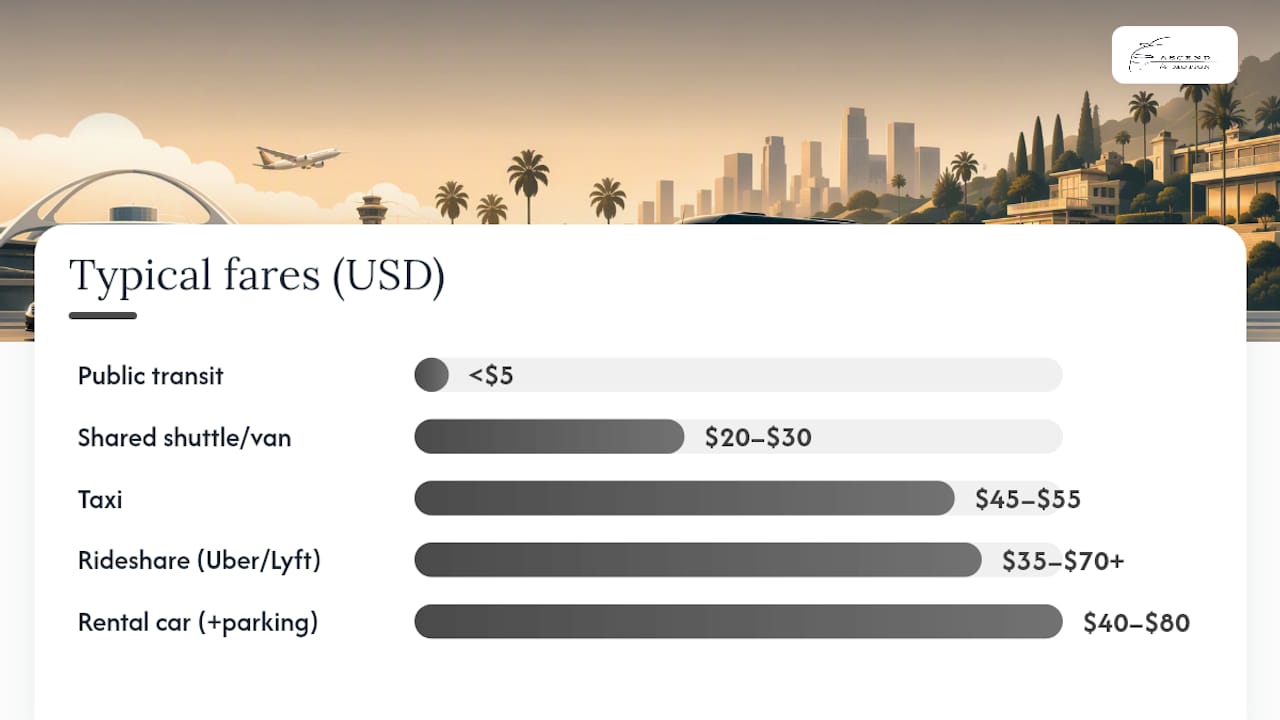
The distance sits at roughly 12 miles, though route choice and traffic can shift that slightly. Uber’s route tool shows an average fare around $51 for this trip, which is a useful planning anchor — but confirm the live estimate at booking since time-of-day demand changes the final number.
What to expect from Uber and Lyft for this route
Uber’s fare estimate for LAX to Beverly Hills averages around $51, though fares typically range from about $35 to $70 depending on demand, vehicle type, and time of day. Off-peak, a standard UberX covers the route in 20–30 minutes. During morning or evening rush hour, that stretches to 45–50 minutes easily.
Pickup at LAX works differently than most airports. Rideshare drivers cannot wait at the terminal curb. Instead, you request your ride after landing, then walk or take the free LAX shuttle to the designated rideshare pickup area. As of 2026, LAX uses the Automated People Mover (APM) to connect terminals to the LAX-it rideshare lot. Allow 15–20 minutes from baggage claim to your driver.
Pros and cons at a glance:
- ✅ Door-to-door convenience
- ✅ Easy app booking, real-time tracking
- ✅ Multiple vehicle classes (standard, XL, Black)
- ❌ Surge pricing during peak hours and bad weather
- ❌ No guaranteed fixed price at booking
- ❌ LAX pickup adds 15–20 minutes to total trip time
Pro Tip: Schedule your Uber in advance through the app’s “Schedule a Ride” feature. It locks in a price estimate and reduces wait time at the LAX-it lot, especially useful for early morning arrivals.
For a deeper private car vs rideshare comparison specific to SoCal travelers, that breakdown covers when each option genuinely makes sense.
What does a taxi from LAX to Beverly Hills cost?
Taxis from LAX to Beverly Hills typically run between $45 and $55 on the meter, according to Love Beverly Hills travel guidance. Travel time mirrors rideshare: 20–40 minutes off-peak, longer during rush hour.
Finding a taxi at LAX is straightforward. After collecting your bags, exit to the lower/arrivals level and follow signs to the taxi stand. Taxis queue there and are dispatched in order — no app needed, no surge pricing, and drivers are licensed by the City of Los Angeles.
One practical note: taxis accept credit cards, but some drivers prefer cash. Confirm before the ride starts. Fares are metered, so tolls (if the driver uses the 105 or 405 freeway) may be added on top.
Pro Tip: *During peak rideshare surge periods, a metered taxi can actually cost less than an Uber.
Are shared airport shuttles worth it from LAX?
Shared passenger vans from LAX to Beverly Hills typically cost between $20 and $30 per person, making them the second-cheapest motorized option after public transit. The tradeoff is time: shared shuttles make multiple stops to drop off other passengers, so a 12-mile trip can take 45–75 minutes even with light traffic.
Pickup logistics: Shared shuttles use the LAX lower-level curb, typically in the van/bus zones outside each terminal. Most require advance booking online or by phone. Expect to wait 10–20 minutes for the van to load before departing.
Who benefits from shared shuttles:
- Budget travelers with flexible schedules
- Solo travelers with manageable luggage
- Groups of 2–3 splitting the per-person cost
Who should skip them:
- Anyone with a tight connection or time-sensitive arrival
- Travelers with oversized luggage or multiple large bags
- Groups of 4+ where a private vehicle becomes cost-competitive
The per-person pricing looks attractive, but the added stops and loading time mean shared shuttles rarely save much time over public transit for this particular route.
How do you take public transit from LAX to Beverly Hills?
Public transit is the cheapest way to cover this route, typically costing less than $5 total, but plan for 60–90 minutes and at least one transfer. Culver CityBus connects the LAX area with Westside routes, and Metro bus or rail fills the remaining gap to Beverly Hills.
Here’s the general sequence:
- Exit your terminal and take the free LAX Shuttle (Green Bus) to the LAX City Bus Center on Aviation Blvd.
- Board a Culver CityBus route serving the Westside corridor toward Culver City or points north.
- Transfer to a Metro bus (typically the 720 Rapid or a connecting line) heading toward Beverly Hills/Wilshire Blvd.
- Exit near your Beverly Hills destination on Wilshire or Santa Monica Blvd.
Fare payment uses TAP cards (available at Metro stations and some convenience stores) or contactless payment on newer buses. A single Metro/Culver CityBus ride costs around $1.75 as of 2026.
This route works well for travelers with a single carry-on, a flexible schedule, and no time pressure. With large suitcases, it becomes genuinely difficult — bus aisles are narrow and stops are frequent.
Should you rent a car for the LAX to Beverly Hills trip?
Daily rental rates from LAX typically start around $40 to $80 per day for a compact or midsize vehicle, though airport surcharges, taxes, and fees increase the actual cost. The drive itself takes 20–40 minutes in normal traffic, following the I-405 or surface streets through Culver City.
Rental car pickup at LAX: Rental counters are not at the terminals. You take a dedicated rental car shuttle from the lower-level curb to the Consolidated Rent-A-Car facility (ConRAC) on 98th Street. Allow 20–30 minutes for the shuttle ride and pickup process.
Practical considerations before renting:
- Beverly Hills parking runs $3–$6/hour in surface lots and $5–$10/hour in structures
- Valet parking at hotels often adds $40–$60/night
- Traffic on the 405 during rush hour can make a 12-mile drive take over an hour
For EV renters, the corridor between LAX and Beverly Hills has 1,379 charging points, including high-power 350 kW stations near the airport, so range anxiety is minimal on this route.
A rental car makes the most sense for travelers staying multiple days and planning to explore beyond Beverly Hills. For a single airport transfer, the pickup time, parking costs, and return logistics usually make it the least efficient choice.
What makes a flat-rate private car service different?
The core difference between a private chauffeur service and every other option on this list is price certainty before you travel. With metered taxis and rideshares, the final fare is unknown until you arrive. With a flat-rate service like Ascendinmotion, the price is set at booking — no surge, no meter running in traffic.
Ascendinmotion’s LAX to Beverly Hills transfer service includes real-time flight monitoring, so your driver adjusts pickup timing automatically if your flight lands early or late. Vehicles are black minivans and Mercedes-Benz Sprinters, suited for both solo travelers and groups with full luggage.
The practical difference: A rideshare or taxi driver starts the meter when they pick you up. A flat-rate chauffeur service locks your price at booking and monitors your flight so the car is there when you land — not when you finally get through the LAX-it lot.
Key features to verify when booking any private car service:
- Is the price flat or metered?
- Does the driver monitor flight arrivals for delays?
- How long is complimentary wait time included?
- What is the vehicle’s luggage capacity?
- What is the cancellation policy?
For travelers who want a deeper look at how airport transfers compare to taxi service, that breakdown covers the predictability gap in detail.
What factors change your LAX to Beverly Hills fare?
Several variables can push your actual cost well above any estimate. Knowing them in advance helps you plan — or avoid them entirely.
The main cost and time drivers:
- Rush hour traffic: Westbound I-405 and surface streets through Culver City are heavily congested 7–9 AM and 4–7 PM. A 25-minute off-peak ride can run 55–65 minutes during peak hours.
- Rideshare surge pricing: Uber and Lyft apply dynamic multipliers during high demand. Surge is common after large events, during rain, and at peak arrival windows.
- Airport access fees: Rideshare and taxi pickups at LAX include airport fees built into the fare.
- Tolls: Some routes use the 105 or 405 express lanes, which add $1–$4 depending on time of day.
- Oversized luggage: Some shared shuttles charge extra for large bags or sports equipment.
Practical ways to lower your cost:
- Book a flat-rate private car in advance to lock in price regardless of traffic
- Travel off-peak (mid-morning or early afternoon on weekdays)
- Use public transit if budget is the only priority
- Check the Uber estimate before leaving baggage claim — if surge is above 1.3x, consider a taxi
Pro Tip: Add a 30-minute buffer after your scheduled landing time before requesting a rideshare. This accounts for deplaning, baggage claim, and the walk to the LAX-it lot — and it often puts you outside the immediate post-flight surge window.
How do you pick the right option for your trip?
The right choice depends on three questions: How much does price certainty matter? How much luggage are you carrying? And how flexible is your schedule?
Match your priorities to the right mode:
- Lowest total cost: Public transit via Culver CityBus and Metro — under $5, but allow 60–90 minutes and travel light.
- Fastest off-peak: Taxi or rideshare — 20–30 minutes, $45–$70 depending on surge.
- Most predictable price and pickup: Flat-rate private car service — fixed fare, flight monitoring, no LAX-it lot wait.
- Budget group travel: Shared shuttle at $20–$30/person if schedules are flexible.
- Multi-day stay with exploration plans: Rental car, factoring in parking costs.
Red flags to watch for:
- A rideshare app showing 1.5x+ surge right after landing
- A taxi driver quoting a flat price before starting the meter (metered fares are standard; a pre-quoted “flat” from an unlicensed driver is a scam)
- A shared shuttle with no confirmed departure time or unclear stop sequence
- A private car booking with no written confirmation of the pickup location
Quick questions to ask before booking:
- Is the quoted price the final price, or does it exclude tolls and fees?
- Where exactly is the pickup point at LAX?
- Is flight monitoring included, or do I need to contact the driver on arrival?
For a side-by-side comparison of airport transportation options across all modes, that resource covers the full decision matrix.
Why flat-rate transfers make more sense than people think
Most travelers default to rideshare because it feels familiar. That’s understandable. But the LAX-it lot adds 15–20 minutes to every Uber pickup, and surge pricing at peak arrival windows is common enough that the “average $51 fare” can easily become $75 before you’ve left the airport.
The real cost of a rideshare isn’t just the fare. It’s the fare plus the walk to the lot, plus the wait for the driver, plus the uncertainty of not knowing what you’ll pay until you’re already in the car. For a business traveler or anyone with a tight schedule, that unpredictability has a real cost.
Taxis are more predictable than rideshares in one sense — no surge — but they’re still metered, which means traffic adds directly to your bill. A 55-minute rush-hour ride costs more than a 25-minute off-peak one.
Flat-rate private car service sidesteps both problems. The price is set before you travel, the driver tracks your flight, and the vehicle meets you without the LAX-it lot detour. For travelers who value time certainty over squeezing out the last few dollars, it’s the more rational choice — not just the premium one.
Budget travelers and local commuters are better served by transit or rideshare. But for anyone flying into LAX with luggage, a schedule, and a Beverly Hills destination, the math on a flat-rate transfer is closer than most people assume.
Ascendinmotion: flat-rate LAX to Beverly Hills transfers
Flat-rate pricing and real-time flight monitoring are the two things most travelers wish they had after a long flight. Ascendinmotion delivers both on every LAX to Beverly Hills transfer.
Your driver monitors your flight arrival and adjusts pickup timing automatically. Vehicles are black minivans and Mercedes-Benz Sprinters with full luggage capacity — no extra charges for bags, no surge multipliers, no surprises at drop-off.
Service highlights:
- Fixed flat-rate fare, confirmed at booking
- Real-time flight monitoring for every airport pickup
- Black minivans and Mercedes-Benz Sprinters
- Available for solo travelers, families, and corporate groups
Reserve your LAX to Beverly Hills transfer now and receive instant confirmation with your driver’s details and pickup instructions.
Where these estimates come from
Fare and time estimates in this article draw from the following sources. Real-world prices vary based on traffic, demand, and booking timing — always confirm live fares before travel or book flat-rate when predictability matters.
- Uber route estimates: Uber’s LAX to Beverly Hills route tool — average fare ~$51, 12-mile sample route
- Taxi and shuttle fares: Love Beverly Hills travel information — $45–$55 taxi, $20–$30/person for passenger vans
- Route distance and EV charging: RoutePlanner LAX to Beverly Hills — 1,379 charging points on corridor
- Public transit routing: Culver CityBus — Westside routes connecting LAX area to Beverly Hills via Metro
- Private car service details: Ascendinmotion LAX to Beverly Hills page — flat-rate pricing, flight monitoring, vehicle options
Sources
- How to get from LAX Airport to Beverly Hills, CA | Uber
- Beverly Hills Travel Information | Love Beverly Hills
- Beverly Hills, CA to Los Angeles International Airport (LAX) – Drive Time, Distance & Directions
- Culver CityBus Home

