
TL;DR:
- Driving the I-15 offers flexibility and convenience from Los Angeles to Las Vegas.
- A private chauffeur with Ascendinmotion provides door-to-door comfort for groups, families, and business travelers.
For most travelers, driving the I-15 is the best overall way to travel from Los Angeles to Las Vegas — it gives you flexibility, door-to-door convenience, and the freedom to stop when you want. However, if you are traveling with a group, carrying heavy luggage, or simply want to arrive relaxed, a private chauffeur with Ascendinmotion is a leading door-to-door option on the corridor.
Quick verdicts by priority:
- Fastest overall: Flying from a nearby airport (BUR or ONT) when you pack light — approximately a several hours door-to-door
- Most flexible: Driving via I-15 (~270 miles, 4–5 hours with light traffic)
- Cheapest: Bus (FlixBus or Greyhound), with fares commonly starting at $20 when booked early.
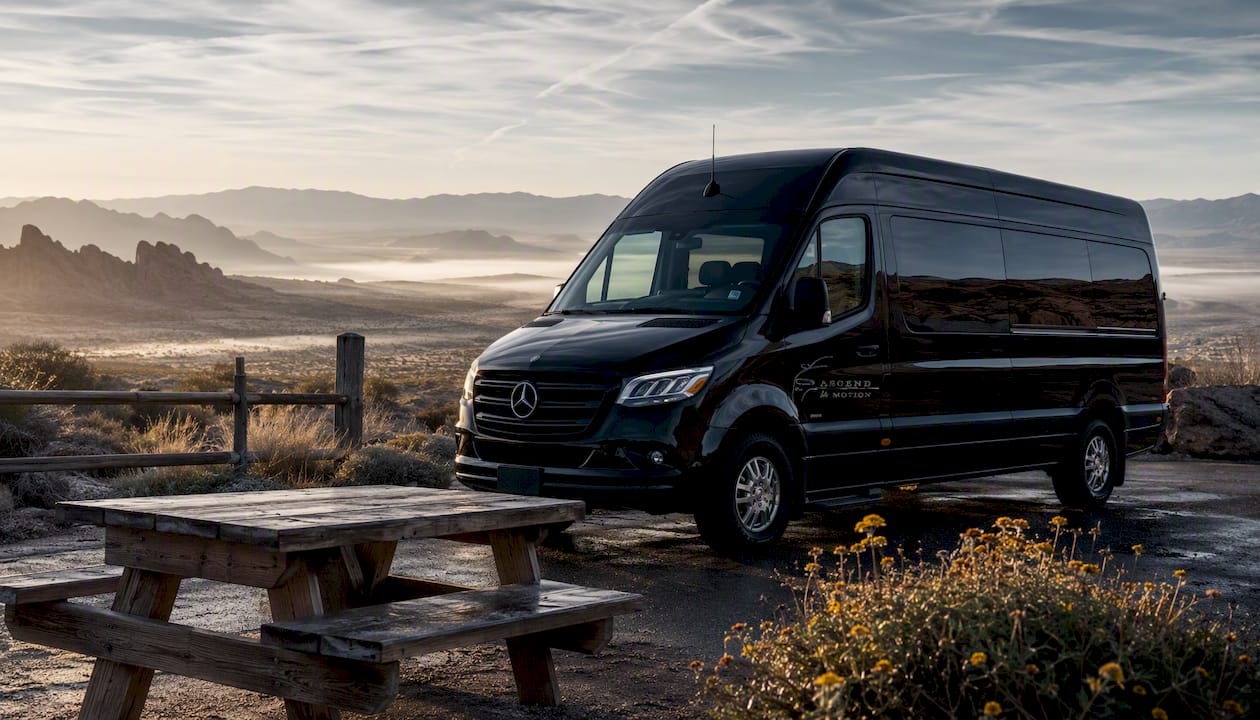
- Best for groups or comfort: Private chauffeur (Ascendinmotion black minivans or Mercedes-Benz Sprinters)
- Most scenic: Road trip via I-15 with stops at Barstow, Baker, and Primm
Table of Contents
- How do the main travel modes compare at a glance?
- Driving the I-15: what the road trip actually looks like
- Is flying from LA to Las Vegas actually faster?
- Bus from LA to Vegas: operators, times, and who it suits
- Is there a train from Los Angeles to Las Vegas?
- Rideshare, taxi, and shuttle options: when do they make sense?
- Private chauffeur with Ascendinmotion: the door-to-door premium option
- How do you choose the right travel mode?
- When should you leave to avoid the worst traffic?
- Road-trip stops worth making on the I-15
- Key Takeaways
- Why a chauffeur changes the LA to Las Vegas trip
- Skip the logistics: Ascendinmotion drives you to Las Vegas
- Useful sources and operator links
How do the main travel modes compare at a glance?
| Mode | Door-to-Door Time | Typical Cost (one-way) | Flexibility | Comfort | Luggage | Best For |
|---|---|---|---|---|---|---|
| Drive (I-15) | 4–5 hrs | $40–$50 (fuel + tolls) | High | Moderate | Unlimited | Flexible solo/family trips |
| Fly (LAX/BUR/ONT → LAS) | 3–4 hrs | $26–$150+ | Low–Moderate | Moderate | Restricted | Short trips, light packers |
| Bus (FlixBus/Greyhound) | 5–7.5 hrs | $20–$65 | Low | Low–Moderate | Limited | Budget solo travelers |
| Train + bus combo | 7–10+ hrs | $50–$120 | Very Low | Moderate | Moderate | Scenic, patient travelers |
| Rideshare/taxi | 4–5 hrs (plus cost) | $150–$300+ | Moderate | Moderate | Moderate | Short legs, airport transfers |
| Private chauffeur | 4–5 hrs | Varies (flat rate) | High | High | Generous | Groups, business, comfort |
Key operators to know: Greyhound and FlixBus handle the budget bus routes. Amtrak covers the train leg. LAX, Harry Reid International (LAS), Hollywood Burbank Airport (BUR), and Ontario International Airport (ONT) are your main airport options. Ascendinmotion covers the premium private chauffeur end.

Driving the I-15: what the road trip actually looks like
The classic route runs from central Los Angeles northeast on I-10, then north on I-15 through the Cajon Pass, past Barstow and Baker, through Primm, and into Las Vegas. Total distance from central LA is roughly 270 miles.
Realistic time windows
With light traffic on a Tuesday morning, you can cover the distance in several hours. On a Friday afternoon, that same drive can take significantly longer due to congestion at the Cajon Pass and the Barstow interchange. Sunday afternoons westbound are also prone to heavy traffic.
Fuel and toll costs
A typical passenger car averaging around 30 mpg will use a moderate amount of fuel for the trip. At current California gas prices, fuel cost is a moderate expense each way. There are no major toll roads on the I-15 corridor itself, though some LA surface streets may add minor costs.
| Departure Point | Approx. Miles to LAS | Estimated Fuel Cost |
|---|---|---|
| Downtown LA | ~270 miles | $40–$50 |
| Santa Monica | ~270 miles | $42.98–$50 |
| Burbank | ~270 miles | $40–$50 |
| Ontario | ~270 miles | $20–$43 |
Parking in Las Vegas
Most major Strip resorts now charge for parking, often with a daily fee for self-parking. Some loyalty program members still get free parking at certain properties. If you are staying off-Strip, free parking is more common. Overnight street parking in downtown Las Vegas is generally available but check posted signs carefully.
Pro Tip: Depart before 6 AM on a Friday or after 9 PM to skip the worst Cajon Pass backup. The two-hour difference in departure time can save you three hours on the road.
For a deeper look at the LA to Las Vegas drive, including vehicle prep and packing checklists, Ascendinmotion’s travel guide covers the full corridor.
Desert driving checklist:
- Full tank before leaving LA (gas is cheaper in the city)
- At least 2 liters of water per person
- Phone charger and offline maps downloaded
- Sunscreen and sunglasses for daytime driving
- Emergency kit: jumper cables, first-aid, reflective triangle
Is flying from LA to Las Vegas actually faster?
The airborne flight time between LA area airports and Harry Reid International (LAS) is roughly 55–65 minutes. Door-to-door, however, the total typically runs 3–4 hours once you factor in getting to the airport, security, boarding, and the ride from LAS to your hotel.
Which LA airport should you use?
- LAX: The most flights and often the cheapest fares, but the airport itself is large and slow. Add 60–90 minutes for access from most LA neighborhoods.
- BUR (Hollywood Burbank Airport): Much faster to navigate. If you live in the Valley, Pasadena, or Glendale, BUR can cut your total travel time significantly.
- ONT (Ontario International Airport): Ideal for travelers in the Inland Empire or eastern LA County. Smaller, faster, and often cheaper to park.
Sample fare ranges
Fares on Expedia can start as low as $26 one-way on budget carriers, though midweek departures (Tuesday and Wednesday) consistently offer better prices than weekend flights. Expect to pay $60–$150 for a typical round-trip booking made a week or two in advance.
| Airport | Typical Drive to Airport | Security Speed | Notes |
|---|---|---|---|
| LAX | 30–60 min (traffic-dependent) | Slow | Most flights, lowest fares |
| BUR | 15–30 min (Valley/Glendale) | Fast | Best for north/central LA |
| ONT | 30–60 min (east LA/IE) | Fast | Good fares, easy parking |
Arrival at LAS
Harry Reid International has dedicated rideshare pickup zones on Level 2 of the parking garage, plus taxi stands and rental car desks. Budget 20–30 minutes from landing to your hotel lobby if you are using a rideshare. A pre-booked private airport transfer eliminates the rideshare queue entirely.
Flying wins when: You are traveling solo with carry-on only, your hotel is close to the Strip, and you depart from BUR or ONT on a weekday morning.
Bus from LA to Vegas: operators, times, and who it suits
Budget intercity buses are the cheapest way to make this trip, though comfort and schedule flexibility are the trade-offs. Both Greyhound and FlixBus run multiple daily departures between Los Angeles and Las Vegas.
Operators and key details
- Greyhound: The fastest listed Greyhound trip runs about 5 hours and 5 minutes, with fares starting around $42.98. Multiple daily departures from the LA bus terminal.
- FlixBus: Generally competitive on price, with similar travel times. Boarding points vary by route; check the FlixBus app for exact pickup locations.
Travel time and fares
Most intercity coaches take several hours, depending on the service, stops, and traffic. Fares typically start at $20 when booked early, rising during peak weekends.
| Operator | Fastest Trip | Starting Fare | Daily Departures |
|---|---|---|---|
| Greyhound | ~5 hrs 5 min | ~$42.98 | Multiple |
| FlixBus | ~5–6 hrs | ~$20 | Multiple |
Drop-off in Las Vegas
Buses commonly drop passengers at the South Strip Transfer Terminal (SSTT), which is a short rideshare or taxi ride from most Strip hotels. Some services stop at operator-specific terminals closer to downtown.
Who should take the bus: Solo budget travelers, students, and anyone without a car who has a flexible schedule. Book midweek and at least a week in advance for the lowest fares.
Pros and cons at a glance:
- ✅ Cheapest option on the corridor
- ✅ No driving fatigue
- ❌ Slowest mode (5–7.5 hours)
- ❌ Limited luggage space
- ❌ Schedule is fixed; no flexibility mid-trip
Is there a train from Los Angeles to Las Vegas?
Not directly. There is currently no direct regular intercity passenger train service between Los Angeles and Las Vegas… Brightline West has announced a high-speed rail project connecting the two cities, but no confirmed operational date has been set as of 2026.
Amtrak + bus combo
The practical workaround is an Amtrak train to a connecting hub, followed by a bus or shuttle for the final leg. For example, Amtrak’s Southwest Chief or Pacific Surfliner can take you to San Bernardino or Victorville, where connecting bus services continue to Las Vegas. Total travel time on a combo itinerary typically runs 7–10 hours or more, depending on connections.
Pros of the rail+bus combo:
- More comfortable seating than a pure bus trip
- Scenic desert views on certain segments
- Accessible boarding at Amtrak stations
Cons:
- Significantly longer total travel time
- Schedule complexity and transfer risk
- Luggage must be managed across two modes
Accessibility note: Amtrak trains offer accessible seating and boarding ramps at most stations. However, the connecting bus leg may have more limited accessibility depending on the operator. Confirm accessibility options directly with each carrier before booking.
Rideshare, taxi, and shuttle options: when do they make sense?
For the full LA to Las Vegas distance, rideshare apps like Uber and Lyft are rarely the right call. A one-way Uber for the full 270-mile trip can run $150–$300 or more, and surge pricing on Friday afternoons can push that higher. Moreover, not every driver will accept a trip that long.
Where rideshare works well
Rideshare shines for the first and last mile: getting from your home to LAX, BUR, or ONT, or from the South Strip Transfer Terminal to your hotel after a bus ride. These shorter legs typically cost $15–$50 depending on distance and time of day.
Casino and airport shuttles: Several Las Vegas hotels and casinos operate shuttle services from LAS, though many have scaled back in recent years. Confirm availability with your specific property before relying on one.
Group considerations: For groups of 4–6, a shared shuttle or rideshare from the airport to a Strip hotel can be cost-effective. Beyond that, a private vehicle or chauffeur service usually makes more financial and logistical sense.
Luggage and accessibility: Standard rideshare vehicles have limited trunk space. If you are traveling with multiple bags or oversized luggage, confirm vehicle type when booking, or opt for a larger vehicle class.
Private chauffeur with Ascendinmotion: the door-to-door premium option
A private chauffeur transfer with Ascendinmotion is the most comfortable and predictable way to make the LA to Las Vegas trip. You are picked up at your door, your luggage is handled, and you arrive at your Las Vegas hotel without navigating parking, rideshare queues, or bus terminals.
What the service includes
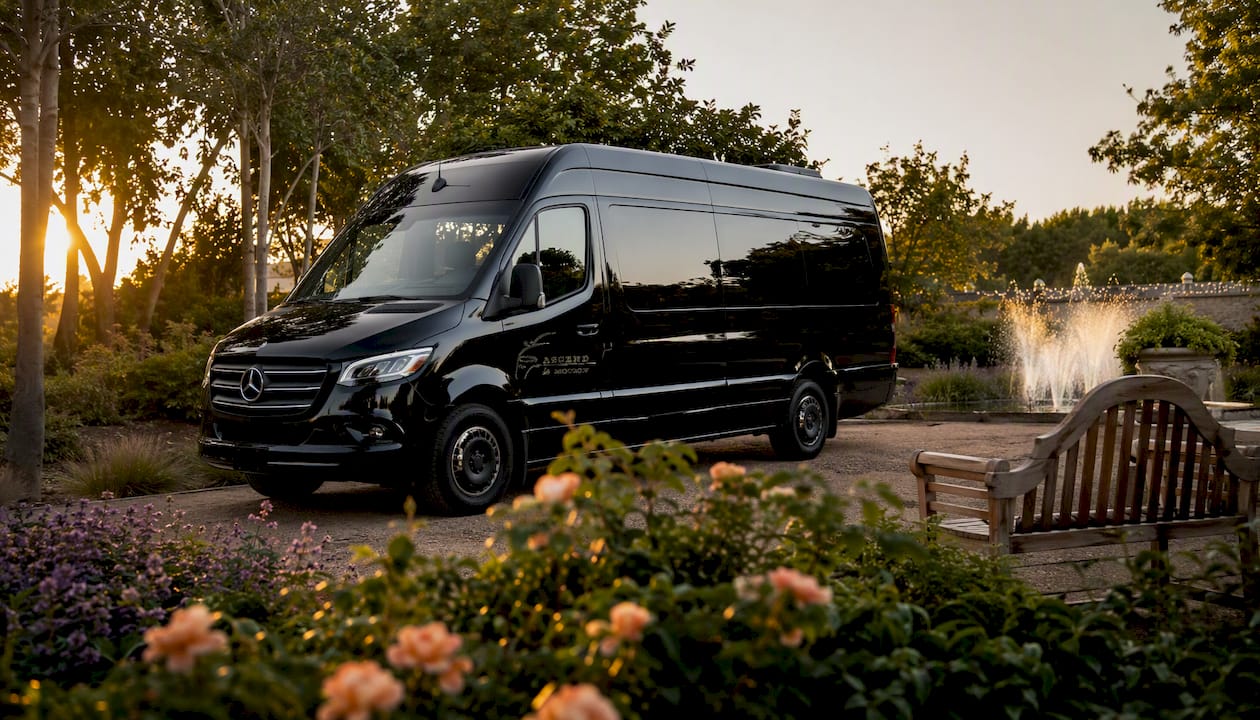
Ascendinmotion operates luxury chauffeur transfers in black minivans and Mercedes-Benz Sprinters. The service covers door-to-door pickup anywhere in the LA area, real-time flight monitoring for airport-connected trips, and flat-rate pricing so there are no surprises at the end of the ride.
Who benefits most
- Groups: A Sprinter van accommodates larger parties with luggage, often at a per-person cost that rivals flying once you add checked bag fees and airport transfers.
- Families: No car seats to rent, no parking to arrange, no stress at the airport.
- Business travelers: Arrive at your Las Vegas meeting or conference without driving fatigue. Use the travel time for calls or prep.
- Travelers with lots of luggage: No baggage fees, no overhead bin fights, no size restrictions.
Pricing cues
Ascendinmotion uses flat-rate pricing for long-distance transfers. The exact rate depends on vehicle size, pickup location, time of day, and any wait time. Tolls and fuel are typically included in the quoted rate. Always confirm what is included when you book.
Booking checklist:
- Exact pickup and drop-off addresses
- Number of passengers and bags
- Flight number if the trip connects to an airport pickup
- Preferred departure time and any flexibility
- Cancellation and wait-time policy in writing
Pro Tip: If you are departing from the San Fernando Valley, Pasadena, or the Westside, a private chauffeur can often match or beat the total door-to-door time of flying once you account for airport access, security, and the LAS rideshare queue.
How do you choose the right travel mode?
Work through this checklist in order. The first factor that eliminates a mode is your answer.
Decision checklist
- Time is your top priority → Fly from BUR or ONT (pack light, book midweek) or book a private chauffeur for a stress-free 4–5 hour ride.
- Budget is your top priority → Bus (FlixBus or Greyhound, booked at least a week in advance).
- You have 3+ people or heavy luggage → Drive or book a private chauffeur; flying adds bag fees and airport logistics that erode the time advantage.
- You want flexibility mid-trip → Drive or private chauffeur; buses and flights lock you into a schedule.
- You want a scenic experience → Drive the I-15 with planned stops.
- You need accessibility support → Amtrak for the train leg; confirm bus accessibility separately; private chauffeur for full door-to-door control (note: Ascendinmotion does not provide wheelchair-adapted vehicles).
Questions to ask a private car service before booking
- Is the quoted price a flat rate, or can it change?
- Are tolls and fuel included?
- What is the wait-time policy if my flight is delayed?
- What vehicle type will be dispatched?
- Are drivers licensed and insured for long-distance transfers?
- How will I receive pickup confirmation?
Red flags to watch for:
- Vague or verbal-only pricing with no written confirmation
- No vehicle type specified at booking
- No flight monitoring offered for airport-connected trips
- Missing or unclear cancellation policy
For a full breakdown of what sets a premium car service apart, Ascendinmotion’s guide covers the key differentiators worth checking before you commit.
When should you leave to avoid the worst traffic?
Timing matters more than almost any other variable on the LA to Las Vegas corridor. The I-15 through the Cajon Pass is one of the most congested weekend routes in Southern California, and getting it wrong can add hours to your trip.
Best and worst departure windows
| Departure Window | Direction | Expected Congestion | Verdict |
|---|---|---|---|
| Tuesday/Wednesday, morning | Eastbound | Minimal | Best overall |
| Thursday morning | Eastbound | Light | Good |
| Friday afternoon | Eastbound | Severe | Avoid |
| Saturday morning, before 7 AM | Eastbound | Light–Moderate | Acceptable |
| Sunday, 2 PM–7 PM | Westbound | Severe | Avoid |
| Any weekday after 9 PM | Either | Light | Good alternative |
Friday afternoon eastbound and Sunday afternoon westbound are consistently the worst windows on the I-15. Peak holiday weekends (Memorial Day, Labor Day, Fourth of July) can add 2–4 hours beyond the typical peak.
Pro Tip: If you must leave on a Friday, depart before 10 AM or after 9 PM. The two-hour gap between 10 AM and noon is often the last window before traffic locks up through Cajon Pass.
Use Waze or Google Maps with live traffic enabled and set your departure time in advance to preview expected conditions. Both apps show historical traffic patterns for future departure times.
Road-trip stops worth making on the I-15
The I-15 corridor is not just a highway. With a little planning, it becomes one of the more interesting desert drives in the American Southwest.
- Barstow outlets and Harvey House (Barstow Station): About 120 miles from LA, Barstow is the natural first stop. The Barstow Premium Outlets are worth a quick browse, and the historic Casa del Desierto (Harvey House) is a striking Moorish-style building right off the freeway. Add 30–45 minutes.
- Baker and the World’s Tallest Thermometer: Baker sits at the edge of the Mojave Desert, roughly 60 miles past Barstow. The 134-foot thermometer is a genuine roadside curiosity, and the Mad Greek Café has been a traveler institution for decades. Add 20–30 minutes.
- Calico Ghost Town: A short detour off I-15 near Barstow, this restored silver mining town is run by San Bernardino County Parks. It is a legitimate half-hour detour for history-minded travelers.
- Primm outlets: Right on the Nevada state line, Primm has a factory outlet mall and a couple of small casinos. Good for a stretch break and a Nevada welcome moment. Add 20–30 minutes.
Safety reminders for desert driving:
- Fill your tank before leaving Barstow; gas stations thin out between Baker and Primm.
- Carry at least 2 liters of water per person, more in summer.
- Summer temperatures between Baker and Primm regularly exceed 110°F. If your car overheats, pull off immediately and call for help rather than pushing through.
- Keep your phone charged; cell coverage is spotty in stretches between Baker and the Nevada line.
For a full scenic breakdown of the LA to Las Vegas drive adventure, including detour timing and photography spots, Ascendinmotion’s road-trip guide covers the corridor in detail.
Key Takeaways
Driving the I-15 is the most flexible way to travel from Los Angeles to Las Vegas, but a private chauffeur with Ascendinmotion delivers the best door-to-door comfort for groups, families, and business travelers on the 270-mile corridor.
| Point | Details |
|---|---|
| Best overall flexibility | Driving the I-15 (~270 miles, 4–5 hours with light traffic) gives full schedule control. |
| Cheapest option | Bus via FlixBus or Greyhound, with fares starting at $20 when booked early and trips taking 5–7.5 hours. |
| Flying is faster airborne, not always door-to-door | A 55–65 minute flight becomes 3–4 hours total once you add airport access, security, and LAS transfers. |
| Best timing to leave | Tuesday or Wednesday mornings avoid the worst Cajon Pass congestion; Friday afternoons are the worst window. |
| Ascendinmotion for groups and comfort | Black minivans and Mercedes-Benz Sprinters with flat-rate pricing and door-to-door pickup across the LA area. |
Why a chauffeur changes the LA to Las Vegas trip
Most people underestimate how much of a road trip is actually logistics. You find parking, you navigate the Cajon Pass in Friday traffic, you argue about where to stop for gas. By the time you reach Las Vegas, you have already spent the energy you were saving for the weekend.
A private chauffeur flips that equation. The vehicle comes to you. Your bags go in the back. You sit in a comfortable seat and arrive at your hotel without having touched a steering wheel or stood in a rideshare queue. For a group of four splitting the cost, the per-person price often lands closer to a budget flight than most people expect, and you get door-to-door service with no checked bag fees.
Ascendinmotion has handled long-distance transfers on this corridor for both leisure travelers and corporate clients. The difference between a chauffeur and a rideshare is not just the vehicle. It is the pre-confirmed pickup, the real-time flight monitoring, and the driver who already knows your drop-off address before you get in the car. For anyone who values arriving ready rather than arriving exhausted, that reliability is the point.
Skip the logistics: Ascendinmotion drives you to Las Vegas
The fastest door-to-door option from most LA neighborhoods is not always the airport. Ascendinmotion’s luxury Southern California airport car service extends to long-distance transfers, including direct LA to Las Vegas runs in black minivans and Mercedes-Benz Sprinters.
Alt text: Ascendinmotion black Mercedes-Benz Sprinter parked outside a Los Angeles residence, ready for a private chauffeur transfer to Las Vegas.
Flat-rate pricing means the number you see when you book is the number you pay. No surge pricing, no surprise tolls added at the end, no baggage fees. Real-time flight monitoring keeps your driver updated if your schedule shifts. For groups, families, or anyone who wants to arrive in Las Vegas ready to enjoy the trip rather than recover from it, this is the option worth booking.
Reserve your LA to Las Vegas chauffeur transfer directly through Ascendinmotion’s service page, or explore flat-rate point-to-point pricing to get a quote for your specific route.
Useful sources and operator links
Check live schedules and fares directly with each operator before booking, as times and prices change frequently.
- Expedia: Los Angeles to Las Vegas flights (LAX to LAS)
- Las Vegas Wonders: How far is Las Vegas from Los Angeles?
- Calico Ghost Town Regional Park (San Bernardino County Parks)
- Ascendinmotion: LA to Las Vegas private chauffeur transfers
- Ascendinmotion: LAX airport transfer services
- Ascendinmotion: Private airport transportation Las Vegas guide
