

The realistic door-to-door driving time from LAX to Las Vegas runs about 4.5 to 6.5 hours in a private chauffeur vehicle, covering roughly 270 to 290 miles on I-15. That range already accounts for normal stops and everyday traffic. Heavy congestion, holiday exodus weekends, or Cajon Pass slowdowns can push it past 7 hours, so departure timing matters more than almost anything else you control.
TL;DR:
- Leaving before 9 a.m. or after 8 p.m. on weekdays helps avoid the heaviest LA rush and reduces trip time by several hours.
- Unplanned stops for fuel or food typically add 20 to 45 minutes, and weather conditions can slow speeds even without traffic incidents.
- Heavy congestion, construction, or holiday exodus can extend drive times to over nine hours, especially through the Cajon Pass and desert areas.
- Booking a chauffeur service with flight monitoring and planned stops ensures more reliable timing and comfort for long-distance trips.
- Proper preparation includes confirming pickup details, stop policies, luggage allowances, and leaving extra cushion time for peak travel periods.
Table of Contents
- How Long Does It Take to Drive From LAX to Las Vegas?
- What Slows Down or Speeds Up the Trip?
- When Should You Leave to Avoid Delays?
- What Happens During a Chauffeur Pickup and Drive?
- What Should You Confirm Before Booking?
- Why Travelers Choose a Chauffeur for This Route
- Book a Chauffeur Transfer From LAX to Las Vegas
- Sources
How Long Does It Take to Drive From LAX to Las Vegas?
Under clear conditions, a straight run from LAX to Las Vegas takes about 4 to 4.5 hours, covering the roughly 270 miles of highway that connects the two cities. Travel-time calculators put a standard route estimate at around 4 hours and 28 minutes, which lines up closely with that clear-road figure. That’s the floor, not the average.
Once you factor in a fuel stop, a bathroom break, or a meal, the realistic common range climbs to about 4.5 to 6.5 hours for most trips. Here’s how that typically breaks down:
- Best case: 4 to 4.5 hours, light traffic, no stops, early morning or late-night departure.
- Average case: 5 to 6 hours, one or two brief stops, moderate midday traffic.
- Worst case: 7 to 9+ hours on Friday afternoons, Sunday evenings, or major holiday weekends when I-15 backs up for miles.
If you’re leaving on a random Tuesday morning, plan around the lower end. If you’re heading out on a three-day weekend, build in real cushion.
What Slows Down or Speeds Up the Trip?
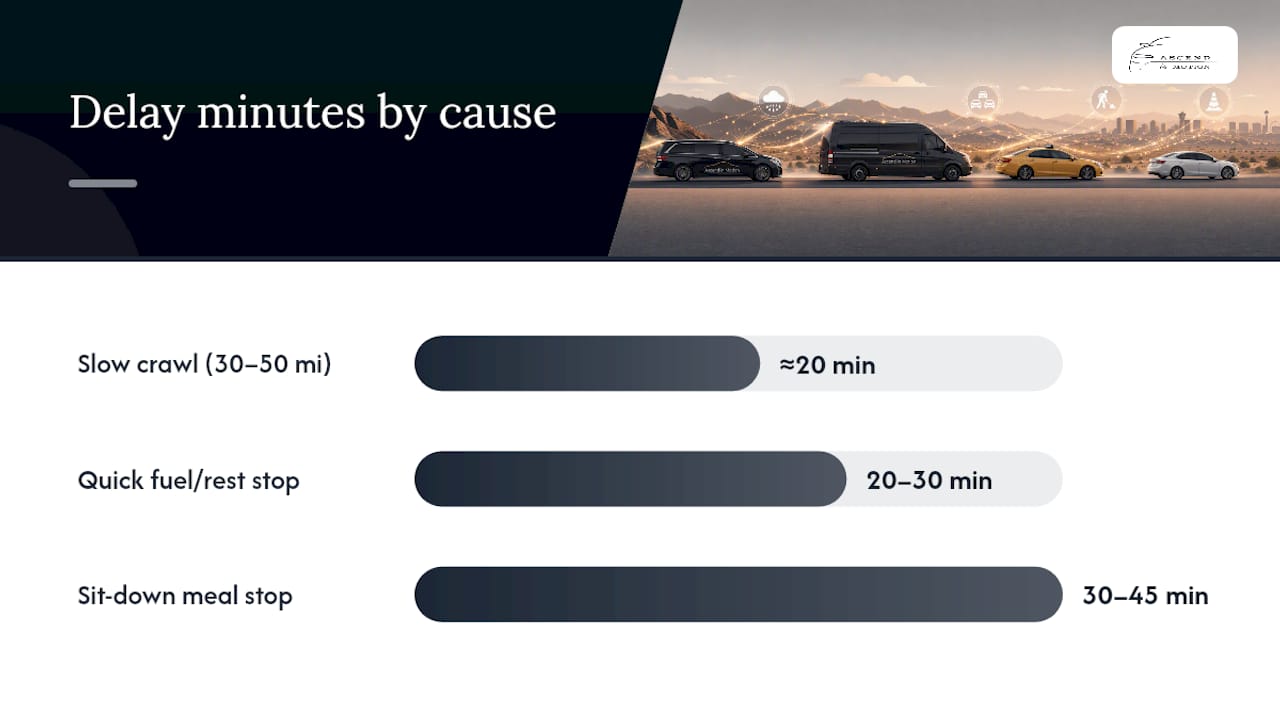
Several variables swing your total time by an hour or more, and most of them are predictable if you plan ahead. The first 30 to 50 miles out of LAX, through the Inland Empire and toward the Cajon Pass, often set the tone for the entire drive. A slow crawl through that stretch can eat 20 minutes before you’ve even reached open highway.
Traffic incidents and construction on I-15 are the biggest wildcard. Local traffic coverage points out that congestion, construction zones, and holiday exodus periods can stretch the trip to 6 to 9 or more hours, particularly through the Cajon Pass and the desert stretch near Baker.
Planned stops add time too, though usually less than travelers expect:
- A quick fuel or restroom stop adds about 20 to 30 minutes.
- A sit-down meal stop adds closer to 30 to 45 minutes.
- Bad weather, especially wind through the Cajon Pass or the desert, can slow speeds even without an accident.
Pro Tip: Ask your chauffeur about combining a fuel stop with a stretch break near Barstow. It’s the natural halfway point, and doing both at once saves you from a second unplanned stop later.
When Should You Leave to Avoid Delays?
Departure time is the single biggest lever you actually control, and it matters more than route choice or vehicle type. Shifting your departure by even 60 to 90 minutes can mean the difference between a smooth 5 hour drive and a frustrating 8-hour crawl, according to research on trip-duration variability on this exact corridor.
- Leave before 9 a.m. or after 8 p.m. on weekdays to skip the worst of LA’s morning and evening rush hour before you even hit the freeway.
- Avoid Friday afternoon and Sunday evening departures. Those windows carry the heaviest Las Vegas exodus traffic in both directions, especially the westbound crawl back into LA.
- Add an extra hour of buffer around three-day weekends and major holidays, when I-15 traffic reports consistently show extended delays through the desert stretch.
- Check live traffic before you leave, not the night before. Caltrans and Nevada DOT updates change quickly once an accident or closure hits the Cajon Pass.
Weekday midday departures tend to be the most predictable. Weekend timing takes more planning, and holiday timing takes the most.
What Happens During a Chauffeur Pickup and Drive?
A professional pickup at LAX isn’t instant, and a good chauffeur builds that into your schedule instead of treating it as an afterthought. Most experienced drivers plan pickup roughly 45 to 75 minutes after your scheduled flight arrival, adjusting for domestic versus international arrivals, to account for deplaning, baggage claim, and the walk to curbside pickup.
That buffer exists because LAX curbside can add its own delay before you’ve traveled a single mile toward Las Vegas. Once you’re moving, here’s what a managed chauffeur trip typically looks like:
- Real-time flight monitoring, so your driver adjusts pickup timing if your flight lands early or late.
- One planned stop near the halfway point for fuel, food, or a stretch break, timed to avoid adding extra minutes.
- Local route knowledge that helps sidestep known trouble spots around the Inland Empire and Cajon Pass.
- A quieter cabin built for calls, work, or rest instead of white-knuckle merging and lane changes.
For long stretches like this one, vehicle choice matters. A chauffeur service built for long-distance trips generally runs black minivans or Mercedes-Benz Sprinters, both suited to stretching out over several hours rather than cramming into a sedan.
What Should You Confirm Before Booking?
A smooth transfer starts with the right questions at booking, not on the day of the trip. Confirm these details before you lock in your reservation:
- Whether the service offers flight monitoring for delayed or early arrivals.
- The exact pickup location at LAX and how the driver will find you.
- Whether planned stops are included or need to be requested in advance.
- The luggage policy, especially for groups or golf clubs, skis, and oversized bags.
- The wait-time allowance included in your fare before extra charges apply.
Most providers price this route as a flat rate rather than by the hour, which makes budgeting easier since traffic delays won’t change your fare. Before you go, pack a phone charger, any medications, a light jacket for desert AC, and your ID or travel documents somewhere accessible, not buried in checked luggage.
Pro Tip: If you’re traveling for a specific event or dinner reservation in Las Vegas, book your pickup time with an extra 30 minute cushion. It costs you nothing if traffic cooperates, and it saves the trip if it doesn’t.
Why Travelers Choose a Chauffeur for This Route
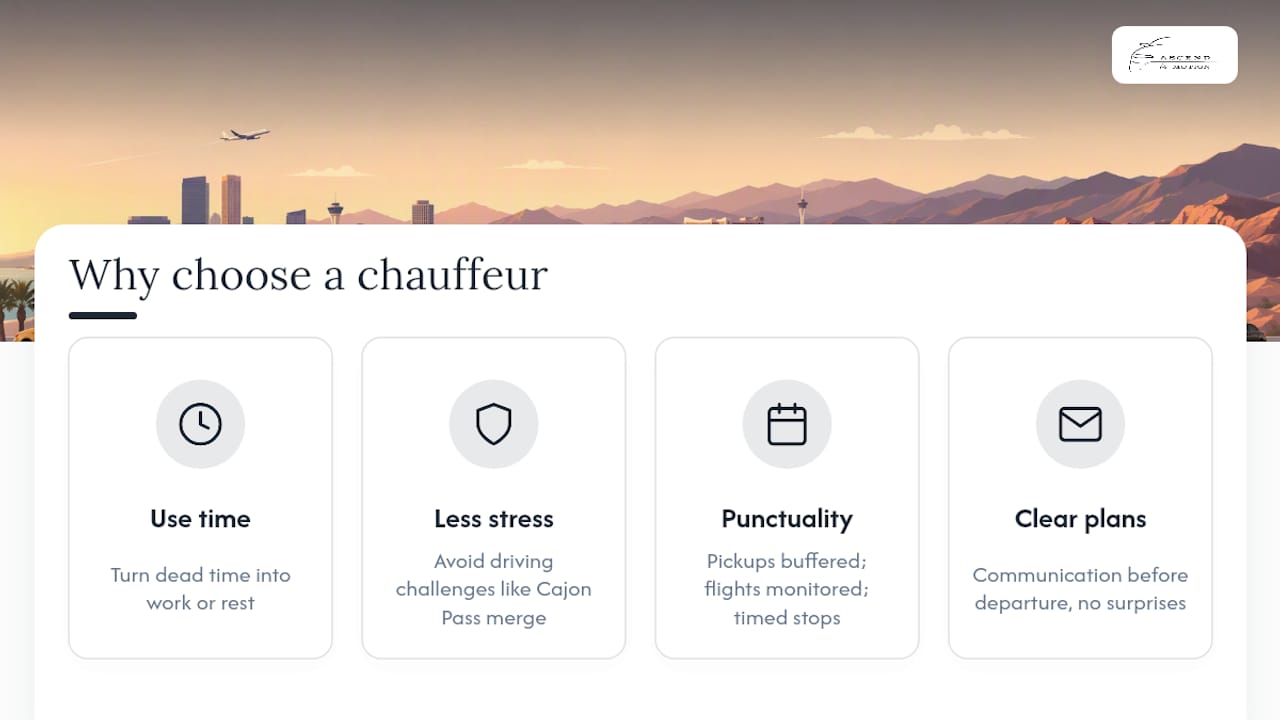
Most people underestimate how much a five-hour drive can wear you down until they’ve done it in the front seat versus the back. That’s the real case for a chauffeur on this route: it turns dead time into usable time, whether that means answering emails, closing your eyes, or just not thinking about the Cajon Pass merge for once.
Timing is treated as the whole job, not an afterthought. LAX pickup buffers are included, flights are monitored, and stops are timed to avoid adding unnecessary minutes to the trip. Clear communication before departure, not surprises on the road, is what makes the difference between a stressful transfer and a comfortable one.
— Sirus
Book a Chauffeur Transfer From LAX to Las Vegas
Skip the rental counter line, the unpredictable rideshare surge pricing, and the stress of watching your own mirrors for 270 miles. This service offers an alternative to piecing together your own trip: one flat rate, one driver familiar with this corridor, and a vehicle designed for a multi-hour ride instead of a short trip.

Alt text: Black Mercedes-Benz Sprinter chauffeur vehicle for LAX to Las Vegas transfers.
Bookings often include real-time flight monitoring, so pickups can adjust if flights run early or late, and some providers use flat-rate fares that do not change with traffic delays. For a straightforward comparison of what separates a scheduled ride from waiting on an app to match you with a stranger, see how LAX private car service works before you book. If you’re weighing a chauffeur against ride-share pricing for this specific run, our breakdown of private car service versus ride-share lays out the tradeoffs plainly. Ready to lock in your pickup window? Book your LA to Vegas car and get a flat-rate quote in minutes.
Sources
For live conditions before you leave, check Caltrans and I-15 traffic updates, and see driving-time estimates from TravelMath for route specifics. Travelers researching general long-distance private transfers may also find comparable planning guidance in private transfer services from other regions useful for reference.
- Vegas
- Driving time from LAX to Las Vegas, NV | TravelMath
- Traffic from Las Vegas to Los Angeles: how to keep updated on the I-15 | RGJ

