
TL;DR:
- Choosing a licensed private car service with verified drivers and proper permits ensures passenger safety during Los Angeles airport transfers.
- Rideshare and taxi pickups at LAX require traveling to the designated LAX-it lot, making permit compliance essential for legal and safe transit.
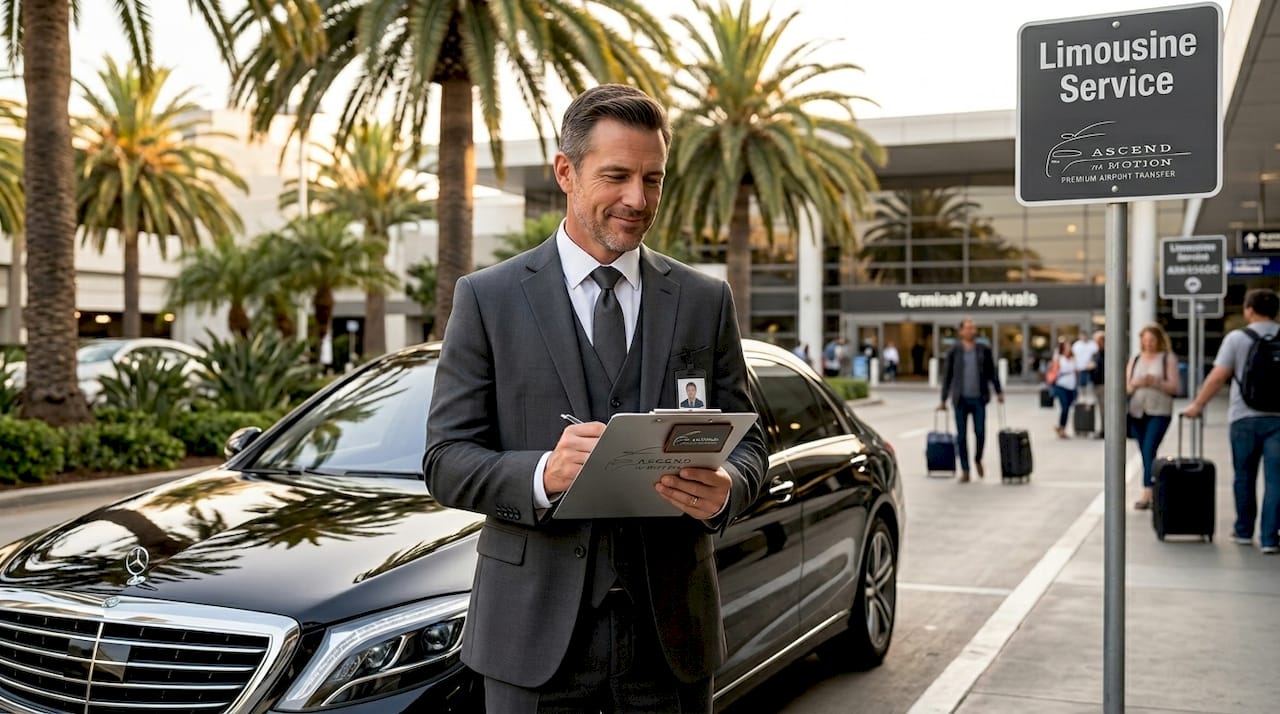
Choosing a safe car service means selecting a provider with verified drivers, inspected vehicles, and full compliance with California and LAX airport regulations. In Los Angeles, where transportation options range from licensed private chauffeurs to rideshare apps and street taxis, the differences in safety standards are significant. The wrong choice can leave you stranded at the wrong pickup zone, riding with an uninsured driver, or worse. This guide covers the credentials, vehicle standards, airport rules, and red flags you need to know before you book.
What safety credentials should you check when choosing a car service?
The industry term for what most travelers call a “safe car service” is licensed ground transportation, and the distinction matters. A licensed provider holds verifiable credentials: driver background checks, vehicle inspection records, commercial insurance, and operating permits.
In California, rideshare drivers undergo annual background checks and vehicle inspections every 12 months or 50,000 miles, regulated by the California Public Utilities Commission (CPUC). That sounds thorough, but CPUC standards for rideshare differ from the stricter requirements applied to commercial chauffeurs. Private chauffeur services must carry commercial auto insurance, hold a business license, and in many cases maintain a CPUC TCP (Transportation Charter Party) permit.
Here is what to verify before booking any service:
- Driver background check: Ask whether the provider uses a third-party screening service or relies solely on the platform’s internal check.
- Commercial insurance: Personal auto insurance does not cover passengers in a commercial context. Confirm the provider carries commercial liability coverage.
- Vehicle inspection records: Ask how often vehicles are inspected and whether records are available.
- LAX operating permit: For airport pickups, the provider must hold a valid LAX permit and display the required airport compliance decal.
- Online reviews and registries: Cross-reference the company on Google Reviews, Yelp, and the CPUC’s public TCP registry to confirm legitimacy.
Pro Tip: Search the CPUC’s online carrier database before booking a private car service. A legitimate TCP number takes under two minutes to verify and confirms the company is legally authorized to operate in California.
How do LAX pickup rules affect your choice of safe car service?
LAX has some of the most specific ground transportation rules of any major U.S. airport, and those rules directly affect which services are safe and legal to use.
Since late 2019, rideshare and taxi pickups at LAX terminals have been prohibited. Passengers must travel to the LAX-it lot, located east of Terminal 1, for all rideshare and taxi pickups. A $4.00 trip fee applies. This matters for safety because drivers who ignore this rule are operating illegally and expose you to citation risk and unreliable service.
Follow these steps to use LAX ground transportation safely:
- Confirm your service type before landing. Private car services with valid LAX permits can meet you at designated curbside zones. Rideshare and taxis cannot.
- Walk or take the shuttle to LAX-it. The lot is accessible by foot from Terminal 1 or via a free shuttle from other terminals.
- Never accept a pickup at the terminal curb from a rideshare driver. This is a violation, and unauthorized pickups risk LADOT citations ranging from $73 to $293.
- Verify your driver’s vehicle and plate before entering. Match the app details or confirmation email to the actual vehicle.
- Report any driver who pressures you to enter a vehicle quickly. Legitimate services do not rush passengers.
“LAX’s strict pickup zones mean travelers must know exact procedures to avoid unsafe or illegal pickups that can compromise safety.” — CityRuleLookup, 2026
In 2026, LAX increased trip fees and enforcement measures, making permit compliance more critical than ever. A provider that cannot confirm its LAX operating status is a provider you should not book.
What vehicle safety features should you expect from a reputable service?
The vehicle itself is as important as the driver. Modern safety features like airbags, electronic stability control, and lane-departure warnings significantly reduce passenger injury risk. Reputable services operate newer-model fleets precisely because these features are standard in vehicles manufactured after 2018.
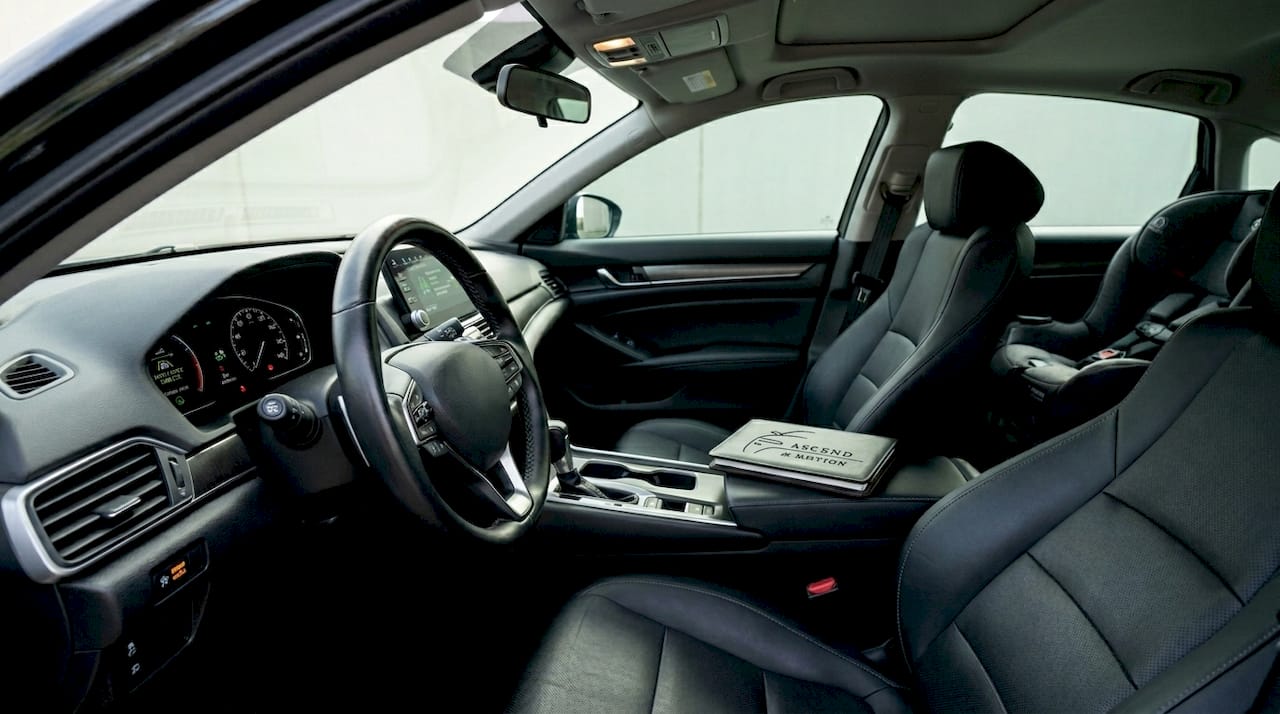
Below is a comparison of common fleet types and their typical safety profiles:
| Vehicle type | Safety features | Best for |
|---|---|---|
| Luxury black sedan | Full airbag suite, stability control, newer model year | Solo travelers, executives |
| Black minivan | Sliding door safety, high roof clearance, multiple airbags | Groups, families with luggage |
| Mercedes-Benz Sprinter | Commercial-grade build, reinforced frame, high visibility | Large groups, long-distance travel |
| Standard rideshare vehicle | Varies by driver’s personal vehicle age and condition | Short local trips |
Vehicle maintenance frequency is a reliable indicator of service quality. Ask how often the fleet is serviced and whether the company uses a dedicated maintenance provider. A reputable operator will answer without hesitation.

Pro Tip: If you are traveling with children, confirm child safety seat availability before booking. Not all services carry them, and California law requires appropriate restraints for children under 8 or under 4 feet 9 inches tall.
Private car service vs. rideshare and taxis: which is safest?
The safety gap between private car services and rideshare platforms is real and documented. Private car services have lower accident rates per mile than rideshare and taxis, based on NYC TLC data. That finding reflects a structural difference: private chauffeurs are screened and trained more rigorously than rideshare drivers, and they maintain clean driving records to keep their employment.
Here is how the three main options compare on key safety factors:
- Driver screening: Private chauffeur services conduct thorough background checks and require professional licensing. Rideshare platforms use CPUC-mandated annual checks. Taxis vary by city licensing authority.
- Vehicle standards: Private fleets are company-owned and maintained on a fixed schedule. Rideshare vehicles are driver-owned and inspected annually or at 50,000 miles. Taxi fleets vary widely.
- Insurance coverage: Private services carry commercial liability policies. Rideshare drivers carry personal insurance with a platform-provided layer that activates only during active trips.
- LAX compliance: Chauffeured operators must hold valid LAX operating permits and display airport decals. Rideshare and taxis operate under separate TNC rules with LAX-it lot restrictions.
- Pickup reliability: Private services confirm your booking in advance and track your flight. Rideshare availability at LAX-it can fluctuate based on surge demand.
The difference in driver oversight between private chauffeurs and rideshare drivers is the single most consistent safety advantage of booking a dedicated car service. For airport transfers, that advantage is compounded by the permit and staging compliance requirements at LAX.
For a detailed breakdown of LAX pickup zone differences, understanding which service type can legally meet you at the curb versus the LAX-it lot is worth reviewing before your next trip.
Practical tips for booking a safe car service in Los Angeles
Most safety failures in ground transportation come down to skipping verification steps that take less than five minutes. Here is what to do before every booking:
- Confirm the provider’s TCP permit number via the CPUC registry before paying.
- Use official booking platforms or direct provider websites. Third-party aggregators sometimes list services without verifying current permit status.
- Avoid services that offer unusually low fares without explanation. Unlicensed operators frequently undercut licensed providers because they carry no commercial insurance or permit costs.
- Beware of unofficial LAX pickup offers. Unauthorized services may appear legitimate but lack proper airport permits and insurance. Enforcement citations increasingly impact these operators.
- Check cancellation policies before booking. A reputable service offers clear cancellation terms. Vague or non-existent policies are a red flag.
- Confirm the driver’s name, vehicle make, model, and plate via your confirmation before the trip. Do not enter any vehicle that does not match.
Pro Tip: Book your airport car service at least 24 hours in advance. Last-minute bookings with unverified providers are the most common source of LAX pickup problems. A confirmed reservation with a licensed provider eliminates the scramble.
For more guidance on selecting airport transportation in Los Angeles, reviewing the specific criteria for LAX-compliant services helps narrow your options quickly.
Key takeaways
Choosing a safe car service in Los Angeles requires verifying driver credentials, vehicle standards, and LAX permit compliance before every booking.
| Point | Details |
|---|---|
| Verify credentials first | Confirm TCP permit, commercial insurance, and background check policy before booking. |
| Know LAX pickup rules | Rideshare and taxis must use the LAX-it lot; private services with permits can use curbside zones. |
| Private services lead on safety | Private chauffeurs have lower accident rates and stricter screening than rideshare drivers. |
| Vehicle condition matters | Newer-model fleets with airbags and stability control reduce passenger injury risk significantly. |
| Avoid unverified low-fare services | Unlicensed operators skip commercial insurance and airport permits, creating real legal and safety risk. |
What I’ve learned from years of watching LA travelers get this wrong
Most travelers treat ground transportation as an afterthought. They spend hours researching hotels and flights, then book the first car service that appears in a search result. That approach works until it doesn’t, and at LAX, it fails in very specific and predictable ways.
The most common mistake I see is confusing a low price with a good deal. An unlicensed operator who charges $10 less than a permitted service is not saving you money. That operator has no commercial insurance, no LAX decal, and no accountability if something goes wrong. The savings disappear the moment you are left waiting at the wrong pickup zone or, worse, involved in an incident with no coverage.
The second mistake is assuming that a recognizable app name guarantees safety. CPUC regulations for rideshare are real, but they set a floor, not a ceiling. Annual background checks and 50,000-mile vehicle inspections are the minimum. Private chauffeur services that maintain their own fleets and screen drivers continuously operate well above that floor.
My honest recommendation: for LAX transfers and any trip where timing and accountability matter, book a licensed private car service with a confirmed LAX permit. Verify the TCP number. Confirm the vehicle details. Then travel without thinking about it again. That is what a genuinely safe car service delivers.
— Sirus
Travel confidently with Ascendinmotion
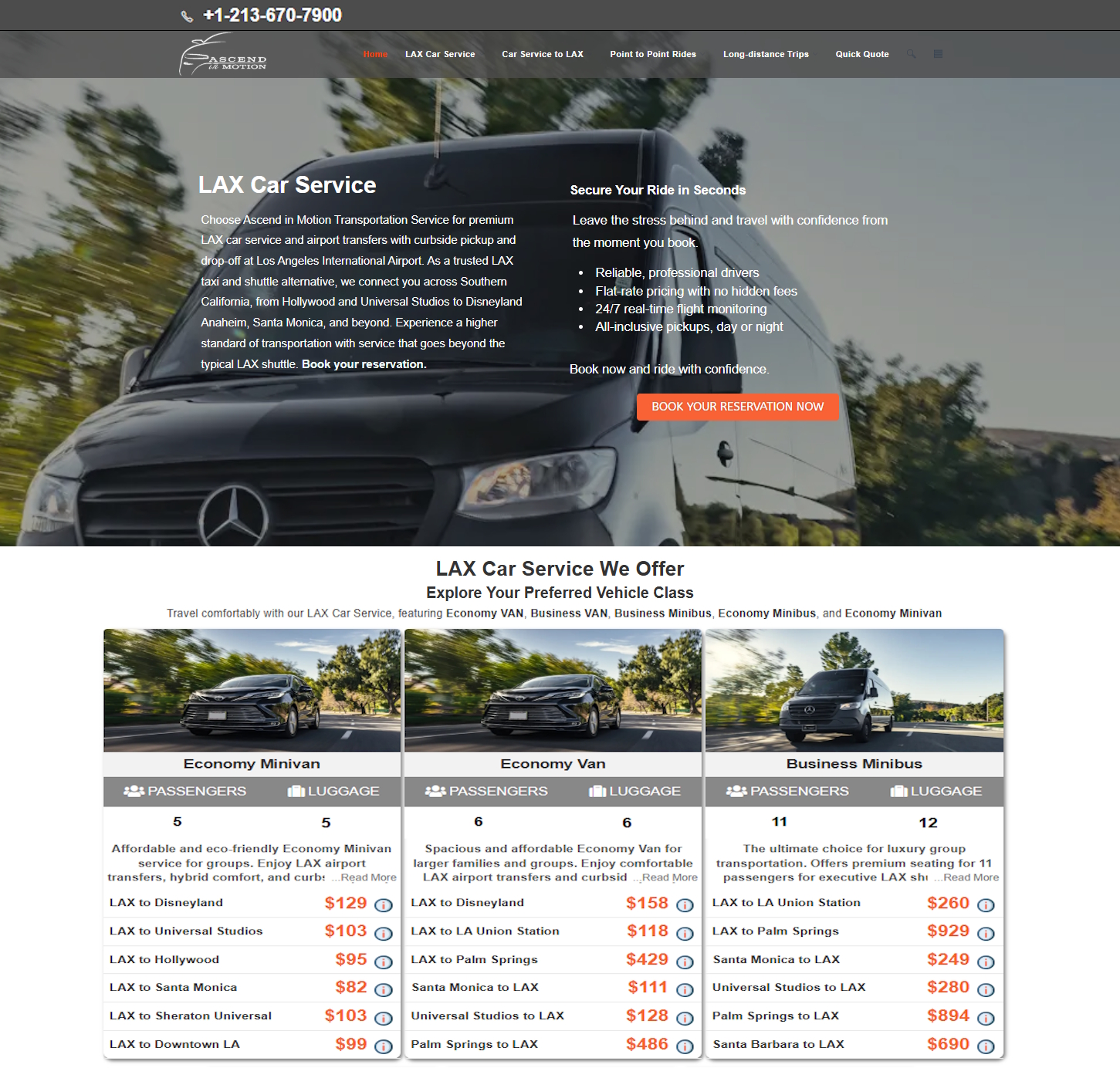
Ascendinmotion is a fully licensed Los Angeles car service operating black minivans and Mercedes-Benz Sprinters for LAX airport transfers, long-distance travel, and local trips across Southern California. Every driver holds a valid chauffeur license, passes a thorough background check, and operates under Ascendinmotion’s commercial insurance policy. The fleet meets LAX permit and decal requirements, so your pickup is legal, confirmed, and on time. Transparent pricing and direct booking mean no surprises at checkout. Whether you are heading to LAX, Disneyland, Hollywood, or Las Vegas, Ascendinmotion delivers the safety and legal compliance that licensed ground transportation requires. Book directly at ascendinmotion.com and travel with a provider that has done the verification work for you.
FAQ
What credentials should a safe car service have in California?
A safe car service in California must hold a CPUC TCP permit, carry commercial auto insurance, and conduct driver background checks. For LAX airport pickups, the provider also needs a valid LAX operating permit and airport compliance decal.
Can rideshare apps pick me up at LAX terminals?
No. Since late 2019, rideshare and taxi pickups at LAX terminals are prohibited. All rideshare and taxi pickups require passengers to travel to the LAX-it lot east of Terminal 1, where a $4.00 trip fee applies.
Is a private car service safer than Uber or Lyft for airport transfers?
Private car services have lower accident rates per mile than rideshare platforms, based on NYC TLC data. Private chauffeurs also face stricter screening requirements and maintain clean driving records as a condition of employment.
How do I verify a car service is legitimate before booking?
Search the CPUC’s online TCP carrier database using the company’s permit number. Also check Google Reviews, Yelp, and confirm the provider’s LAX operating permit status directly with the company before paying.
What are the signs of an untrustworthy car service?
Key red flags include unusually low fares with no explanation, inability to provide a TCP permit number, no clear cancellation policy, and drivers who offer pickups at LAX terminal curbs instead of the designated LAX-it lot.
