
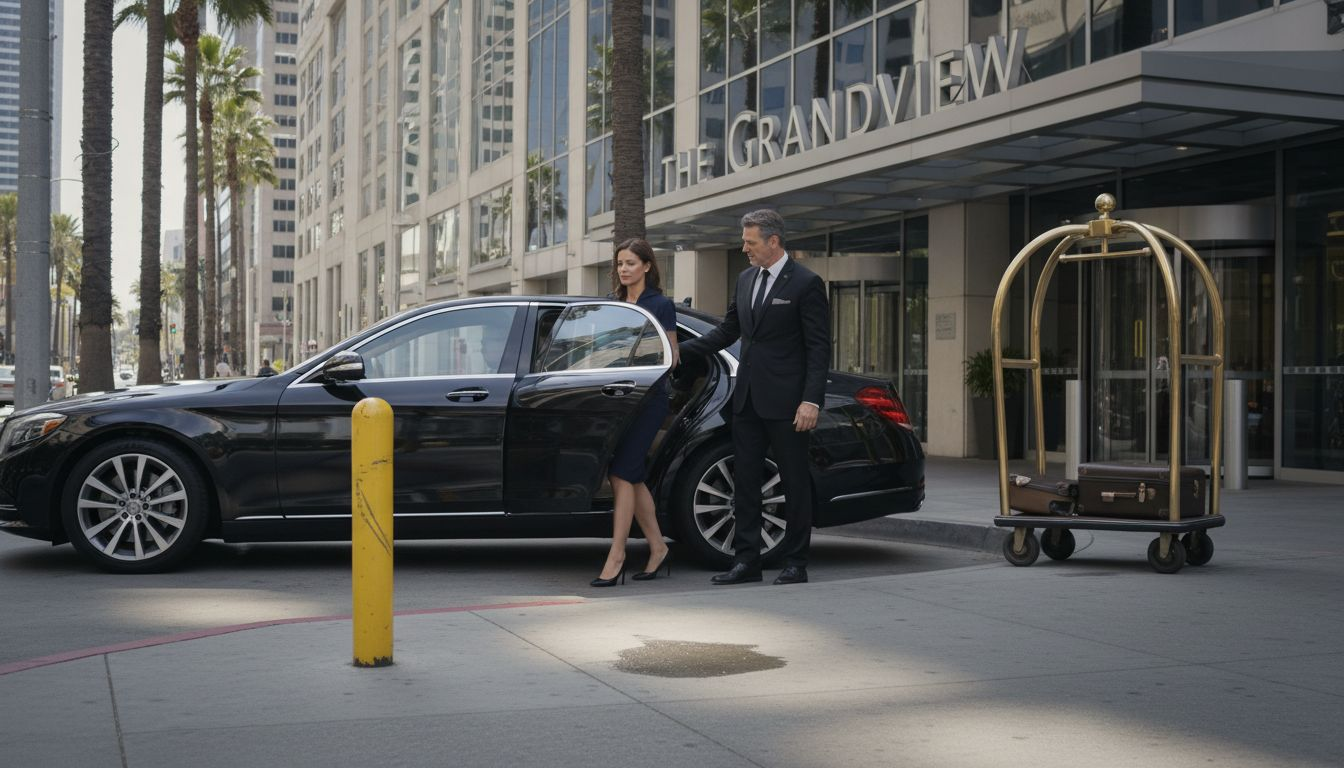
Arriving at Los Angeles International Airport sets the tone for your entire Southern California visit, especially when every detail counts. For discerning business travelers seeking more than simple transportation, California’s strict car service regulations ensure your chosen chauffeur service meets high standards for safety, licensing, and professionalism. This guide helps you navigate the legal definitions, premium options, and booking strategies that safeguard your comfort and reputation while traveling from LAX.
Table of Contents
- Defining Car Service In California
- Premium Variations And Travel Use Cases
- Licensing And Chauffeur Qualifications
- Insurance Coverage And Safety Standards
- Costs, Risks, And Booking Strategies
- Legal Updates Impacting Chauffeur Services
Key Takeaways
| Point | Details |
|---|---|
| Regulatory Framework | California mandates strict compliance with licensing, safety, and operational standards for car services distinct from most states. |
| Luxury Vehicle Options | Business travelers at LAX can choose from various premium services tailored to specific travel scenarios, enhancing their professional image. |
| Chauffeur Qualifications | All chauffeurs must meet stringent state licensing and safety requirements, providing peace of mind regarding passenger safety. |
| Strategic Booking | Establishing a relationship with a reliable service provider fosters better rates and ensures availability for repeat trips in Southern California. |
Defining car service in California
Car service in California encompasses far more than just maintenance and repairs. The state has created a comprehensive regulatory framework that defines what constitutes legal car service, who can provide it, and what standards they must follow. Understanding these definitions matters because California’s approach is stricter than most states, and it directly affects how services like chauffeured transportation operate within the Golden State.
At its core, car service in California must comply with the Business and Professions Code, Vehicle Code requirements, and specific operational standards set by regulatory bodies. The Bureau of Automotive Repair oversees traditional repair and maintenance services, ensuring that any facility offering these services maintains proper licensing and adheres to consumer protection standards. But car service extends beyond repair shops. Commercial transportation services, including luxury chauffeured options, operate under different regulations defined by the California Code of Regulations Title 13, which establishes vehicle definitions and operational requirements for both private and commercial fleets. These regulations specify which vehicles qualify for commercial operation, what licensing entities need, and how service providers must maintain their operations.
For business travelers arriving at LAX, this regulatory distinction matters significantly. When you book a premium chauffeured service, you are engaging with a provider that operates under commercial fleet regulations, not just repair shop standards. The vehicle itself must meet specific operational requirements, the driver must hold appropriate licensing, and the service provider must maintain compliance with safety and insurance standards. This multi-layered definition of car service ensures consumer protection while allowing legitimate businesses to operate across California’s diverse transportation landscape.
Here’s how California car service regulations differ for traditional repairs and commercial transportation:
| Service Type | Licensing Authority | Vehicle Requirements | Who Oversees Compliance |
|---|---|---|---|
| Repair & Maintenance | Bureau of Automotive Repair | Must meet shop standards | State-licensed repair facilities |
| Commercial Chauffeured | CPUC & DMV | Commercial grade status | Fleet operators with TCP authority |
Pro tip: When selecting a car service in California, verify that the provider holds proper commercial licensing and operates vehicles registered under commercial fleet regulations, not personal vehicle classifications.
Premium variations and travel use cases
Not all car services are created equal, and California’s luxury market reflects this reality. Business travelers landing at LAX have access to an array of premium transportation options tailored to specific travel scenarios. The vehicle you choose depends entirely on your situation, the impression you want to make, and the level of comfort you need for your journey.
Luxury sedans work best for executive travel and one-on-one business meetings. These sleek vehicles project professionalism while offering privacy for important calls or last-minute meeting prep. Full-size SUVs provide additional space for small groups and accommodate luggage without cramping passengers. Limousines suit special occasions like corporate galas, client entertainment, or milestone celebrations where the experience itself becomes part of the event. Beyond vehicle type, luxury car services cater to various premium travel use cases including weddings, corporate retreats, large group transportation, and executive travel. Each scenario demands different amenities: a wine tour through Napa requires climate control and knowledge of regional routes, while an airport transfer prioritizes punctuality and seamless coordination with your flight schedule.
For business travelers, the choice often hinges on your specific need. Corporate events demand vehicles that make a statement. Client pickups from LAX benefit from sedans that blend comfort with understated elegance. Multi-day conferences or regional travel across Southern California might call for an SUV offering flexibility and space. The key insight here is understanding how your transportation choice reinforces your professional image and supports your actual travel requirements.
This summary shows typical premium car service types and their ideal business use case:
| Vehicle Type | Best Use Scenario | Key Benefit | Typical Client |
|---|---|---|---|
| Luxury Sedan | Executive travel, meetings | Privacy, professionalism | Business traveler |
| Full-Size SUV | Small group transport, conferences | Space, flexibility | Executive teams |
| Limousine | Special events, entertainment | Experience, statement | VIP, corporate guests |
Matching vehicle type to your itinerary
Consider the duration of your stay when selecting a vehicle. Quick airport transfers work fine with standard luxury sedans. Extended stays involving multiple destinations benefit from larger vehicles that provide comfort during longer driving periods. Ground transportation for conference attendees across Los Angeles, Disneyland, or Universal Studios often requires vehicles accommodating different group sizes throughout your visit.
Pro tip: Book your vehicle based on your complete itinerary, not just your arrival time, since vehicle size and amenities should align with how you’ll actually use the service throughout your stay.
Licensing and chauffeur qualifications
California doesn’t let just anyone operate a chauffeur service. The state maintains strict licensing requirements designed to protect passengers and ensure professional standards across the industry. When you book premium transportation, you’re engaging with a driver and service provider that have passed multiple regulatory hurdles. Understanding these qualifications gives you confidence that safety and professionalism aren’t just promises but legal requirements.

Operating a chauffeur service in California requires obtaining Charter-Party Carrier (TCP) authority from the California Public Utilities Commission (CPUC). This isn’t a simple registration. The process involves submitting detailed operational plans, proof of insurance, and demonstrating compliance with safety standards. Beyond the business licensing, individual chauffeurs must meet specific personal qualifications. Every driver must hold a valid California driver’s license, but that’s just the baseline. Chauffeurs must pass background checks, comply with strict drug and alcohol policies, and maintain current commercial vehicle certifications. The CPUC doesn’t issue TCP authority lightly because these regulations directly impact passenger safety.
The California DMV plays a complementary role through occupational licensing oversight for vehicle industry businesses including chauffeur services. This means your service provider must navigate both CPUC and DMV requirements simultaneously. Vehicle registration must be commercial grade, not personal. Insurance requirements exceed standard auto policies. Regular safety inspections are mandatory. For business travelers, this layered approach translates to accountability. Your chauffeur has been vetted by background check. The vehicle has been inspected by California authorities. The service provider maintains active TCP authority demonstrating ongoing compliance with safety regulations.
What this means for your booking
When selecting a chauffeur service, verify that the company openly displays its licensing credentials. Legitimate operators proudly reference their CPUC authority and current certifications. Ask about driver training and qualifications during booking. A professional service welcomes these questions because transparency demonstrates they have nothing to hide.
Pro tip: Request confirmation of your chauffeur service’s TCP authority number and verify it directly with the CPUC before booking, ensuring you’re working with a fully licensed and compliant provider.
Insurance coverage and safety standards
Insurance isn’t just a legal checkbox for California chauffeur services. It’s the financial safety net that protects you if anything goes wrong. When you book premium transportation, you need to know that the vehicle and driver are properly insured and that the service provider takes safety seriously. The difference between adequate coverage and insufficient coverage can mean thousands of dollars in personal liability if an accident occurs.
California law requires minimum auto liability insurance coverage of $30,000 per person and $60,000 per accident for bodily injury, plus $15,000 for property damage. But here’s the critical distinction: these minimums apply to personal vehicles. Commercial chauffeur services must carry significantly higher coverage limits because they operate for hire. A luxury sedan transporting business executives carries different liability exposure than a personal commuter vehicle. Professional chauffeur services typically maintain $1 million or higher in liability coverage to protect both passengers and their own operations. This elevated coverage demonstrates that the service provider understands the responsibility of transporting affluent clients and has invested in comprehensive financial protection.
Beyond liability insurance, the California Department of Insurance enforces additional safety requirements. Vehicles used for hire must have commercial insurance policies meeting strict state minimums and undergo regular safety inspections. These aren’t occasional inspections. Professional chauffeur services maintain ongoing maintenance schedules ensuring that brakes, tires, lighting, and mechanical systems meet California safety standards. When you arrive at LAX exhausted from your flight, you’re trusting that the driver who picks you up operates a vehicle that passed current safety inspections and is covered by comprehensive commercial insurance.
What protection actually means for you
Proper insurance and safety standards translate into peace of mind. If your service vehicle is involved in any incident, the commercial insurance covers liability. Regular safety inspections mean mechanical failure becomes virtually impossible. These standards exist because California recognizes that passenger safety is non-negotiable.
Pro tip: Before confirming your booking, request proof of current commercial insurance and ask when the vehicle last completed its California safety inspection to verify the service meets all regulatory requirements.
Costs, risks, and booking strategies
Premium car services in California come with a price tag that reflects their value. Understanding what you’ll pay, what risks exist, and how to book strategically separates savvy business travelers from those who overspend or encounter service failures. The cost of luxury transportation isn’t arbitrary. Professional operators factor in licensing expenses, commercial insurance premiums, vehicle maintenance, and driver compensation to determine pricing. When you see variation in rates across different services, you’re often seeing the difference between companies cutting corners and those maintaining genuine safety and quality standards.
Costs vary significantly based on vehicle type, distance, time of day, and advance booking. A luxury sedan from LAX to downtown Los Angeles typically costs between $85 and $150 depending on traffic conditions and surge pricing. Full-size SUVs command higher rates, sometimes exceeding $200 for the same route. Limousines for special events can range from $150 to $350 per hour depending on amenities and availability. The key insight here is that effective booking management and pricing strategies often include advance booking discounts, loyalty programs, and off-peak pricing that can reduce your costs by 20 to 35 percent. Booking 24 to 48 hours in advance typically unlocks better rates than same-day requests, which trigger dynamic pricing increases during peak travel times.

Risks extend beyond cost. Service cancellations, late arrivals, or driver unavailability can derail your plans. Mitigate these risks by booking with established operators that maintain real-time vehicle tracking and communicate proactively. Confirm your reservation 24 hours before travel. Provide accurate pickup location details and contact information. Request driver contact information at least 30 minutes before your appointment. Additionally, understand the cancellation policy before booking. Reputable services allow free cancellation up to 2 hours before pickup, protecting you if your plans change unexpectedly.
Strategic booking for business travelers
Business travelers benefit from establishing a relationship with one reliable service rather than constantly switching providers. Many services offer corporate accounts with preferential pricing, dedicated driver assignments, and simplified billing that integrates with your expense reports. When traveling repeatedly to Southern California, this consistency eliminates the uncertainty of finding quality transportation each trip.
Pro tip: Book your return transportation immediately after confirming your arrival, locking in rates before peak demand periods, and ensuring driver availability for your actual departure time rather than relying on last-minute booking.
Legal updates impacting chauffeur services
California’s legal landscape shifts constantly, and chauffeur services must adapt to remain compliant. Recent 2025 employment law changes directly affect how transportation companies operate, how they treat drivers, and ultimately what you experience as a passenger. Understanding these updates matters because they reflect California’s commitment to worker protections and can influence service quality, driver retention, and pricing. When booking premium transportation, you’re engaging with services navigating an increasingly complex regulatory environment.
One significant shift involves employment classification and licensing requirements. Recent California labor law updates restrict employers from requiring driver’s licenses unless driving is genuinely central to the job function. For chauffeur services, this seems straightforward since driving is the core function. However, the broader implication addresses worker classification, which ties directly to wages, benefits, and working conditions. Additionally, new regulations expanded protections for crime victims and modified wage requirements affecting transportation employees. These changes mean that reputable chauffeur services invest more in compliance infrastructure, driver benefits, and training programs. This investment ultimately translates to more professional, better trained, and more stable driver pools.
Another critical update involves restrictions on mandatory employer meetings about political or religious matters. While this might seem removed from transportation services, it reflects California’s evolving approach to employee rights and autonomy. For business travelers, this underscores that modern chauffeur services operate under heightened scrutiny regarding employment practices. Services that maintain transparency about their hiring practices, driver treatment, and compliance investments demonstrate they’re serious about ethical operations. When you book with a service that publicly discusses their commitment to driver welfare and legal compliance, you’re supporting operations that prioritize both passenger safety and worker dignity.
These legal updates create operational costs for service providers. Compliance training, updated payroll systems, and enhanced documentation requirements all increase expenses. However, quality operators absorb these costs rather than cutting corners on service quality or driver compensation.
Pro tip: Choose chauffeur services that openly discuss their compliance practices and driver treatment policies, as transparency in these areas indicates a service committed to legal operation and quality standards.
Experience California Car Service That Meets Every Luxury and Safety Standard
Navigating California’s complex car service regulations can be overwhelming, especially when you need reliable, chauffeur-driven transportation that prioritizes your safety and professionalism. The article highlights challenges such as verifying commercial licensing, matching vehicle types to your itinerary, and ensuring superior insurance coverage for peace of mind. At Ascend in Motion, we understand these critical demands. Our premium Los Angeles car service is fully licensed under California’s stringent regulations, with chauffeurs who meet all background and safety qualifications. Whether you need a luxury sedan for business meetings or an SUV for group travel to top destinations, we have options tailored to your unique needs.

Don’t settle for less when your safety and comfort are at stake. Book your next ride with Ascend in Motion to enjoy seamless LAX airport transfers, expert chauffeur service, and transparent licensing and insurance standards, all designed around California’s rigorous legal framework. Explore our offerings and secure your luxury travel experience today at Ascend in Motion. Your professional image and peace of mind deserve nothing less.
Frequently Asked Questions
What are the licensing requirements for car services in California?
California requires car service providers to obtain Charter-Party Carrier (TCP) authority from the California Public Utilities Commission (CPUC) and comply with various regulations set forth by the DMV. This ensures a professional standard of safety and service.
How does insurance coverage differ between personal and commercial vehicles for chauffeur services?
Commercial chauffeur services must carry significantly higher insurance coverage than personal vehicles, typically maintaining $1 million or more in liability coverage to protect both passengers and their operations due to the increased risk associated with transporting clients for hire.
What types of vehicles are commonly used for premium car services?
Premium car services offer a variety of vehicles including luxury sedans for executive travel, full-size SUVs for small group transport, and limousines for special events. Each vehicle type is suited to different travel scenarios and passenger needs.
How can I ensure the safety of my chauffeur service?
To ensure safety, verify that your chauffeur service displays its licensing credentials, inquire about the driver’s qualifications and training, and request proof of current commercial insurance and recent safety inspections before booking.
