

Shuttle drivers get flat cash instead: $1–$2 per bag or $2–$5 per person. For short rides under 20 minutes, $5–$10 covers you even if the percentage math comes out lower.
TL;DR:
- Tipping 15–20% of the fare is standard for chauffeur and luxury car services in the U.S., with higher tips for attentive and lengthy service.
- For airport shuttles, $2–$5 per person or $1–$2 per bag is customary, depending on luggage handling and volume.
- Cash tips are most direct, as they reach the driver immediately, whereas card tips may be pooled or split before payout.
- Extra tipping is appropriate for heavy luggage, long waits, multi-stop trips, and adverse conditions like bad weather or last-minute bookings.
- When in doubt, a tip between $5 and $20 based on the service context is appropriate, and always confirm gratuity policies beforehand.
Table of Contents
- Car Service Tipping Quick Reference by Ride Type
- How to Calculate the Tip for Each Type of Car Service
- When to Tip Above the Standard Range
- Cash or Card: Which Tipping Method Actually Reaches the Driver
- Corporate-Booked Rides: Do You Still Need to Tip?
- Regional and International Tipping Norms
- Real Tipping Math for Four Common Scenarios
- When and How to Hand the Tip Over
- Ascend in Motion’s Notes on Gratuity and Service Transparency
- What to Do When the Service Falls Short
- Times When You Don’t Need to Tip at All
- Misconceptions That Trip Up Even Experienced Travelers
- A Practical Note on Being a Considerate Passenger
- Book a Car Service That’s Upfront About Gratuity
- Sources
Car Service Tipping Quick Reference by Ride Type
Different vehicles call for different math, so here’s the breakdown before you get in the car.
- Chauffeur, black-car, or limo service: 15–20% of the base fare, with 20% common for attentive, professional service.
- Airport shuttles: $2–$5 per person, or $1–$2 per bag if the driver handles a lot of luggage.
- Short point-to-point trips (under 20 minutes): a $5–$10 minimum, even if 15% of the fare would technically be less.
- Any booking with a service charge or gratuity line already listed: confirm before adding anything extra, since double-tipping is one of the most common mistakes travelers make on corporate and event bookings.
Once you know which category your ride falls into, you can calculate the tip quickly.
How to Calculate the Tip for Each Type of Car Service
Base your tip on the fare itself, not the total invoice. Tolls, airport fees, and surcharges are pass-through costs, not driver compensation, so leave them out of the math unless local custom says otherwise.
- Airport transfer with meet-and-greet service: Use the higher end of the range, 18–20%, since the driver is tracking your flight, waiting inside, and handling bags. On a $200 fare, that’s $36 to $40.
- Curbside pickup with no meet-and-greet: 15% is reasonable if the ride itself was smooth and required no extra coordination.
- Hourly or all-day bookings: Tip on the full daily total, not each individual leg. A long day with multiple stops or a demanding schedule justifies leaning toward 20%.
- Event or wedding transportation: Check for a built-in gratuity first. If none exists, 15–20% of the package price is standard, and a flat bonus of $20–$50 is appropriate when the driver went well beyond the basics.
- Long-distance trips: Calculate the tip on the trip fare before tolls, and consider the driver’s total time investment, not just mileage.
When to Tip Above the Standard Range
Some situations call for more than the baseline percentage, and drivers notice when passengers recognize the difference. For travelers coordinating a destination golf trip, knowing how to request local guidance can help improve your service experience and etiquette, as explained in local golf tips for Costa del Sol trips.
- Heavy or awkward luggage: add $1–$2 per bag, or a flat $5–$20 if you’re bringing golf clubs, ski equipment, or multiple oversized items.
- Waiting time beyond what was booked: tack on $5–$20 depending on how long the driver sat, especially if flight delays or meeting overruns extended the wait.
- Multi-stop or multi-hour itineraries: move toward 20% or slightly above, since coordinating several stops takes more skill than a single point-to-point run.
- Holidays, severe weather, or last-minute bookings: a little extra acknowledges the driver worked under tougher conditions than usual.
Pro Tip: Keep a stash of small bills in your travel bag before any trip involving a car service. Scrambling for cash at the curb is the single most common reason travelers underpay drivers who deserve more.
Cash or Card: Which Tipping Method Actually Reaches the Driver
Cash remains the most direct way to tip because it reaches the driver immediately and in full, with no processing delay or company policy standing between your gratitude and their pocket. Card and app tips are convenient, particularly when you didn’t plan ahead, but some companies pool or split those tips before they reach the driver.
- If you’re tipping through an app or card charge, ask the company directly whether 100% of that amount goes to the driver.
- If cash isn’t available at pickup, leave a clear card tip and consider a small cash bonus at drop-off if the service exceeded expectations.
- A simple question works fine here: “Does the gratuity on this booking go straight to my driver, or is it pooled?”
- When in doubt, a hybrid approach, mostly card with a few dollars in cash, covers both convenience and certainty.
Corporate-Booked Rides: Do You Still Need to Tip?
When a company, client, or event organizer books and pays for your ride, the etiquette shifts slightly. Start by checking the booking confirmation, since corporate and event bookings frequently include gratuity as a line item already folded into the total.
- If gratuity is included, you don’t need to add anything else unless the driver went out of their way for you personally.
- If the company paid but no gratuity is listed, and the driver helped with bags or waited through a delay, a modest personal cash tip of $5–$10 is a thoughtful gesture.
- For expense reporting, document any tip you pay out of pocket according to your company’s reimbursement policy, and keep the receipt if one is provided.
- When you’re unsure, ask the event organizer or the car service’s booking contact directly rather than guessing.
Regional and International Tipping Norms
Tipping culture for chauffeured transportation shifts noticeably once you cross state or national borders, so a quick gut check before your trip prevents an awkward moment at the curb.
- United States: 15–20% is standard for chauffeur and black-car services nationwide, though New York City often runs closer to 18–20% given the market’s cost of living and service expectations.
- Europe: Many countries build service into the quoted price, so a smaller top-up of 5–10% is typical when gratuity isn’t already included.
- Asia, the Middle East, and Africa: customs vary widely by country, and in some cultures tipping can even feel unnecessary or mildly awkward.
- When traveling internationally: confirm expectations with the booking company or your hotel concierge rather than assuming your home country’s norms apply.
Real Tipping Math for Four Common Scenarios
Numbers make this easier than percentages alone, so here’s how the calculation plays out across the rides travelers book most.
- Short 15-minute point-to-point ride, $45 fare: 15% comes to $6.75, but since that’s below the practical floor, round up to the $5–$10 minimum and hand over $10.
- Four-hour hourly booking at $85/hour ($340 total): 15–20% lands between $51 and $68, tipped once on the full total rather than per hour.
Industry guides converge on the same core figure: 15–20% is the accepted standard across chauffeur, limo, and black-car bookings in the U.S., which makes it a safe default whenever you’re unsure.
When and How to Hand the Tip Over
The end of the ride, while you’re thanking the driver, is the natural moment to hand over cash. A folded bill placed directly in hand with a brief “thank you, this is for you” is clear and avoids any confusion about what the gesture means.
- If you’re tipping by card, confirm beforehand that the amount reaches the driver directly rather than getting pooled.
- If you’d rather not deal with cash at all, ask whether the company allows you to add a tip through their app or a follow-up invoice after the ride.
- Avoid leaving cash on a seat or console without saying anything. It can go unnoticed or feel impersonal compared to a direct handoff.
Ascend in Motion’s Notes on Gratuity and Service Transparency
Premium providers handle gratuity differently than rideshare apps, and knowing a company’s policy before booking removes most of the guesswork.
- Ascend in Motion publishes flat-rate pricing upfront, so travelers know exactly what’s covered before gratuity even enters the conversation, a structure explained further in the private car service guide.
- Luggage handling and meet-and-greet service at LAX are built into the standard booking, not billed as extras, which is worth knowing when you’re calculating whether additional tipping is warranted.
- For travelers who want a deeper breakdown of etiquette expectations, including how to handle group trips and multi-stop itineraries, the luxury car service etiquette guide covers scenarios beyond the basics.
- Chauffeurs in this tier of service, as outlined in the professional chauffeur qualities guide, are trained to manage flight delays and schedule changes without extra fees, which is exactly the kind of effort that earns a tip on the higher end of the range.
What to Do When the Service Falls Short
A late driver, a rude tone, or a car that wasn’t as clean as expected changes the tipping math, but it doesn’t mean you skip gratuity entirely unless the problem was severe.
Reserve a $0 tip for genuinely serious problems: unsafe driving, a canceled pickup with no notice, or outright rudeness that affected your trip.
Before you dock the tip heavily, though, separate what’s actually the driver’s fault from what isn’t. Traffic delays, weather, and airport congestion are outside anyone’s control, and penalizing a driver for circumstances they couldn’t manage isn’t fair. If the car itself was dirty or didn’t match what you booked, that’s often a dispatch or company issue rather than the driver’s doing.
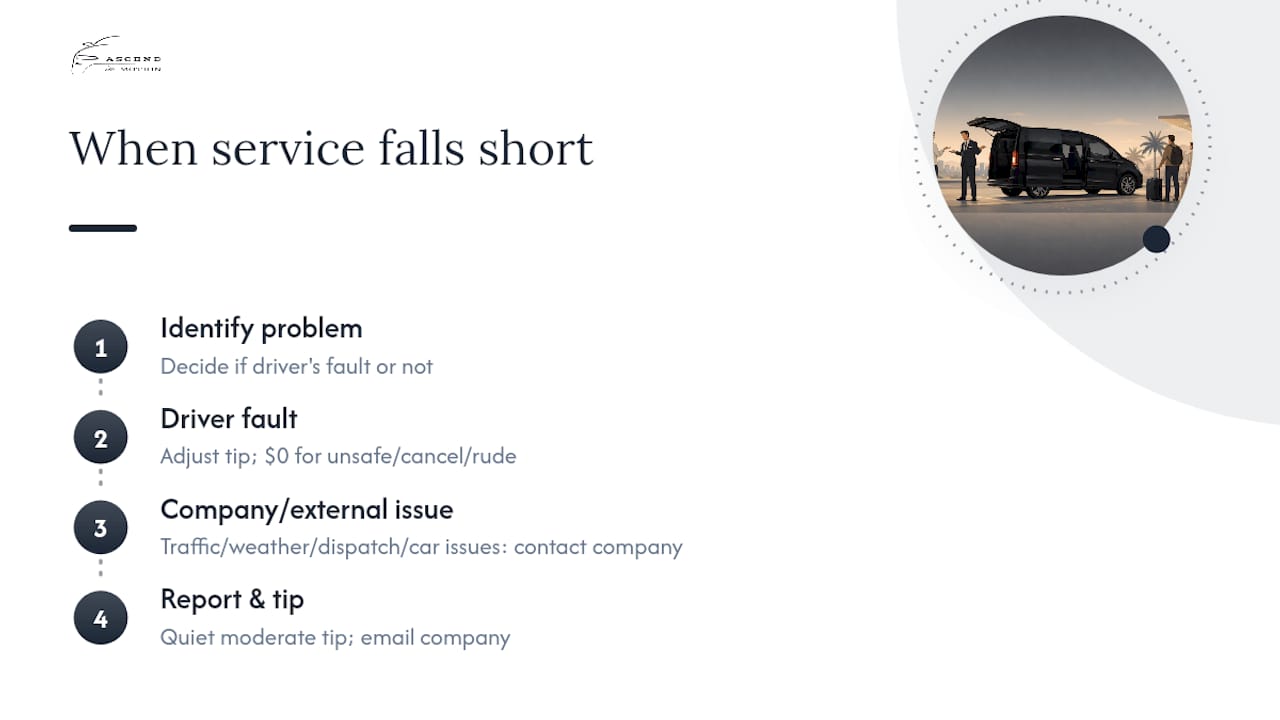
The better move for a real service failure is to address it directly with the company afterward rather than relying on the tip alone to communicate the problem. Most reputable car services, including corporate and premium providers, take service complaints seriously and will follow up. A quiet, moderate tip plus a direct email explaining what went wrong gets you further than an angry $0 tip that the company never hears about.
Times When You Don’t Need to Tip at All
Tipping isn’t universal across every situation involving a car, and knowing where the line falls prevents both awkward over-tipping and needless guilt.
Adding more on top isn’t expected, though it’s a nice gesture for standout service. This is one of the most common points of confusion, since many riders don’t realize gratuity lines are already baked into event and corporate pricing.
Rides booked entirely through a third party, where you never see or handle the payment, sometimes fall outside standard tipping etiquette too, particularly when the organizer confirms gratuity was handled on their end. Always ask rather than assume.
It’s also worth remembering that “car service” as a category doesn’t include every car-related interaction. Mechanics and dealership service advisors typically aren’t tipped, unlike chauffeurs and limo drivers, since it’s a completely different kind of service relationship. If you’re ever unsure whether a specific booking includes gratuity, a quick call to the company clears it up faster than guessing.
Misconceptions That Trip Up Even Experienced Travelers
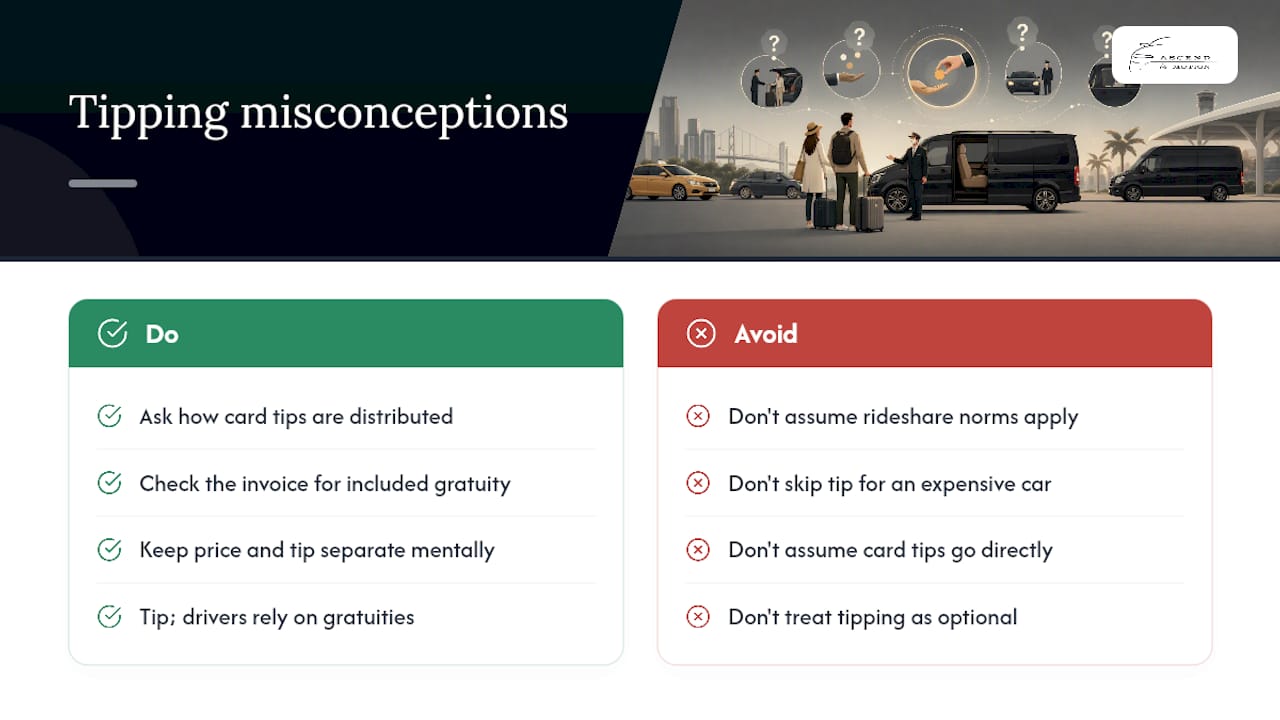
A few myths about car service tipping persist despite being flatly wrong, and clearing them up saves both money and awkward moments.
“Rideshare tipping norms apply to chauffeur services.” They don’t.
“If I already paid a lot for the service, I don’t need to tip.” Price and gratuity are separate line items in almost every case. A high-end vehicle doesn’t automatically include the driver’s tip unless the invoice explicitly says so.
“Card tips always go straight to the driver.” Not necessarily. Some companies pool or split card gratuities differently than cash, which is exactly why asking about distribution policy matters before you assume your tip landed where you intended.
“Tipping is only about the ride itself.” In reality, professional drivers are often compensated through a mix of base pay and gratuity, similar to other service roles, which is part of why tips remain a meaningful part of total earnings in this field. Treating the tip as optional ignores how the compensation structure actually works.
A Practical Note on Being a Considerate Passenger
Fair tipping isn’t complicated once you know which category your ride falls into. Keep a few small bills on hand before any trip, glance at the booking confirmation, and you’ll rarely second-guess yourself at the curb again.
— Sirus
Book a Car Service That’s Upfront About Gratuity
Ascend in Motion is the alternative to guessing whether gratuity is buried somewhere in your invoice. Every booking uses flat-rate pricing, so you know exactly what’s covered before the ride even starts, no surprise service charges, no ambiguity about whether luggage handling costs extra.

That transparency matters most at LAX, where flight delays and multi-bag pickups are the norm rather than the exception. Ascend in Motion’s luxury airport car service includes real-time flight monitoring and meet-and-greet service as part of the standard booking, not an upsell. If you want the full etiquette breakdown before your next trip, including how gratuity works across point-to-point rides, long-distance trips, and group bookings, the luxury car service etiquette guide covers it in detail. Ready to book your next Southern California transfer? Get a flat-rate quote and lock in your pickup time before your travel dates fill up.
Sources
- Tipping limo, shuttle and airport drivers – waldev
- How Much Do You Tip Car Service Drivers in NYC (2026 Guide) | Black Car NYC
- Black Car Service Tipping Guide: How Much Should You Tip a Black Car Service? | VIATAS
- Taxi drivers and chauffeurs – U.S. Bureau of Labor Statistics

