
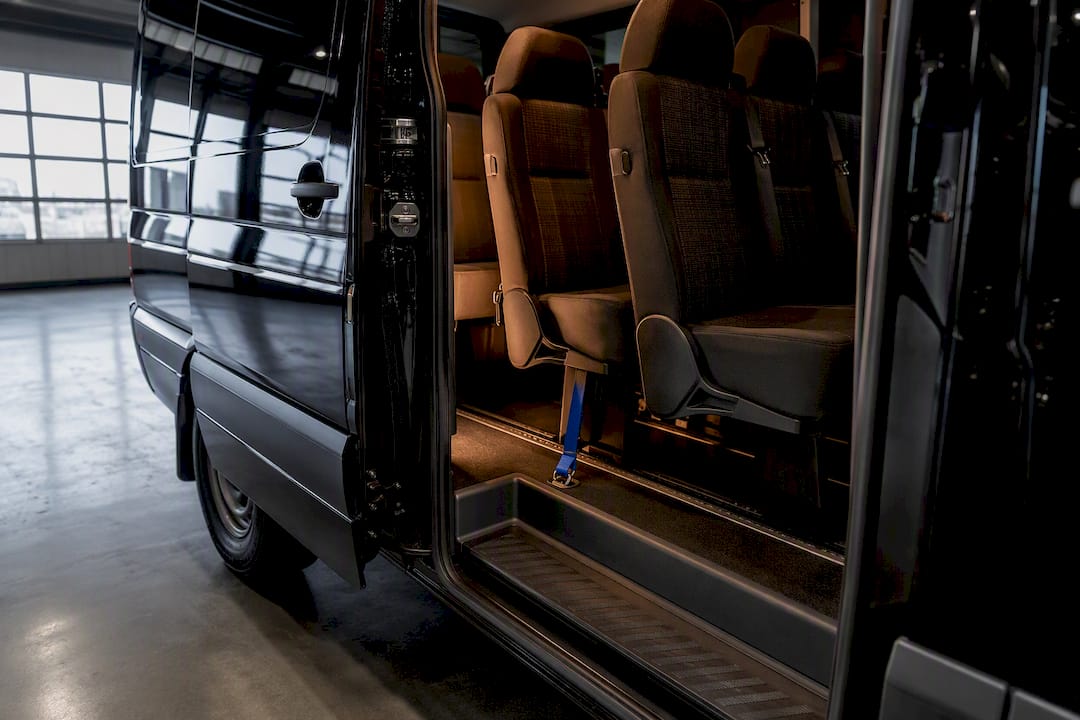
A factory Mercedes-Benz Sprinter passenger van seats up to 15 people, while cargo and crew variants top out much lower. The 2026 Sprinter passenger van lineup tops out at 15 total seats, crew vans max out around 5, and cargo models offer just 2 to 3 front seats. Wheelbase and roof height determine whether you land at 12 or 15.
TL;DR:
- The 15-passenger Sprinter van is only available in the long wheelbase and high-roof configurations, limiting maximum capacity to 15 seats.
- Shorter wheelbases support only up to 12 seats, while the longer 170-inch wheelbase can accommodate 15 passengers.
- Adding seats beyond the factory maximum can compromise safety, legality, and vehicle certification, risking insurance and inspection issues.
- Cargo space decreases significantly with more seats installed, so careful luggage and capacity planning is essential for group trips.
- Hiring a professional group transfer service can provide flexible seating and luggage capacity without the ownership, maintenance, or insurance complexities.
Table of Contents
- Sprinter Van Seating Capacity by Model: Cargo, Crew, and Passenger
- How Wheelbase and Roof Height Shape Seating Options
- Row-by-Row Seating: What 12- and 15-Passenger Layouts Actually Look Like
- Cargo Room vs. Seating: What Happens to Your Luggage
- Aftermarket Seat Additions: Where the Safety and Legal Line Sits
- How to Choose the Right Sprinter Seating Configuration
- The Case for Hiring Instead of Buying or Converting
- Book a Sprinter Group Transfer Instead of Buying One
- Sources
Sprinter Van Seating Capacity by Model: Cargo, Crew, and Passenger
Not every Sprinter on the road is built to move people. The three main body styles serve completely different jobs, and mixing them up is the most common mistake shoppers make when they start researching sprinter van seating capacity.
The Cargo van is built around freight, so it typically ships with just the driver and front passenger seat, meaning 2 to 3 occupants depending on whether a jump seat is fitted. The Crew van splits the difference, adding a rear bench behind a mid-cabin partition for a total capacity around 5, which suits contractors who need to haul both a small team and equipment. The Passenger van is where seating capacity climbs, with factory-built 12- and 15-passenger configurations designed specifically for shuttle and group work. Mercedes also offers a Passenger Select trim, which keeps similar seat counts but swaps in upgraded upholstery and captain’s-chair style seating for premium or corporate use.
Here’s how the lineup breaks down:
- Cargo van: 2 to 3 seats, front row only
- Crew van: up to 5 seats, front row plus rear bench
- Passenger van: 12 or 15 seats, depending on wheelbase and roof height
- Passenger Select: 12 to 15 seats with upgraded, higher-comfort seating
Car and Driver’s spec breakdown confirms this same 2 to 15 seat range across the model family, which lines up with what Mercedes publishes directly.
How Wheelbase and Roof Height Shape Seating Options
Two dimensions do most of the work in determining how many seats you end up with: wheelbase length and roof height. Get these right before you start comparing trim levels, because they narrow your options fast.
A 144-inch wheelbase Sprinter generally supports a 12-passenger layout, since there simply isn’t enough floor length for a fifth row. Step up to the 170-inch wheelbase, and you gain the room for a full 15-passenger configuration, according to Car and Driver’s Sprinter overview. Roof height matters too, though in a different way: a high roof doesn’t add seats, but it adds standing headroom, which makes a real difference on longer rides and gives conversion shops more flexibility if they’re adding overhead storage or accessibility features.
Trade-offs to weigh:
- Shorter wheelbase (144 in): tighter turning radius, easier city and airport-loop driving, less luggage room
- Longer wheelbase (170 in): more seats and cargo space, but wider turning arcs and less maneuverability in tight lots
- High roof: better headroom and conversion flexibility, slightly higher center of gravity in crosswinds
- Standard roof: lower profile, marginally better fuel economy, less usable vertical space
Row-by-Row Seating: What 12- and 15-Passenger Layouts Actually Look Like
Numbers on a spec sheet don’t always translate into a clear mental picture, so here’s what the seating grid actually looks like once you’re standing inside the van.
- 12-passenger layout: 2 in front, then three rows of 3, followed by a rear bench of 4. That’s four rows behind the driver, plus the front two seats, for 12 total.
- 15-passenger layout: 2 in front, then four middle rows of 3, followed by a rear bench of 4. That gives you five rows behind the driver, matching the pattern Driving for the 170-inch high-roof model, where a 2+3+3+3+4 arrangement is standard.
- Removable or optional rows: The rearmost bench and one or two middle rows are usually designed for quick removal, letting operators reconfigure a shuttle for a mixed passenger-and-cargo run without a full conversion.
Cargo Room vs. Seating: What Happens to Your Luggage
Every seat you keep installed eats into cargo space, and this is where a lot of shuttle operators get caught off guard on moving day or during an airport run with a full group and full luggage.
With all seats installed, certain Sprinter passenger trims still offer roughly 109 to 117 cubic feet of cargo volume, which sounds generous until you divide it across 15 people and their bags. A reasonable planning rule: budget one standard rolling suitcase and one carry-on per passenger for a 15-seat van, and drop to one bag per passenger if the group is checking oversized items like golf clubs or ski gear.
- Remove the rear bench for extra cargo room on baggage-heavy trips
- Use a Crew van or a second vehicle when luggage volume outpaces available floor space
- Confirm luggage rules before booking, since luggage limits vary by vehicle even within the same fleet
Aftermarket Seat Additions: Where the Safety and Legal Line Sits
Factory capacity tops out at 15 for good reason, and pushing past it isn’t just a comfort question, it’s a structural and legal one.
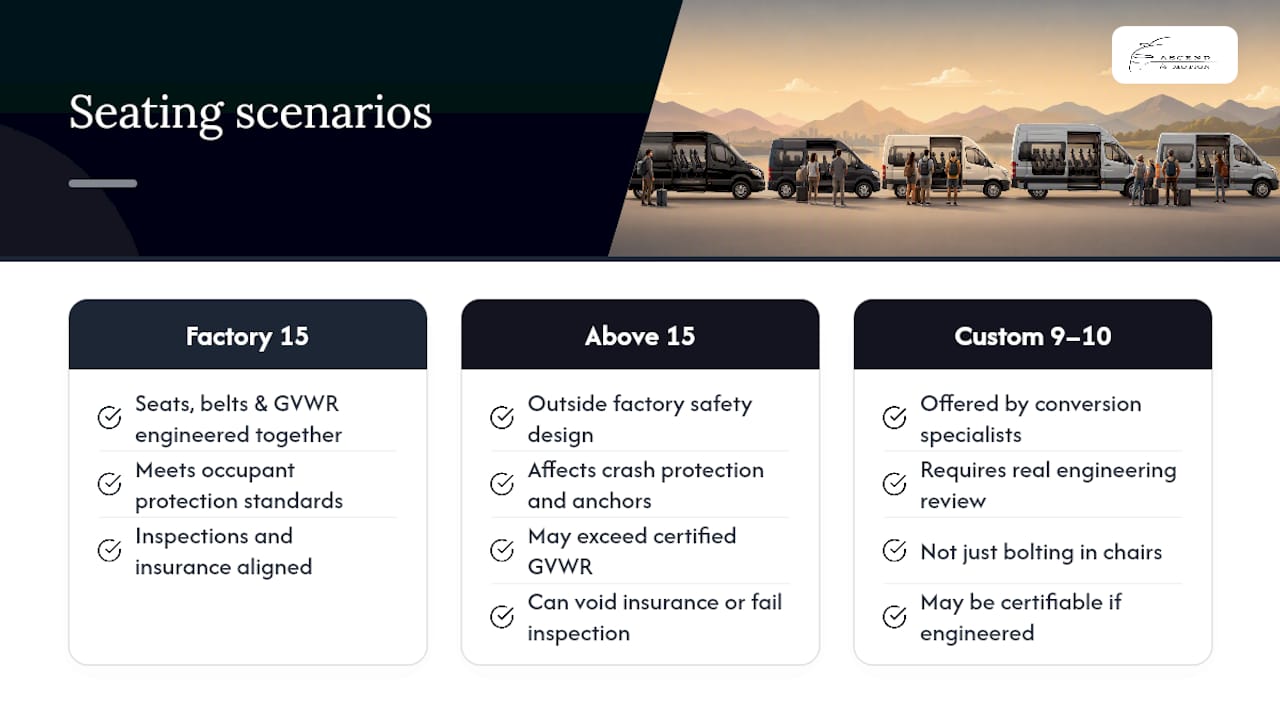
Adding seats beyond the factory-designed layout can affect crash protection, seatbelt anchoring, and the van’s certified Gross Vehicle Weight Rating (GVWR), all of which were engineered together as a system. NHTSA’s vehicle safety resources are the right starting point for anyone considering a conversion, since occupant protection standards assume factory seating positions and anchor points. No standard Sprinter is built to legally carry 20 passengers; anything above 15 sits outside the factory safety design entirely. Some conversion specialists do offer custom 9 or 10-seat captain’s-chair layouts, but these require real engineering review, not just bolting in extra chairs.
Pro Tip: Before you buy or convert a used Sprinter for shuttle work, ask the seller for the original build sheet. It will confirm the factory seat count and GVWR rating, which protects you from insurance disputes down the road.
Insurance carriers and state inspectors both check seating configuration against the factory GVWR rating, and a mismatch can void coverage or fail a commercial inspection outright.
How to Choose the Right Sprinter Seating Configuration
Matching a Sprinter to your actual trip, rather than just the biggest number on a spec sheet, saves headaches later. Run through this before you commit:
- Confirm your true max passenger count, including any no-show buffer for corporate or event groups
- Estimate luggage volume per person, then check it against cargo space with seats installed
- Pick wheelbase and roof height based on that seat count plus maneuverability needs at pickup and drop-off points
- Verify GVWR and seat anchoring documentation if you’re buying used or considering a conversion
- Ask any dealer or rental provider for exact row spacing, seat material, and safety anchoring specs before signing
If the math gets complicated, or if you’d rather not deal with GVWR paperwork and insurance verification at all, hiring a chauffeured Sprinter service solves the seating question instantly.
The Case for Hiring Instead of Buying or Converting
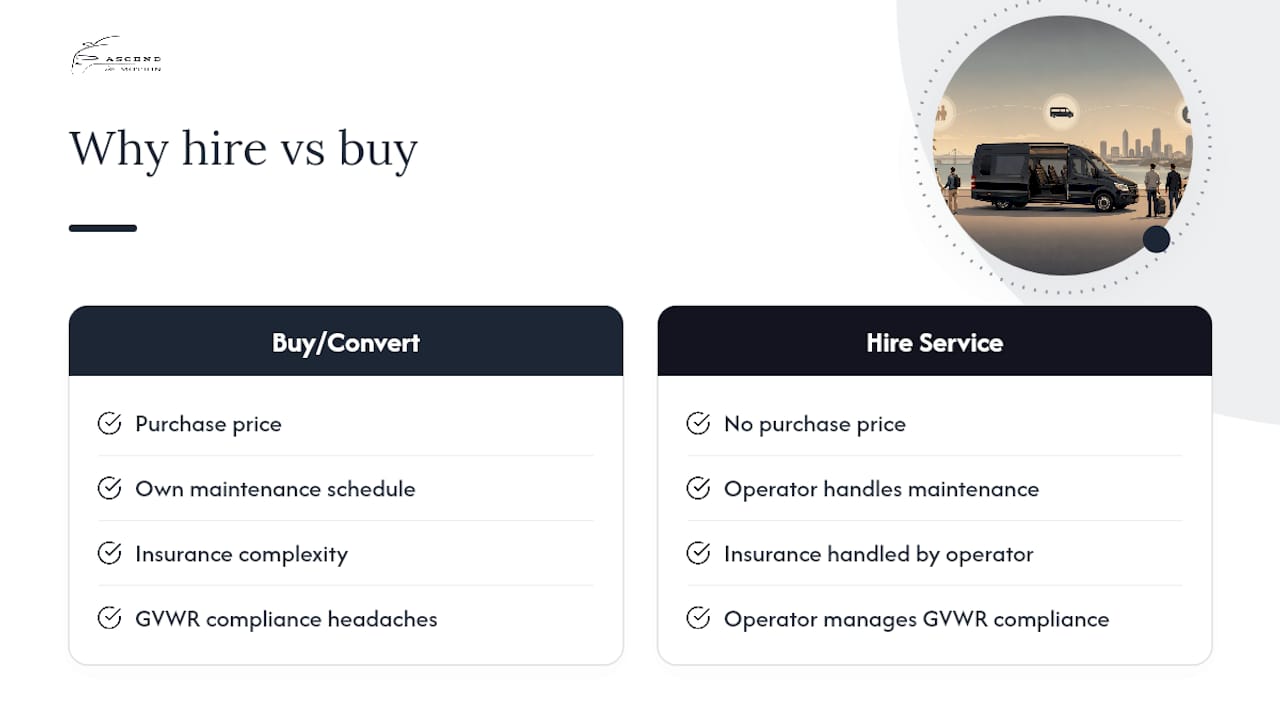
Owning a 15-passenger Sprinter means owning its maintenance schedule, its insurance complexity, and its GVWR compliance headaches too. Most groups researching seating capacity aren’t trying to become fleet operators, they just need a reliable way to move 12 or 15 people once, or occasionally.
That’s the gap a service fills. Ascendinmotion runs a fleet built specifically for group transport, including Sprinter vans configured for LAX and event work, with professional drivers who already handle the luggage math and the punctuality pressure. You skip the purchase price, the conversion risk, and the insurance shopping entirely, and you still show up with the same 15-seat capacity when the group needs it.
— Sirus
Book a Sprinter Group Transfer Instead of Buying One
Ascendinmotion is the alternative to buying, financing, or converting your own van for occasional group trips around Los Angeles, making it easy to book private transfers and tours without the hassles of ownership. Instead of researching GVWR ratings and insurance riders, you book a professionally driven Sprinter, already configured and compliant, and let someone else handle the logistics.
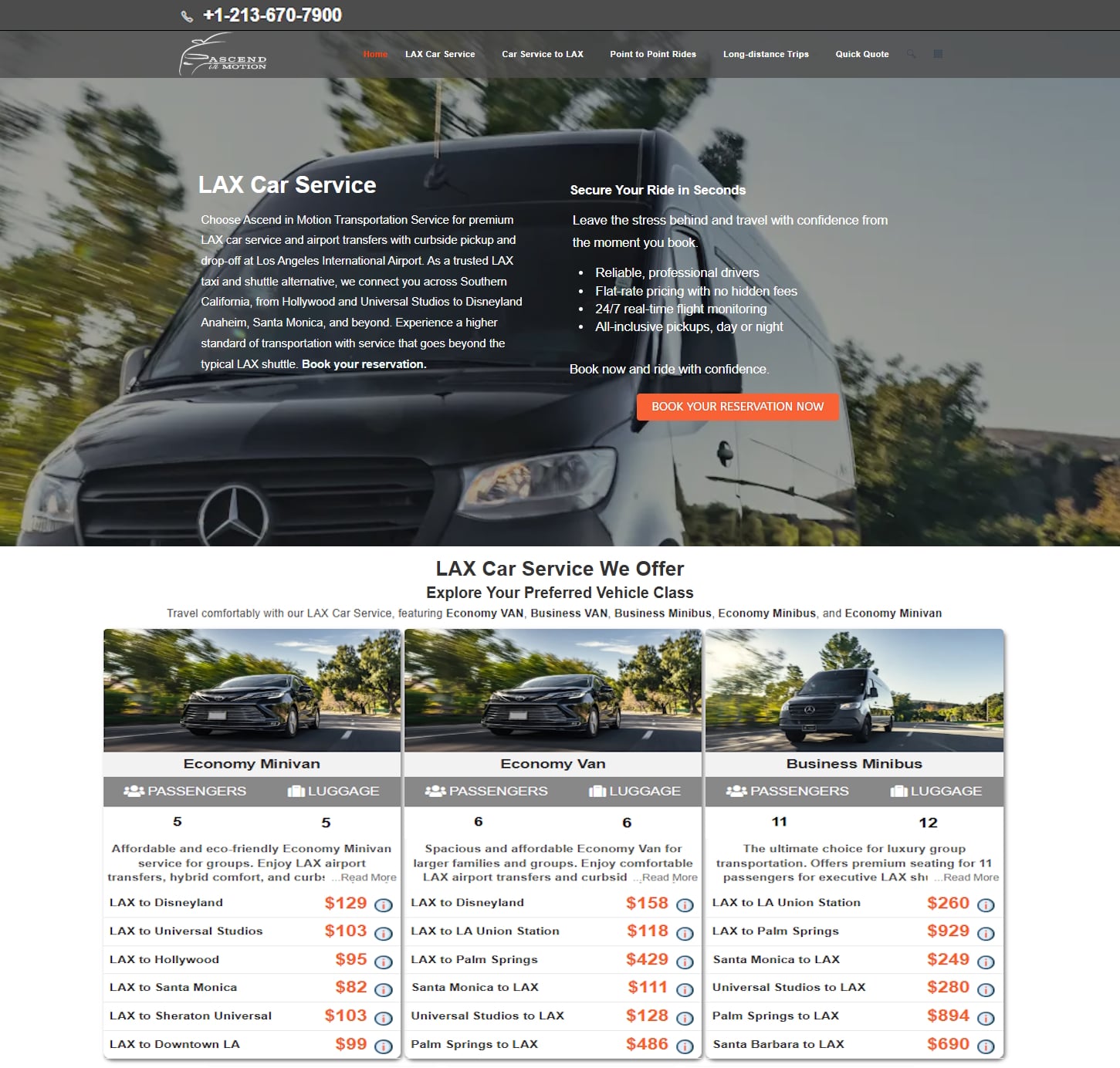
Our black Sprinter vans and minivans handle LAX airport transfers, corporate shuttles, and trips to Disneyland, Universal Studios, Santa Monica, and beyond, all on flat-rate pricing with real-time flight monitoring built in for pickups. If your group’s luggage load runs heavy, our luggage limit guide helps you plan ahead, and if your headcount exceeds 15, our Business Minibus Plus option covers the overflow. For the details on how our group service works, visit the Sprinter LAX group transfer page and check availability for your dates, or explore our luxury airport car service options for a smoother start to your Southern California trip.
Sources
- 2026 Passenger Van | Sprinter
- 2026 Mercedes‑Benz Sprinter review, pricing, and specs — Car and Driver
- Driving
- NHTSA vehicle ratings and safety resources

