
The fastest common public-transit route from LAX to Pasadena is the FlyAway shuttle to Union Station, then Metro’s A Line, a combination that runs about 80 minutes total and costs $11.25 each way. Fares and timing can shift with traffic and schedules, so treat those figures as typical rather than fixed. If you would prefer to skip transfers, a private chauffeur transfer from Ascend in Motion gets you there door to door.
TL;DR:
- The public transit route from LAX to Pasadena via FlyAway and the Metro A Line takes about 80 minutes and costs $11.25, but travel time can extend to 60 minutes during traffic peaks.
- Union Station transfer and walking between bus and train platforms add 10 to 15 minutes, so planning for extra transfer time reduces the risk of missing the train.
- Rideshare and taxi options offer more flexibility and can be faster or more reliable, especially late at night or with heavy luggage, but fares fluctuate with demand.
- Booking a private chauffeur transfer provides a door-to-door, stress-free experience with flight monitoring, making it the best choice for tight schedules or larger groups.
- Fare prices stay consistent for Metro and private transfers, but Uber and Lyft prices vary significantly during peak hours due to dynamic pricing.
Table of Contents
- How to ride the FlyAway and Metro A Line to Pasadena
- Rideshare, taxi, and driving from LAX to Pasadena
- Booking a private chauffeur transfer instead of transit
- Fares, TAP payment, and schedule checks before you go
- How long the full trip really takes
- Accessibility options for travelers with disabilities
- Parking near LAX and in Pasadena if you drive partway
- Safety notes for each way of getting there
- Handling luggage across FlyAway, Metro, and rideshare
- Do fares change during peak travel times
- Picking the right option for your trip
- Book a direct ride instead of managing transfers
- Sources
- FAQ
How to ride the FlyAway and Metro A Line to Pasadena
Getting from LAX to Pasadena on public transit means two legs and one transfer. Here is the sequence door to door.
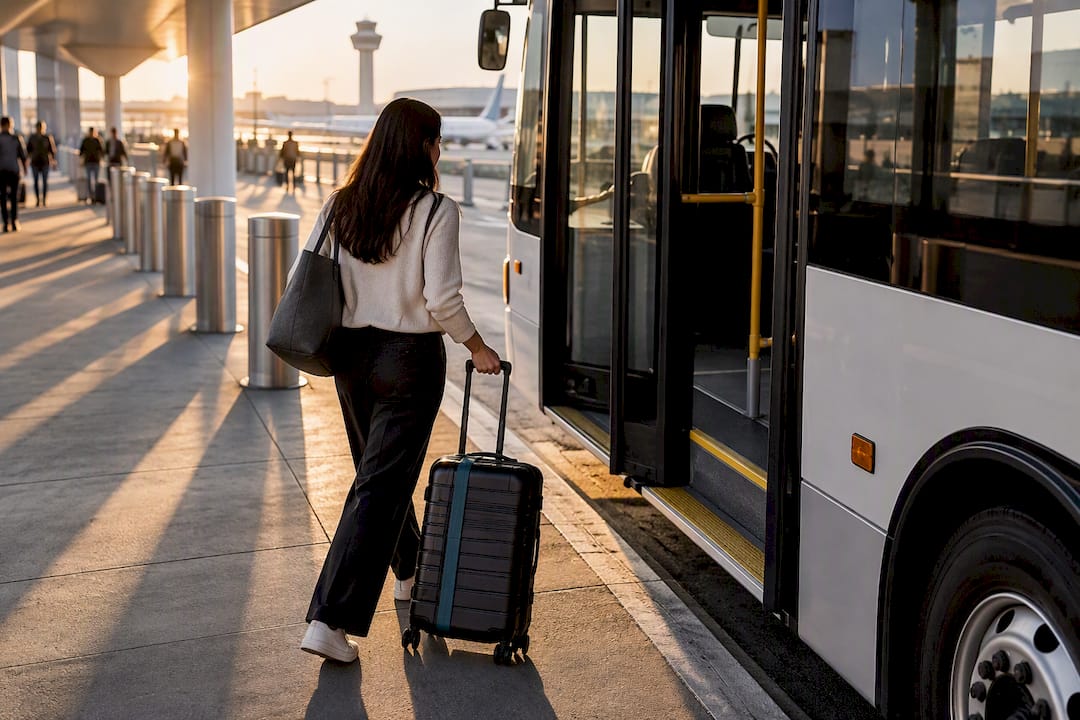
- Board the FlyAway bus at LAX’s lower or arrivals level, following the blue FlyAway signage at the inner curb.
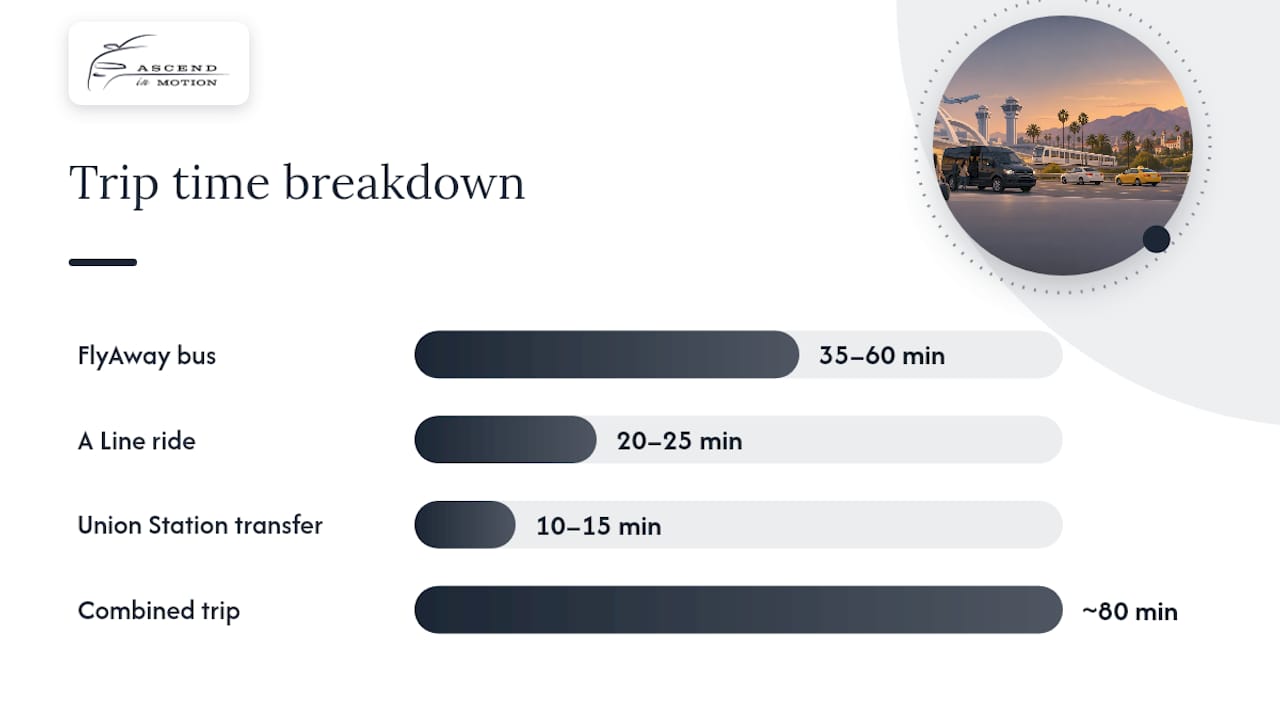
- Ride the FlyAway nonstop to Union Station, a trip that Visit Pasadena lists as taking roughly 35 to 60 minutes depending on traffic, though Carnegie Science’s route note reports about 80 minutes for the combined trip.
- At Union Station, walk from the FlyAway drop-off at Patsaouras Plaza toward the Metro rail platforms.
- Look for the A Line tracks and board a northbound train signed for Azusa or Pasadena, never a southbound one headed toward Long Beach.
- Ride the A Line into Pasadena, a segment that typically takes around 20 to 25 minutes depending on your stop.
Which station you get off at depends on where you are headed:
- Memorial Park puts you closest to Old Pasadena’s shops and restaurants.
- Lake serves the Playhouse District and nearby offices.
- Allen and Sierra Madre Villa work better for the eastern side of the city, including some hotels and residential areas.
Because FlyAway departures run every 20 to 30 minutes, missing one is rarely a disaster, but you should still build in a cushion. Give yourself extra time for the walk between the bus plaza and the train platform, plus a few minutes to buy or tap your fare, especially if you are hauling suitcases through Union Station’s crowds.
Rideshare, taxi, and driving from LAX to Pasadena
If transit transfers do not appeal to you, rideshare and taxi remain the most flexible door-to-door options for most travelers. At LAX, Uber and Lyft pickups happen at the LAX-it lot, reachable by a short shuttle from any terminal, while taxis line up at designated curbside stands.
Driving or riding by car generally takes less time than transit when traffic cooperates, though the reverse is also true during rush hour. Because the route covers roughly two dozen miles of city and freeway driving, congestion on the 110 or 134 can stretch a normally quick trip considerably.
- Check your rideshare app’s live estimate before committing, since fares change with demand and time of day.
- Avoid assuming any fixed price for Uber or Lyft, as both operate on dynamic pricing that shifts by the hour.
- Rideshare or taxi tends to make more sense late at night, when heavy luggage makes transit transfers a headache, or when traveling as a group.
Pro Tip: Screenshot your rideshare pickup confirmation before you start walking to the LAX-it lot, since cell service inside the terminal can be unreliable.
Booking a private chauffeur transfer instead of transit
A premium private transfer trades transfers and platform-hunting for one continuous ride, with a chauffeur meeting you curbside and handling your bags. Ascend in Motion’s LAX to Pasadena car service includes flight monitoring, so your pickup adjusts automatically if your flight lands early or late, and you are not stuck coordinating a bus and a train after a long flight.
Booking ahead matters more than it does for a rideshare. A few pointers:
- Reserve your ride in advance and provide your flight number so the chauffeur can track arrival delays.
- Confirm your curbside pickup point with the driver or dispatch before you land, since airport curb rules occasionally change.
- Ask about vehicle options if you are traveling with a group or extra luggage, since sedans, SUVs, and vans are handled differently.
For verified current pricing, check the LAX to Pasadena cost breakdown directly on the Ascend in Motion site rather than relying on any secondhand estimate, since fares are only accurate as published there.
Fares, TAP payment, and schedule checks before you go
A little preparation avoids most of the common mistakes travelers make on this route. FlyAway tickets can be bought online in advance or at kiosks near the boarding area, though some kiosks accept cards only, so do not count on paying cash at Union Station.
Metro’s A Line runs on the same TAP fare system used across LA’s rail and bus network. The base fare is $1.75 one way, and Metro caps total daily spending so frequent riders are not charged more than the daily maximum once they hit it. Contactless bank cards and digital wallets work at TAP readers just like a physical TAP card, and transferring between Metro lines within a set window is free as long as you tap in each time. Apps like Halen also support contactless transit payments if you would rather manage fares digitally instead of carrying a physical card.
A one-way FlyAway plus Metro trip costs $11.25 according to Carnegie Science’s route breakdown, which is the figure to budget around rather than any rounded estimate.
- Check FlyAway’s live departure status and the A Line’s current schedule on the official FlyAway page before you leave the terminal.
- Keep carry-on luggage manageable, since neither the FlyAway bus nor the A Line has significant onboard storage for oversized bags.
- Build in a 15 to 20 minute buffer at Union Station for the walk and any ticketing delays.
How long the full trip really takes
The honest range for FlyAway plus Metro A Line is wider than a single number suggests. Carnegie Science’s route note puts the combined trip at about 80 minutes, while Visit Pasadena’s estimate for the FlyAway leg alone runs from roughly 35 to 60 minutes depending on traffic, meaning your actual total can land anywhere in that broader window once the A Line segment and transfer time are added.
Rush hour on the 405 or 110 freeways stretches the FlyAway leg noticeably, since the bus shares the same congested roads as everyone else. The A Line itself runs on a dedicated rail line, so once you are aboard, that segment stays fairly predictable at around 20 to 25 minutes regardless of road traffic.
The biggest variable most travelers underestimate is the Union Station transfer itself. Walking from the bus plaza to the correct platform, confirming you are on a northbound train, and tapping your fare card all take a few extra minutes that rarely show up in trip planner estimates. Building a 10 to 15 minute cushion into your transfer keeps a missed train from turning into a much longer wait, since A Line departures are not always immediate.
Accessibility options for travelers with disabilities
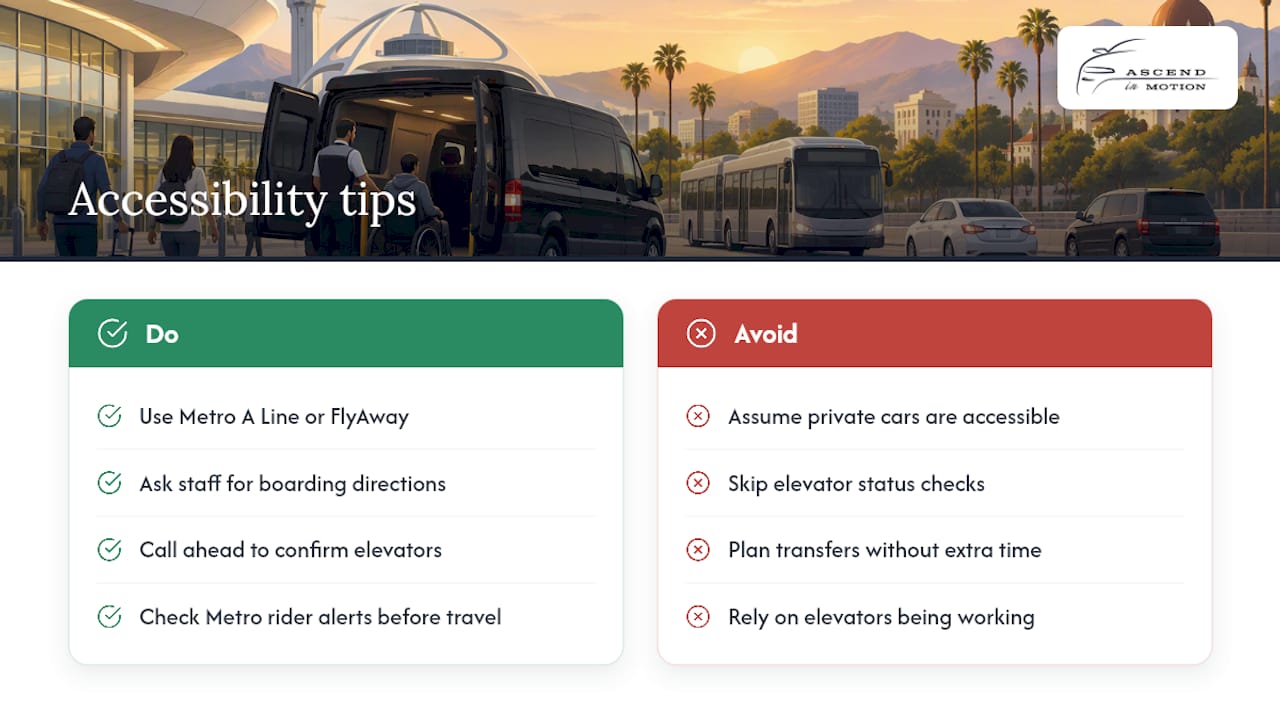
Metro’s rail system, including the A Line, is built with accessible boarding in mind, with level platform access and space set aside for wheelchairs and mobility devices on board. FlyAway buses are also equipped to accommodate riders who need boarding assistance, and staff at both LAX and Union Station can direct you to the appropriate boarding area if you need it.
That said, navigating a multi-step transfer with elevators, escalators, and platform changes adds complexity for any traveler with mobility limitations, and delays or elevator outages can complicate an otherwise straightforward trip. Some private car services may not provide wheelchair-accessible vehicles, so travelers who require that accommodation should look into specialized paratransit or accessible transit services rather than assuming any door-to-door car service covers it.
If accessibility is a concern, calling ahead to confirm current elevator status at Union Station, or checking Metro’s rider alerts before you travel, saves you from an unwelcome surprise mid-transfer.
Parking near LAX and in Pasadena if you drive partway
Some travelers prefer to drive part of the route themselves rather than relying entirely on transit or rideshare. If you are being dropped off or picked up at LAX, the terminal curbs handle that without any parking needed, but if you are leaving a car behind, LAX offers several long-term lots a short shuttle ride from the terminals.
If your plan involves driving partway and then picking up the Metro A Line, parking near a Pasadena station is worth checking in advance, since availability and rules vary by station and time of day. Stations like Allen and Sierra Madre Villa tend to have more parking capacity than the stops closer to Old Pasadena, which sit in busier commercial areas with more limited street parking.
Whichever lot you choose, confirm posted hours and payment methods before you leave your car, since unattended long-term parking without a valid permit or payment can result in towing at either end of the trip.
Safety notes for each way of getting there
Public transit in Los Angeles, including the FlyAway and Metro’s A Line, is a widely used option, though like any transit system it benefits from ordinary precautions: keeping bags close, staying aware in crowded transfer areas like Union Station, and avoiding travel very late at night if you are alone with valuable luggage.
Rideshare and taxi carry their own considerations. Always confirm the driver’s name, license plate, and vehicle match what the app shows before getting in, and share your trip details with someone if you are traveling solo.
A private chauffeur transfer removes some of these variables by design, since you are matched with a single licensed driver for the entire trip rather than transferring between transit vehicles or getting into an unfamiliar rideshare car. Whichever mode you pick, trusting your instincts about a driver, a platform, or a waiting area is always worth more than saving a few minutes.
Handling luggage across FlyAway, Metro, and rideshare
Luggage is often the deciding factor in which mode makes sense. The FlyAway bus has underneath storage similar to an airport shuttle, so checked-size bags travel fine on that leg. The Metro A Line is a different story: there is no dedicated luggage storage on board, so you are holding or wheeling your own bags the entire ride, including during the walk between Union Station’s bus plaza and the train platform.
Rideshare and taxi trunks handle a couple of suitcases without issue, though larger groups with multiple checked bags should request a larger vehicle option in the app rather than assuming a standard sedan will fit everything.
A private chauffeur service is built around this exact problem, since the driver handles loading and unloading bags at both ends of the trip, which matters most for families or groups traveling with strollers, golf clubs, or oversized luggage that would be awkward on a train platform.
Do fares change during peak travel times
Metro’s A Line fares stay flat regardless of time of day. The $1.75 base fare applies whether you are riding during morning rush hour or a quiet weekday afternoon, and the same daily fare caps apply no matter when you tap in.
FlyAway pricing works similarly in that the posted fare does not fluctuate by time of day, though buses may run more frequently during peak commute windows and less often late at night, which affects how long you wait rather than what you pay.
Rideshare is where peak timing actually changes your cost, since Uber and Lyft use dynamic pricing that rises during high-demand periods like weekday rush hour or major event nights near Union Station and Downtown LA. If your schedule is flexible, checking rideshare prices at a couple of different times before you commit can reveal a meaningfully cheaper window, whereas transit and a booked private transfer give you a cost you can count on regardless of when you travel.
Picking the right option for your trip
Public transit makes sense if you are traveling solo, watching your budget, and packing light enough to manage a transfer at Union Station without much hassle. It is also a reasonable choice if you already know the LA Metro system or simply enjoy seeing the city from a train window.
Families, groups, or anyone on a tight schedule tend to do better with a private car, since one driver and one vehicle removes the transfer risk entirely. If your flight lands late or your bags are heavy, that trade-off usually pays for itself in reduced stress alone.
My honest read: FlyAway plus the A Line is a solid budget option worth trying once, but a private transfer is the more dependable choice whenever timing or comfort actually matters.
— Sirus
Book a direct ride instead of managing transfers
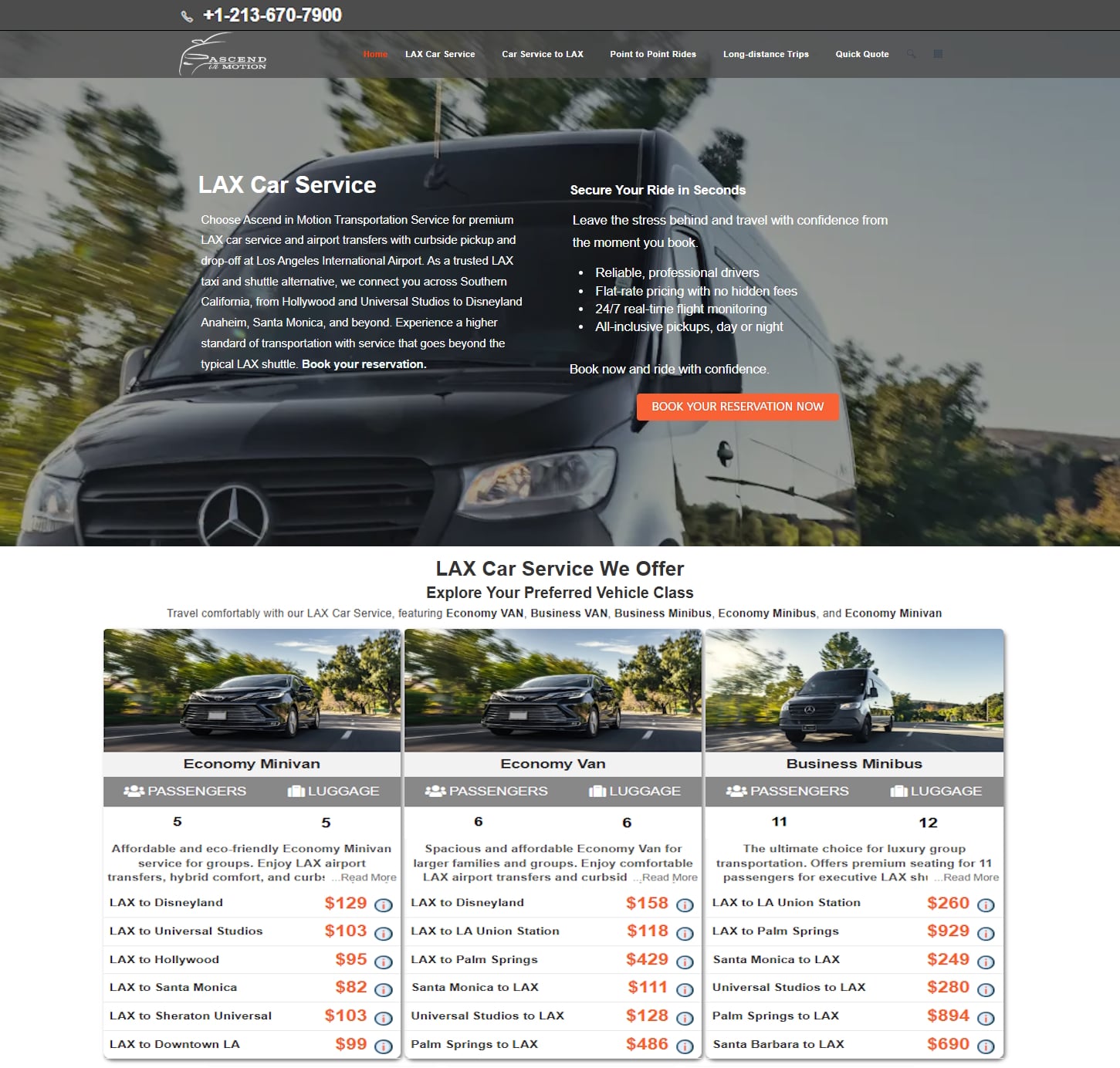
Skipping the FlyAway schedule and the Union Station platform search comes down to one phone call or booking form. Ascend in Motion’s LAX to Pasadena car service puts you in a private vehicle curbside at LAX, with a chauffeur who tracks your flight and handles your bags, so there is no transfer to time and no platform to find.
- One driver, one vehicle, from the LAX curb straight to your Pasadena address.
- Flight monitoring means your pickup adjusts automatically if your arrival time changes.
- Vehicle options are available for solo travelers, families, or larger groups with extra luggage.
Check current pricing and reserve your pickup window on the LAX to Pasadena page, where fares are kept current rather than estimated.
Sources
- Using the FlyAway Shuttle from LAX to Pasadena | Carnegie Science
- LAX Flyaway — Visit Pasadena | Visit Pasadena
- Fares – LA Metro
- FlyAway — FlyLAX
FAQ
What is the best way to get from LAX to Pasadena?
For most travelers, the FlyAway shuttle to Union Station followed by the Metro A Line is the most economical public option, taking about 80 minutes and costing $11.25 each way. Travelers who prefer a single door-to-door ride without transfers often choose a private car service instead.
How much is an Uber from LAX to Pasadena?
Uber and Lyft fares from LAX to Pasadena change with demand, time of day, and traffic, so there is no fixed rate to quote. Check your app’s live estimate before you travel, since prices can differ meaningfully between a quiet afternoon and a busy rush hour.
Is there a shuttle from Pasadena to LAX?
The FlyAway shuttle runs between LAX and Union Station, not directly to Pasadena, so travelers connect from Union Station to Pasadena using the Metro A Line. That connection is the standard public-transit path in either direction between the two cities.
Which airport do you fly into for Pasadena?
Los Angeles International Airport, LAX, is the main airport travelers use to reach Pasadena, since it offers the widest range of flights and the direct FlyAway connection into Downtown LA. Some travelers also consider Hollywood Burbank Airport, which sits closer to Pasadena geographically, though FlyAway service specifically connects from LAX.

