
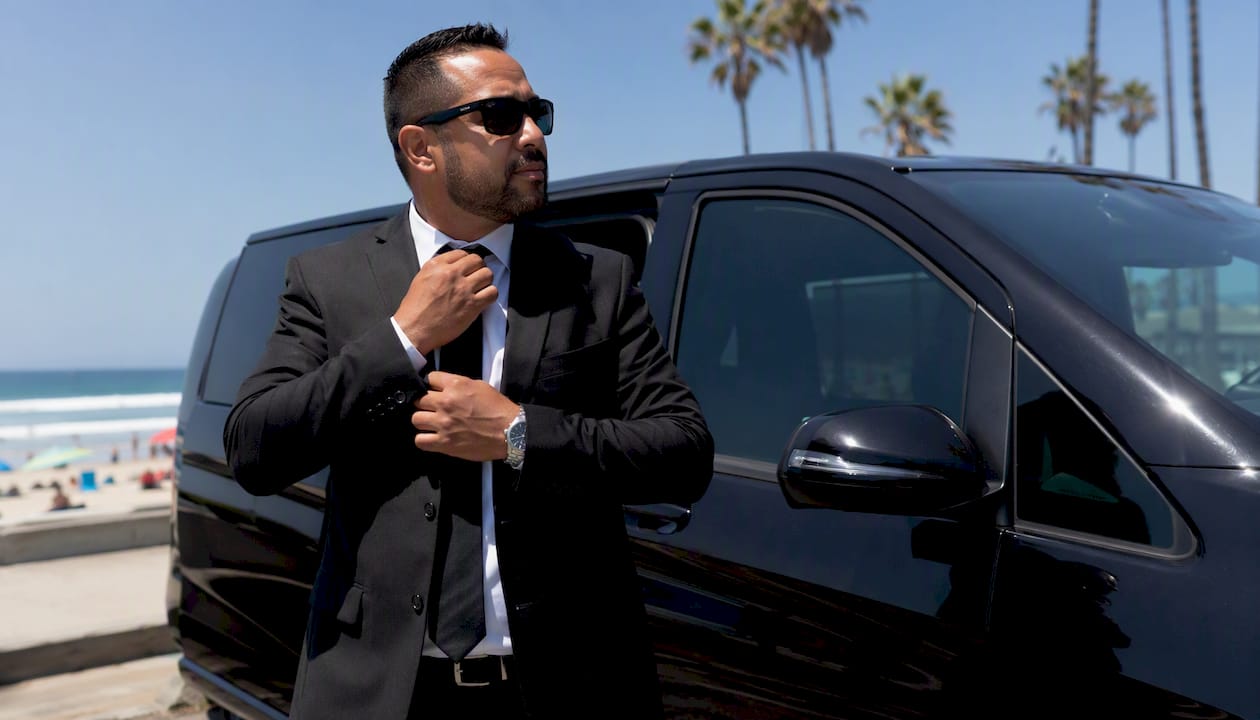
A chauffeur is a professional driver employed to transport passengers in a luxury vehicle, delivering a level of service that goes well beyond simply getting someone from point A to point B. Merriam-Webster defines the role as a person employed to drive a motor vehicle, often for a wealthy or important person. In practice, the job combines skilled driving with concierge-level attention, formal etiquette, and consistent vehicle standards.
Here is what that looks like in the real world:
- Vehicle types: luxury sedans, SUVs, black minivans, Mercedes-Benz Sprinters, and minibuses
- Service emphasis: punctuality, privacy, luggage handling, and in-ride comfort
- Typical clients: corporate executives, business travelers, families, and event groups
- U.S. context: chauffeurs operate under state DMV rules and, in cities like New York, under local taxi and limousine commission (TLC) licensing
The sections below cover daily duties, how a chauffeur differs from an ordinary driver, U.S. training and licensing, history, and a practical hiring checklist.
Key Takeaways
A chauffeur is a vetted, trained service professional who delivers concierge-level transportation in a luxury vehicle, not simply a driver with a nicer car.
| Point | Details |
|---|---|
| Core definition | A chauffeur is a professional employed to drive and care for passengers in a luxury vehicle. |
| Key difference from drivers | Chauffeurs offer flight tracking, formal etiquette, vetted backgrounds, and consistent vehicle standards. |
| U.S. licensing | Requirements vary by state and city; always verify the driver’s license number and background check before booking. |
| Hiring checklist | Confirm vehicle class, flight monitoring, flat-rate pricing, and cancellation terms before you pay. |
| Best use cases | Airport transfers, executive travel, group trips, and long-distance routes where reliability is non-negotiable. |
Table of Contents
- What does a chauffeur actually do day to day?
- How a chauffeur differs from an ordinary driver
- What training and licensing do U.S. chauffeurs need?
- Where did the word “chauffeur” come from?
- When does hiring a chauffeur actually make sense?
- How chauffeurs appear in culture and media
- A professional’s perspective on what the role really demands
- Sources
What does a chauffeur actually do day to day?
A chauffeur’s responsibilities stretch far beyond steering. According to Wikipedia, the role includes vehicle maintenance and care, and reputable services build pre-trip inspections into every shift.
Operational duties include:
- Planning routes and monitoring real-time traffic
- Conducting pre-trip vehicle inspections and keeping the cabin spotless
- Handling luggage at pickup and drop-off
- Monitoring flight arrivals for airport transfers so wait times adjust automatically to delays
Service duties include:
- Maintaining a formal, professional appearance
- Respecting passenger privacy and keeping conversations at the client’s lead
- Assisting with itinerary coordination and local knowledge
- Communicating proactively about schedule changes
For corporate clients, a chauffeur functions as a logistics partner. An executive heading to a 9 AM meeting at LAX does not want to think about parking or traffic; the chauffeur handles both. Premium services like Ascendinmotion operate black minivans and Mercedes-Benz Sprinters for group and executive travel, keeping the fleet consistent and the experience predictable.
| Use case | Typical vehicle | Key service feature |
|---|---|---|
| Airport transfer | Black minivan, luxury SUV | Real-time flight monitoring |
| Executive point-to-point | Luxury sedan, SUV | Privacy, route optimization |
| Group or event transport | Mercedes-Benz Sprinter, minibus | Coordinated pickup, luggage handling |
| Long-distance transfer | Mercedes-Benz Sprinter, SUV | Comfort stops, itinerary support |
How a chauffeur differs from an ordinary driver
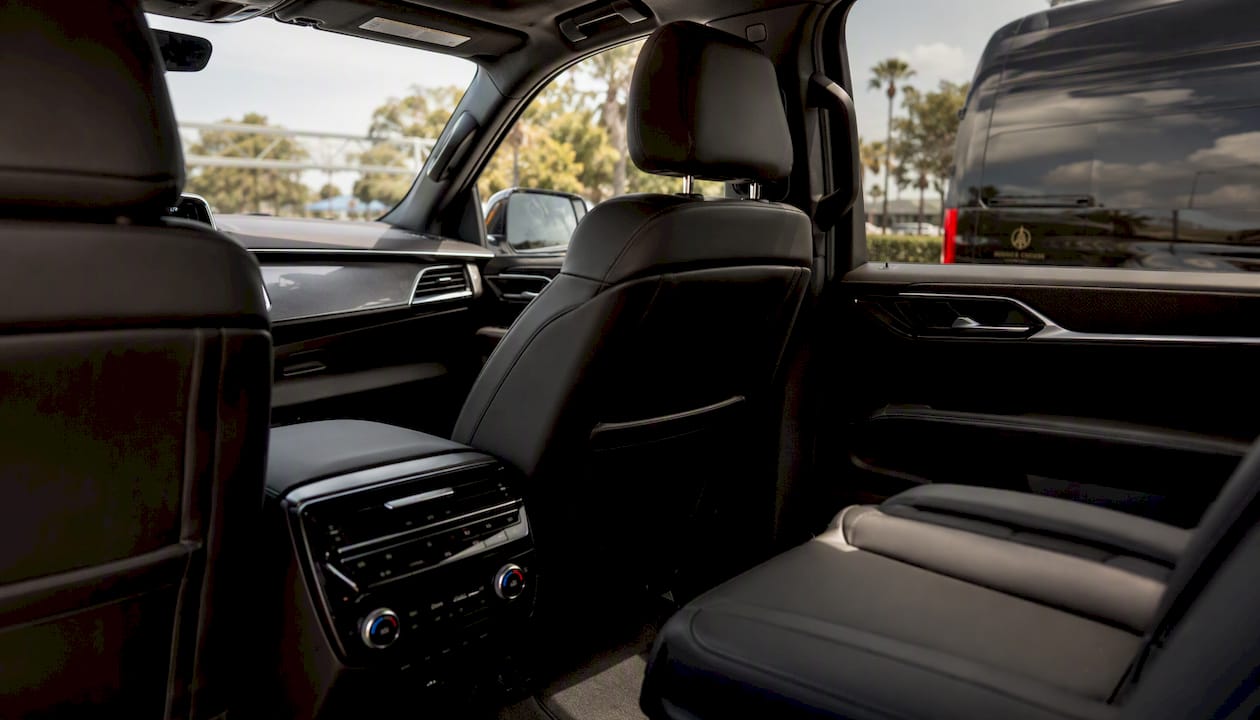
The word “driver” describes anyone behind the wheel. A chauffeur is something more specific: a vetted, trained service professional whose job includes the passenger experience, not just the route. Cambridge Dictionary frames it as someone whose job is to drive a car for a rich or important person, which signals that the relationship involves trust and ongoing accountability.
Here is where the practical gap shows up:
| Dimension | Ordinary driver | Chauffeur |
|---|---|---|
| Service level | Transport focused | Concierge-level attention |
| Appearance | Casual or unspecified | Formal, consistent dress code |
| Vehicle standard | Variable | Luxury, inspected before each trip |
| Flight tracking | Rarely offered | Standard for airport pickups |
| Background checks | Inconsistent | Vetted by employer or licensing body |
| Accountability | App rating system | Named, licensed, company-accountable |
Ride-share platforms offer convenience, but they typically lack the consistency, vehicle quality, and professional accountability of a dedicated chauffeur service. A chauffeur’s name, license, and employer are generally documented before the ride begins. For professional chauffeur standards, that paper trail is the baseline, not a bonus.
Pro Tip: When reviewing a booking page, look for three specific terms: “flight monitoring,” “background-checked drivers,” and a named vehicle class. If all three appear, you are likely looking at a genuine chauffeur service rather than a rebranded ride-share.
What training and licensing do U.S. chauffeurs need?
Licensing requirements vary by state and city, so there is no single national standard. That said, reputable chauffeur services in the U.S. consistently meet a baseline set of credentials.
Typical requirements include:
- A valid state driver’s license (Class D or equivalent; commercial endorsements apply for larger vehicles)
- A clean DMV record, usually checked annually
- A criminal background check, often including fingerprinting
- Drug testing at hire and periodically thereafter
- City-specific livery or for-hire vehicle (FHV) licenses where required
Verify before you book. In cities like New York, the Taxi and Limousine Commission (TLC) licenses for-hire vehicle drivers and publishes driver records online. Other cities and states maintain similar registries through their DMV or public utilities commission. Always ask your provider for their license number and check it against the relevant local authority’s database before your first ride. Local licensing bodies set the exact rules for background checks, vehicle standards, and operator licensing in your area.
Beyond government requirements, professional services add their own layer: etiquette training, defensive driving courses, and vehicle inspection protocols. Chauffeur credentials for corporate transport also note that documented training is a stronger reliability signal than vehicle photos alone. Industry standards consistently place etiquette and safety training above a basic license as the marker that separates a chauffeur from a driver.
One practical benefit worth noting: using a vetted, professional chauffeur as the designated driver of a luxury vehicle can reduce insurance risk for the vehicle owner, a point cited in industry literature on fleet management.
Where did the word “chauffeur” come from?
The word is French, and its origin is more mechanical than it sounds. It comes from the French verb chauffer, meaning “to heat.” In the 1890s, early automobiles used steam-powered engines that required someone to stoke and maintain the boiler before and during a journey. That person was the chauffeur, literally the one who heated the engine.
The role evolved quickly as internal combustion replaced steam:
- 1890s: Chauffeurs were mechanics first, drivers second, responsible for engine maintenance and fuel
- Early 1900s: Wealthy families employed personal chauffeurs as household staff, similar to a butler or valet
- Mid-20th century: The role shifted from personal employee to hired professional, with livery companies offering chauffeur services on demand
- Today: The emphasis has moved to service, logistics, and corporate travel, with vehicle care handled by fleet managers and the chauffeur’s value measured in reliability and client experience
When does hiring a chauffeur actually make sense?
Not every trip needs one. However, certain situations make the investment straightforward.
Hire a chauffeur when:
- You have a tight connection or a high-stakes meeting and cannot afford a late pickup
- You are traveling in a group and need coordinated, comfortable transport
- You want a stress-free airport transfer with real-time flight monitoring
- You are visiting an unfamiliar city and want local knowledge on call
- You are planning a family trip to popular theme park destinations and want door-to-door service without parking headaches
- You need long-distance travel, such as Los Angeles to San Diego or Palm Springs, in comfort
Questions to ask when booking:
- What vehicle class will be assigned, and is it confirmed at booking?
- Do you monitor flights for airport pickups, and how do you handle delays?
- Is pricing flat-rate or hourly, and what triggers additional charges?
- What is your waiting-time policy if I am delayed?
- Can I see the driver’s license number and background check confirmation?
- What is your cancellation policy?
Pricing typically follows common models such as flat-rate for airport transfers and hourly for executive or event service. Distance, vehicle class, and wait time are the main variables. For LAX airport transfers, flat-rate pricing removes the anxiety of a meter running while you wait for luggage.
How chauffeurs appear in culture and media
The chauffeur as a cultural figure shows up consistently in film, literature, and television, almost always as a symbol of discretion and status.
- “Driving Miss Daisy” (1989): Perhaps the most studied portrayal of the chauffeur-client relationship, the film examines trust, class, and the quiet authority a chauffeur holds within a household.
- James Bond films: Bond’s drivers, particularly in the classic era, embody the chauffeur as a tactical asset, someone who knows routes, keeps secrets, and stays composed under pressure.
- “The Great Gatsby” (F. Scott Fitzgerald): Gatsby’s chauffeur is a background presence that signals wealth and the social distance between the powerful and everyone else.
- Downton Abbey: The character of Tom Branson begins as a chauffeur and illustrates how the role historically sat at the intersection of service and intimacy within wealthy households.
Most fictional portrayals emphasize two things: the chauffeur’s access to private conversations and their obligation to absolute discretion. That cultural expectation carries directly into modern professional standards.
A professional’s perspective on what the role really demands
The part of this job that most clients never see is the preparation. A good shift starts well before the passenger gets in the vehicle. That means a thorough inspection of the cabin, a confirmed route with at least one backup, and the flight number already loaded into a tracking app before leaving the garage.
Service practices that separate a professional from the rest:
- Vehicle prep: Cabin cleaned, climate set, water and amenities stocked before pickup
- Communication: Confirmation sent to the client the night before, plus a “on my way” message 30 minutes out
- Privacy: Phone calls and conversations in the cabin stay there; no discussion of clients with other passengers or staff
- Special requests: Noted at booking and confirmed again the day before, whether that is a car seat, a specific route, or a preferred radio silence
Pro Tip: For airport pickups, share your flight number at booking, not just the arrival time. A professional chauffeur tracks the actual landing, not the scheduled one, so your driver is there when you walk out, not 20 minutes later.
At Ascendinmotion, the standard for every LAX pickup and Southern California transfer is built around this preparation model, with black minivans and Mercedes-Benz Sprinters kept to a consistent fleet standard.
Planning a trip from Los Angeles and want chauffeur-driven service that actually shows up prepared? Ascendinmotion covers LAX airport transfers, long-distance routes to San Diego, Palm Springs, and Santa Barbara, and point-to-point service across Southern California. Book your airport transfer or explore what sets a premium car service apart before you book.
Sources
For definitions, verification, and booking resources:
- Chauffeur – Wikipedia
- CHAUFFEUR Definition & Meaning – Merriam-Webster
- CHAUFFEUR | definition in the Cambridge English Dictionary

