


Point to point transportation is changing how people get from one place to another. Most folks think travel means navigating crowded hubs or dealing with endless stops. But the real surprise is that point to point systems can cut total travel time by up to 40 percent compared to traditional hub based routes. This approach is not just faster. It is rewriting what hassle free, direct travel can look like.
Table of Contents
- What Is Point To Point Transportation?
- The Importance Of Point To Point Transportation
- How Point To Point Transportation Systems Work
- Key Concepts Of Point To Point Transportation
- Practical Applications For Travelers
Quick Summary
| Takeaway | Explanation |
|---|---|
| Direct travel reduces transit complexity | Point to point transportation eliminates unnecessary stops, making journeys faster and simpler for passengers. |
| Versatile applications for diverse needs | This transportation model caters to business, leisure, and special events, providing tailored solutions for various travel scenarios. |
| Technology optimizes routing and efficiency | Advanced algorithms and real-time data enhance the travel experience by ensuring personalized and efficient routing. |
| Environmental and economic benefits | This system minimizes vehicle miles traveled, leading to lower emissions and better urban traffic management. |
| Convenience features enhance traveler experience | Services include real-time tracking, flexible payment options, and advanced booking, improving overall satisfaction and control during travel. |
What is Point to Point Transportation?
Point to point transportation represents a direct travel approach that connects passengers from their exact origin to their precise destination without intermediate stops or transfers. Unlike traditional transportation models that route through centralized hubs, this method prioritizes efficiency, convenience, and reduced travel complexity.
Understanding the Basics
At its core, point to point transportation eliminates unnecessary intermediary locations. Wikipedia defines this system as a transportation method where vehicles travel directly between specific locations, minimizing travel time and reducing potential complications associated with multiple transfers.
Key characteristics of point to point transportation include:
- Direct route planning
- Minimal intermediate stops
- Personalized travel experience
- Reduced overall transit duration
Transportation Modes and Applications
Point to point transportation encompasses various modes of travel, including private car services, shuttle vehicles, chartered transportation, and specialized transit options. In urban and regional contexts, these services address specific travel needs by providing customized transportation solutions.
According to the Geography of Transport Systems, this transportation model offers significant advantages over traditional hub-and-spoke networks.
 By creating direct connections, point to point transportation minimizes travel complexity and provides more streamlined transit experiences for passengers.
Whether you are traveling for business, leisure, or special occasions, point to point transportation offers a flexible and efficient alternative to standard transportation models. It transforms how individuals move between locations by prioritizing direct, personalized travel solutions.
The following table compares point to point transportation with the hub-and-spoke model to highlight their major differences in efficiency, complexity, and traveler experience.
| Feature | Point to Point Transportation | Hub-and-Spoke Model |
|---|---|---|
| Routing Approach | Direct routes between origin and destination | Indirect routes via central hubs |
| Number of Transfers | Minimal or none | Multiple transfers common |
| Travel Time | Reduced (up to 40% less) | Often longer due to detours |
| Complexity for Passengers | Low | High |
| Service Personalization | High | Low |
| Efficiency in Urban Traffic | Improved | Can increase congestion |
| Environmental Impact | Fewer vehicle miles, lower emissions | More vehicle miles, higher emissions |
The Importance of Point to Point Transportation
Point to point transportation has emerged as a critical solution addressing modern mobility challenges, transforming how individuals and communities approach travel. By providing direct, efficient, and personalized transportation options, this approach solves multiple logistical and environmental concerns facing contemporary urban and regional transportation systems.
This table summarizes the main transportation modes and practical applications where point to point transportation offers value, helping readers quickly identify relevant scenarios.
| Mode/Service | Typical Applications |
|---|---|
| Private Car Services | Airport and hotel transfers, business trips |
| Shuttle Vehicles | Group events, hotel/venue connections |
| Chartered Transportation | Corporate travel, special occasions |
| Specialized Transit Options | Medical and healthcare transportation |
| Tourist Services | Sightseeing, leisure excursions |
Enhancing Travel Efficiency
Traditional transportation models often involve complex routing and multiple transfers, significantly increasing travel time and passenger frustration. A 2024 mathematical study highlights how point to point transportation services dramatically reduce transit complexity by creating direct travel pathways.
Key efficiency advantages include:
- Minimized travel duration
- Reduced unnecessary route deviations
- Lower overall transportation complexity
- Improved passenger experience
Environmental and Economic Benefits
Beyond individual convenience, point to point transportation delivers substantial broader benefits. Research demonstrates these services can substantially decrease vehicle miles traveled, leading to reduced carbon emissions and improved urban mobility infrastructure.
Economic impacts are equally significant. By optimizing route planning and reducing unnecessary vehicle movements, point to point transportation presents a more sustainable and cost effective transportation model. Cities implementing such systems can expect improved traffic management, decreased congestion, and more efficient resource allocation.
Whether supporting business travelers, tourists, or local residents, point to point transportation represents a sophisticated approach to modern mobility challenges. It transforms transportation from a complicated network into a streamlined, user-centric experience that prioritizes individual needs while simultaneously addressing broader societal transportation requirements.
How Point to Point Transportation Systems Work
Point to point transportation systems function through sophisticated routing strategies that prioritize direct passenger movement while maximizing operational efficiency. These systems leverage advanced technologies and intelligent algorithms to create seamless, personalized travel experiences across various transportation modes.
Routing and Network Optimization
Research on autonomous vehicle routing reveals complex computational strategies that enable precise passenger transportation. The system analyzes multiple variables including passenger location, destination, vehicle availability, and real-time traffic conditions to determine the most efficient travel pathway.
Key operational components include:
- Dynamic route calculation
- Real-time GPS tracking
- Intelligent passenger matching
- Adaptive scheduling mechanisms
Technology and Coordination Mechanisms
Modern point to point transportation relies on integrated technological platforms that synchronize multiple transportation resources. These systems utilize advanced software algorithms to:
- Match passenger demand with available vehicles
- Minimize unnecessary vehicle movements
- Optimize fleet utilization
- Reduce overall transportation infrastructure costs
By implementing intelligent routing strategies, point to point transportation systems transform traditional travel models. They create responsive, flexible networks that adapt quickly to changing passenger needs while maintaining high levels of service quality and operational efficiency. The technology enables transportation providers to deliver personalized, direct travel solutions that significantly improve the passenger experience.
Key Concepts of Point to Point Transportation
Point to point transportation represents a sophisticated mobility paradigm that transcends traditional transit models by emphasizing direct, efficient passenger movement. Understanding its fundamental principles requires exploring the intricate technological and operational frameworks that enable seamless travel experiences.
Fundamental Design Principles
Research on autonomous vehicle routing reveals the core architectural principles underlying point to point transportation systems. These principles prioritize passenger convenience, operational efficiency, and adaptive routing strategies that respond dynamically to real-time transportation demands.
Key foundational concepts include:
- Direct route optimization
- Passenger-centric design
- Minimal intermediate interventions
- Flexible service adaptation
Technological Infrastructure
The technological backbone of point to point transportation integrates advanced computational algorithms, real-time data processing, and sophisticated network management systems. These interconnected technologies enable precise vehicle routing, intelligent passenger matching, and responsive service delivery.
Critical technological components encompass:
- GPS tracking systems
- Intelligent routing algorithms
- Predictive demand forecasting
- Automated scheduling mechanisms
By synthesizing these technological and design principles, point to point transportation transforms traditional mobility constraints. The approach creates a responsive, intelligent transportation ecosystem that prioritizes individual passenger needs while simultaneously optimizing broader transportation network performance. This innovative model represents a significant evolution in how societies conceptualize and implement transportation solutions.
Practical Applications for Travelers
Point to point transportation offers travelers a versatile and sophisticated approach to navigating complex travel landscapes. By providing direct, customized mobility solutions, these services transform traditional transportation experiences across various contexts and travel scenarios.
Travel Scenario Adaptations
The Federal Highway Administration emphasizes the critical role of real-time traveler information systems in enhancing travel reliability and decision making. Point to point transportation adapts seamlessly to diverse travel requirements, from airport transfers and business trips to leisure and special event transportation.
Key travel scenarios include:
- Airport and hotel transfers
- Corporate and business travel
- Medical and healthcare transportation
- Special event and wedding transportation
- Tourist and sightseeing experiences
Traveler Convenience Features
Modern point to point transportation services integrate multiple convenience features designed to streamline the travel experience. These innovations provide travelers with unprecedented control, flexibility, and peace of mind during their journeys.
Primary convenience attributes encompass:
- Advanced booking platforms
- Real-time vehicle tracking
- Transparent pricing models
- Multiple payment options
- Personalized vehicle selection
By offering tailored, efficient transportation solutions, point to point services empower travelers to navigate complex mobility landscapes with confidence. The approach transforms transportation from a logistical challenge into a seamless, user-centric experience that prioritizes individual preferences and requirements.
Below is a table outlining key passenger convenience features integrated into modern point to point transportation services, designed to enhance overall traveler experience and flexibility.
| Convenience Feature | Description |
|---|---|
| Advanced Booking | Reserve rides ahead of time with easy online tools |
| Real-Time Vehicle Tracking | Monitor vehicle location and status live |
| Transparent Pricing | Clear, upfront fares with no hidden fees |
| Multiple Payment Options | Flexible payment (credit, debit, apps) |
| Personalized Vehicle Selection | Choose vehicle types to fit specific needs |
Upgrade Your Point to Point Transportation Experience in Los Angeles
Are you tired of spending too much time transferring between locations or dealing with the confusion of complicated travel routes? Choosing the right point to point transportation in Southern California means the difference between a stressful journey and a smooth, direct ride. Whether your goal is effortless airport transfers or quick, personalized service to popular destinations such as Disneyland or Universal Studios, the promise of fewer stops and a seamless experience can completely change how you travel.
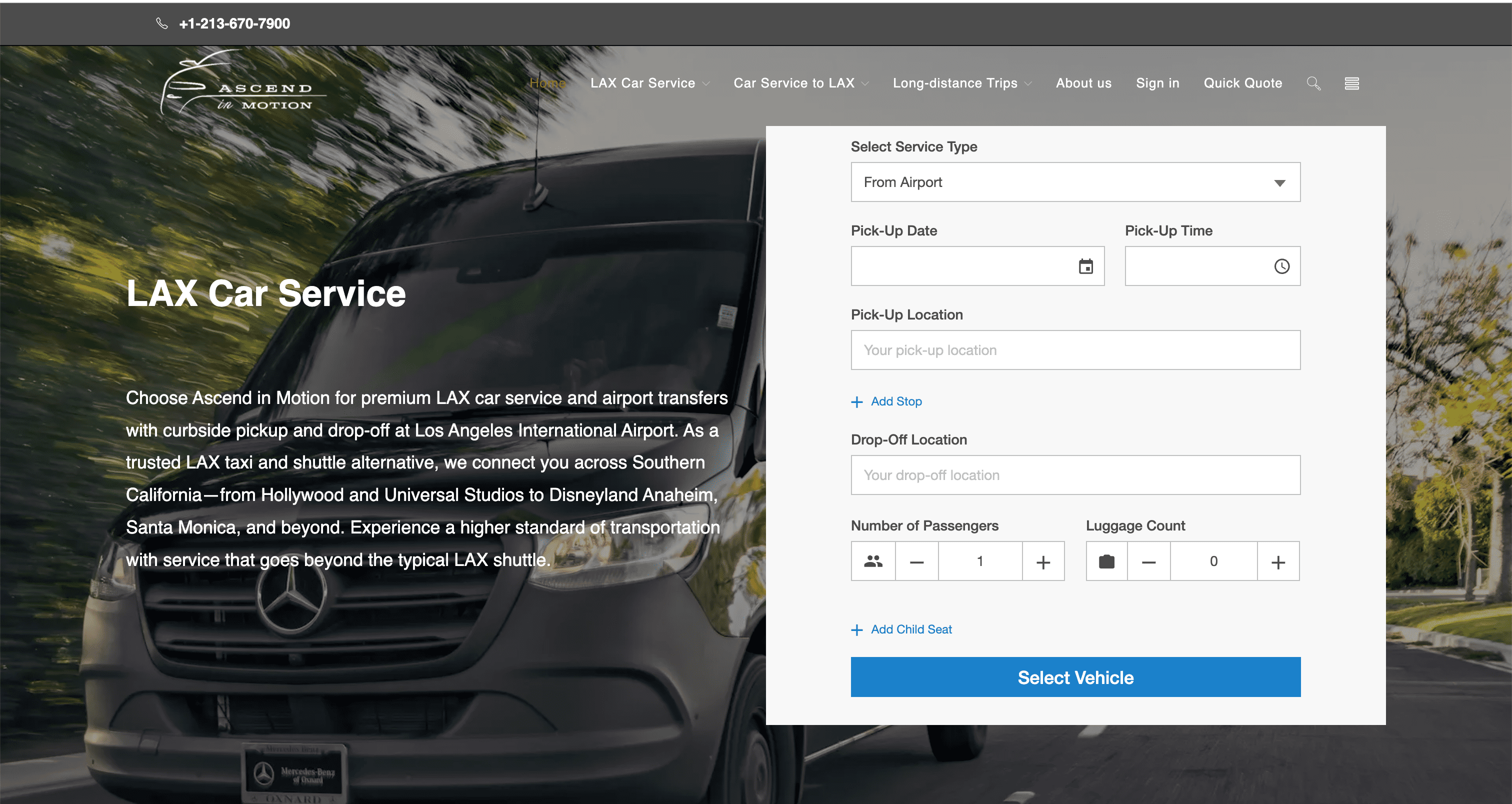
With Ascend in Motion, you can finally leave behind the hassle of indirect routing and unreliable service. Our chauffeur-driven vehicles specialize in direct, private LAX airport transportation and luxury travel to Los Angeles’s top spots. Enjoy transparent booking, real-time updates, and the peace of mind that comes from knowing you will be picked up on time and driven directly to your destination. Book your direct ride now and see how easy point to point transportation should truly feel.
Frequently Asked Questions
What are the main benefits of point to point transportation?
Point to point transportation offers several advantages, including reduced travel time, minimized intermediate stops, a personalized travel experience, and lower overall complexity in transit. This efficiency can greatly enhance the travel experience.
How do point to point transportation systems utilize technology?
These systems leverage advanced technologies such as real-time GPS tracking, intelligent routing algorithms, and dynamic scheduling to optimize passenger movement and improve operational efficiency, ensuring timely services and better resource management.
In what scenarios is point to point transportation commonly used?
Point to point transportation is commonly used for various scenarios, including airport and hotel transfers, corporate travel, medical transportation, special event transportation, and sightseeing tours, providing a tailored solution for each situation.
How do point to point transportation services improve environmental sustainability?
By minimizing unnecessary vehicle movements and optimizing route planning, point to point transportation reduces vehicle miles traveled, leading to decreased carbon emissions and enhancing urban mobility infrastructure, thus promoting a more sustainable transportation model.
