
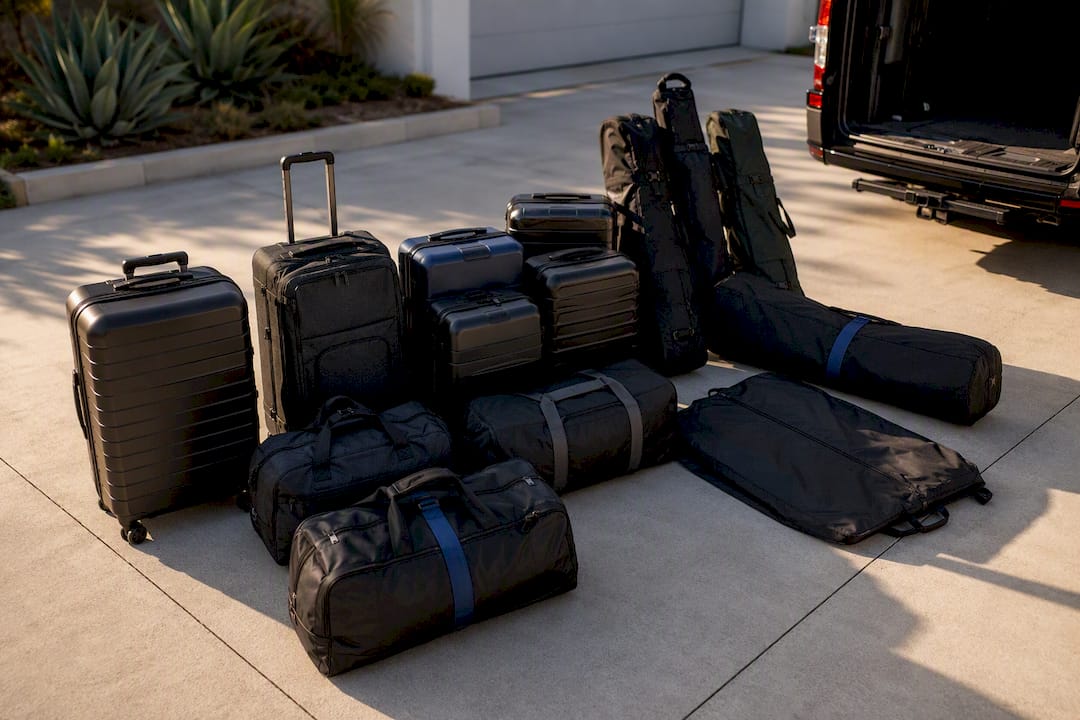
A 12-passenger Sprinter usually carries a dozen or more large checked suitcases plus carry-ons, while a 15-passenger layout typically holds fewer large bags due to reduced rear cargo space as seat rows increase. High-roof, extended-wheelbase configurations push those numbers higher; standard-roof crew vans push them lower. Before you book, tell your chauffeur service the exact bag count, size mix, and any oversized items so they can confirm the right van.
TL;DR:
- A 12-passenger Sprinter can typically hold 12 to 16 large suitcases depending on cargo space and configuration, but weight limits may restrict loads before volume does.
- Upgrading to a high-roof, extended-wheelbase van can add several more bags of capacity without changing the passenger count.
- For oversized items like skis, golf bags, or strollers, exterior racks and lockable boxes are advisable, though they add weight and can affect van handling.
- Accurate luggage counts and item types are essential when booking, as omitted details may lead to undersized vehicles or the need for multiple vans.
- Always verify the specific vehicle’s payload and cargo dimensions before the trip, especially when dealing with heavy or oversized luggage.
Table of Contents
- Sprinter Van Luggage Capacity by Configuration
- How Sprinter Layouts Change Usable Luggage Space
- Packing and Loading Strategies That Maximize Sprinter Cargo Space
- Handling Skis, Golf Bags, Strollers, and Other Oversized Items
- What to Tell Your Chauffeur Service When Booking
- What Years of Sprinter Bookings Have Taught Us
- What the Numbers Actually Tell You
- Ready to Book a Sprinter With the Right Cargo Space
- Sources
Sprinter Van Luggage Capacity by Configuration
Cargo volume swings enormously depending on which Sprinter you’re booking. A cargo-only Sprinter with no seats can hold up to roughly 533 cubic feet of usable space, while a fully seated passenger van with three bench rows might offer as little as 117 cubic feet behind the last row. That gap is the entire story of sprinter van luggage planning: every seat you add subtracts cargo room, and every inch of wheelbase or roof height you gain gives some of it back.
Here’s how that translates into real bag counts for the layouts most transport planners actually book:
| Configuration | Approximate cargo volume | Payload note | Realistic bag count |
|---|---|---|---|
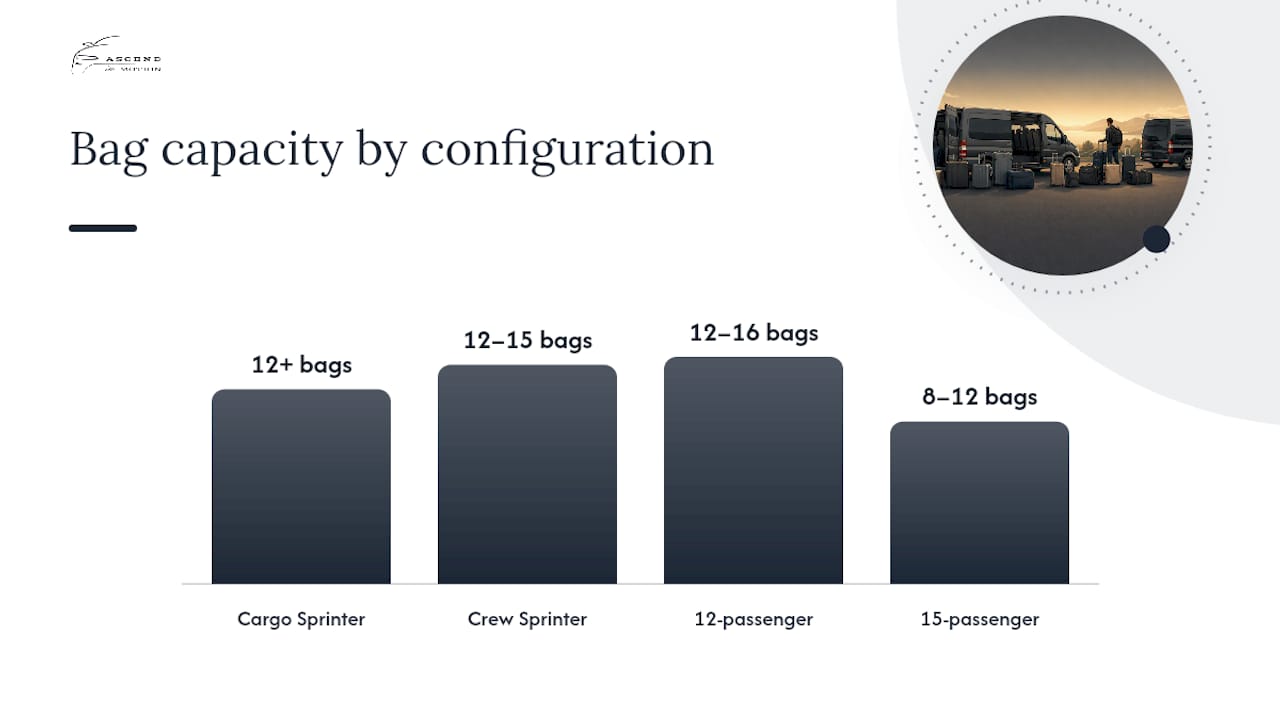
| Cargo Sprinter (no seats) | Up to ~533 cu ft | ~3,100–3,300 lb typical | dozen or more large checked suitcases |
| Crew Sprinter (2 rows) | ~200–300 cu ft (varies by roof) | Similar payload range | 12 to 15 large bags |
| 12-passenger van | ~130–180 cu ft behind seats | Confirm exact trim | 12–16 large bags |
| 15-passenger van | As low as ~117 cu ft | Confirm exact trim | 8–12 large bags |
Those bag counts assume a mix of standard sizes: carry-ons around 22 inches, medium checked bags at 24 to 26 inches, and large checked bags in the 28 to 32 inch range. Swap in oversized items and the math changes fast.
Volume isn’t the only ceiling, either. Mercedes-Benz lists payload figures around 3,100 to 3,300 pounds for many passenger configurations, and that number varies by model year and trim. Once you load 14 adults and their bags, weight can become the binding constraint before the cargo area even looks full. If your group runs heavier than average or you’re hauling golf clubs and hard-shell cases, ask your provider to verify the specific van’s rated payload rather than assuming every Sprinter carries the same limit.
How Sprinter Layouts Change Usable Luggage Space
Three layout types dominate the Sprinter lineup, and each hands you a different luggage equation.
- Passenger vans prioritize seats over storage, with three or four bench rows eating into the rear cargo well.
- Crew vans split the difference, usually seating five to seven people while keeping a generous open cargo area behind the last row.
- Cargo vans carry no permanent seating at all, so nearly the entire body becomes usable volume.
Wheelbase and roof height matter just as much as layout. A 170-inch extended wheelbase with a high roof adds meaningful vertical and linear space over the standard 144-inch, low-roof version, which means more stacking room for large suitcases and enough headroom to load bags upright instead of flat. Swapping a 15-passenger van’s rear bench for a smaller row, or moving up to a high-roof crew configuration, can realistically add several more large bags of capacity without changing the group size at all.
Pro Tip: If your group is borderline between a 12-passenger and 15-passenger van, ask whether a high-roof crew configuration is available. You often keep nearly the same seating while gaining noticeably more usable cargo depth.
Packing and Loading Strategies That Maximize Sprinter Cargo Space
Getting the most out of sprinter van cargo space starts before anyone reaches the curb, and it depends on a few deliberate choices about how bags are packed and stacked.
- Choose soft-sided luggage when space is tight. Compression cubes and duffel bags flex around gaps that rigid hard-shell cases can’t fill, which matters most when you’re near the van’s limit.
- Wear bulky layers instead of packing them. A jacket worn on the body is one less item competing for cargo room.
- Keep fragile and valuable items in carry-ons that travel with passengers rather than in the stacked cargo area.
- Load heaviest and largest bags first, positioned low and toward the rear axle, then build lighter bags on top.
- Preserve aisle access so passengers can board without climbing over luggage, and group family or travel-party items together for faster curbside sorting.
- Secure the load with straps or cargo nets and distribute weight evenly side to side, never favoring one side of the van.
If the group’s bag count creeps past what a single van can safely hold, the smarter move is accepting a second vehicle rather than forcing an overloaded van onto the freeway. A cracked bumper or a delayed pickup because bags wouldn’t fit costs more than the second van ever would.
Pro Tip: Golf bags, garment bags, and hard-shell cases pack far less efficiently than duffels. Treat each one as roughly 1.5 to 2 standard checked bags when you’re estimating how many suitcases your group’s van will realistically hold.
Handling Skis, Golf Bags, Strollers, and Other Oversized Items
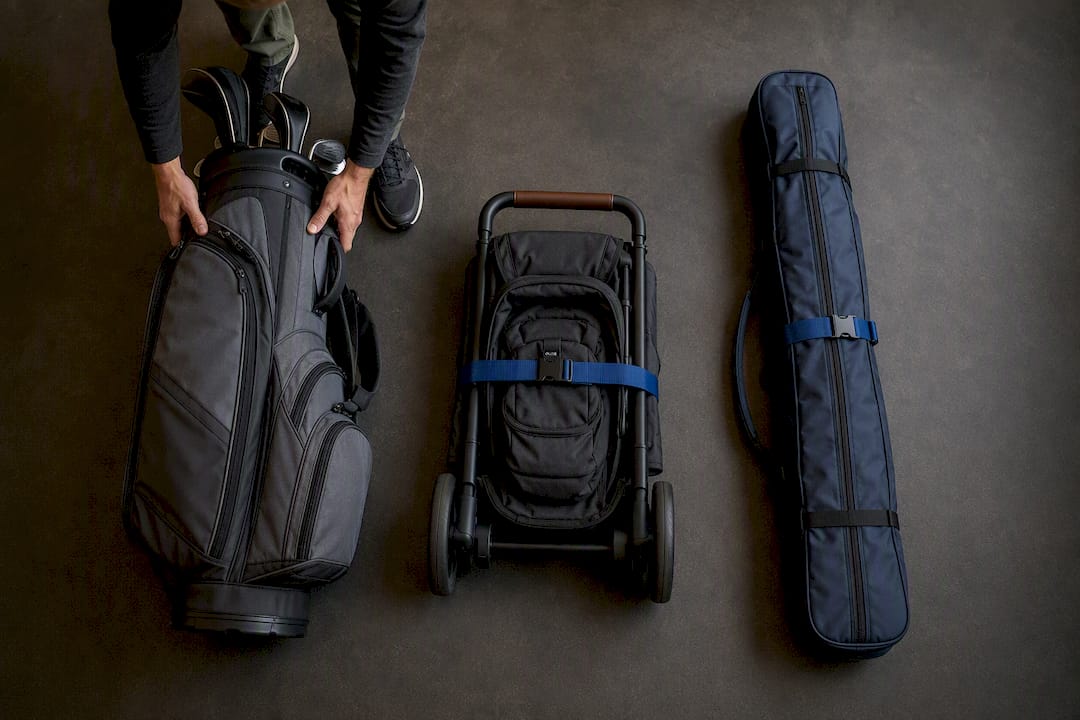
Most instrument cases, folded strollers, and single golf bags fit inside a high-roof, extended cargo Sprinter without much trouble. Skis, multiple golf bags for a full foursome, or several oversized cases at once often push past what the interior can comfortably absorb, especially alongside a full passenger load.
That’s when exterior storage earns its keep:
- Roof racks add flat surface area for skis or long, narrow items but require secure mounting and add wind resistance.
- Rear-mounted carriers work well for bags that don’t need to stay dry or locked.
- Lockable aluminum boxes, like the models Vanlife Outfitters builds for van conversions, offer weatherproofing and security at the cost of added weight and a more involved installation.
Every pound mounted outside the van still counts against the total payload, and exterior loads can shift a Sprinter’s handling more than an equivalent load packed low inside the cargo area.
What to Tell Your Chauffeur Service When Booking
A reliable vehicle recommendation depends entirely on what you tell the operator up front. Skip a detail and you risk a van that’s the wrong size for the day.
- State your total passenger count and whether it’s fixed or might change.
- Break down luggage by size: carry-ons, medium bags, and large checked bags, counted separately.
- Flag special items by name: golf bags, skis, cellos, car seats, strollers.
- Share flight or cruise details, since airport curb rules and cruise terminal loading zones vary.
- Mention any curb constraints, like a narrow driveway or a loading dock with height restrictions.
With that information, most operators can respond with a specific plan: removing a seat row, upgrading to a high-roof van, adding an exterior box, or, when the numbers simply don’t work, recommending a second vehicle. Treat any request for four or more golf bags, a full ski party, or a passenger count above 13 with checked luggage as an automatic signal to ask about upgrading before the trip, not after everyone’s standing at the curb.
What Years of Sprinter Bookings Have Taught Us
Fleet planning around 12 to 15 seat Sprinters comes down to matching the roof and wheelbase to the trip, not just the headcount. Airport pickups tend to run tighter on time, so bags get staged and pre-sorted by size before the flight even lands. Cruise transfers usually carry heavier loads, since travelers pack for a week or more, so we plan conservative capacity estimates rather than cutting it close. If you’re unsure what your group needs, request a luggage assessment before your date so the right van shows up the first time.
What the Numbers Actually Tell You
Manufacturer specs give you a ceiling, not a promise. The gap between a Sprinter’s maximum published cargo volume and what a fully seated passenger van can realistically carry is the detail most booking guides skip entirely, and it’s the one that causes actual problems at the curb.
The conventional advice, pack light and hope for the best, undersells how much configuration matters. A 15-passenger van and a high-roof crew van with similar seating can differ by several bags’ worth of usable space. Guessing at that difference is how groups end up stranded with a suitcase that won’t close the door.
What should you prioritize first? Count your bags by size before you count your passengers. Seating is the easy part; cargo geometry is where trips actually fall apart. Confirm the specific vehicle’s payload and cargo dimensions rather than assuming every Sprinter behaves the same, and treat any oversized item as a conversation to have at booking, not an afterthought to manage at the curb.
— Sirus
Ready to Book a Sprinter With the Right Cargo Space
Guessing at luggage capacity is how groups end up with a van that’s too small and a curb full of frustrated passengers. We run a fleet of black Sprinter vans and Mercedes-Benz vehicles seating 12 to 15 passengers, and every booking includes a real conversation about your exact bag counts, oversized items, and curb constraints before the vehicle gets assigned.

Alt text: Black Mercedes-Benz Sprinter van loaded with luggage for an airport group transfer.
If your group has golf bags, ski equipment, or more than a dozen suitcases between you, tell us the specifics when you request a quote and we’ll confirm whether a high-roof Sprinter, an exterior storage option, or a second vehicle makes more sense. Start by checking availability and requesting a luggage assessment through our LAX airport transfer service, and we’ll match the van to your trip instead of the other way around.
Sources
- Mercedes-Benz Sprinter review with cargo volume figures
- Understanding Sprinter Van Luggage Capacity for Your Transport Needs

