
TL;DR:
- Private senior transportation services provide safe, personalized rides with trained drivers for elderly individuals needing mobility assistance. These services prioritize dignity and comfort, offering door-through-door escort, flexible scheduling, and vehicle accommodations, often with private-pay billing. Planning rides 24 to 48 hours in advance and verifying driver training helps ensure safe, reliable, and stress-free transportation.
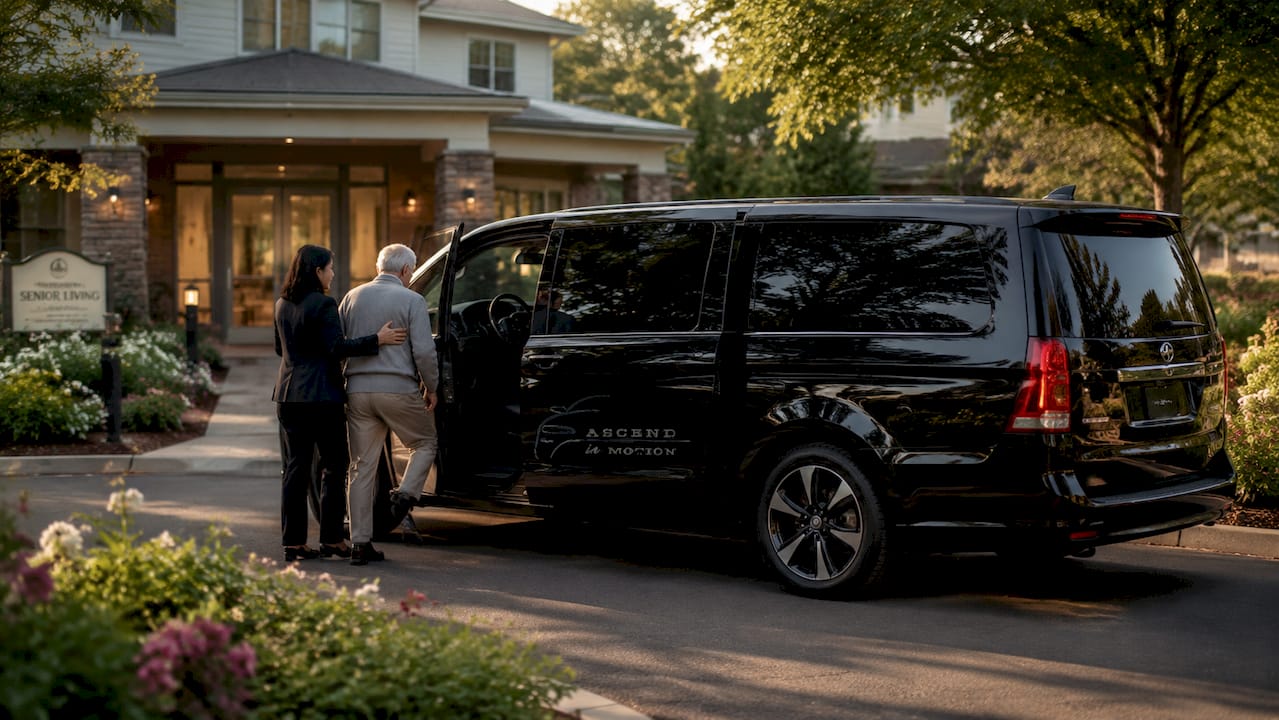
Private senior transportation services are specialized rides designed to safely and comfortably move elderly individuals to medical appointments, errands, and social outings with personalized, hands-on assistance. Unlike standard taxis or rideshare apps, these services pair seniors with trained drivers who understand mobility challenges, cognitive needs, and the importance of dignity at every step. For families and caregivers managing a loved one’s schedule, knowing how these services work, what to look for, and how to book correctly makes a real difference in safety and peace of mind.
What are private senior transportation services?
Private senior transportation services are a category of specialized transport distinct from standard rideshare or taxi options. The industry term most commonly used alongside this category is non-emergency medical transport, or NEMT, which covers rides to medical visits that do not require an ambulance. Private elderly transportation expands on that definition to include social outings, errands, and any trip where a senior needs personalized care.
The most important distinction in this category is the difference between door-to-curb and door-through-door service. Door-to-curb means the driver waits at the vehicle. Door-through-door means the driver physically escorts the senior from inside the home all the way to the interior of the destination. For a senior navigating stairs, a narrow hallway, or an unfamiliar clinic entrance, that difference is significant.
Drivers in this field are not general contractors picking up any available ride. Trained, vetted drivers undergo background screening, defensive driving certification, and specialized training in mobility device securement and respectful communication with cognitively impaired passengers. That level of preparation sets senior ride services apart from standard rideshare platforms, where driver training focuses on navigation and customer ratings rather than fall prevention or medical sensitivity.
Standard rideshare and taxi services prioritize speed and efficiency. Private senior transportation prioritizes dignity and fall prevention over speed metrics. That shift in priority changes everything from how a driver opens a door to how long they wait at a pickup location.
Key features that separate senior-focused services from general transport include:
- Door-through-door escort from home interior to destination interior
- Trained drivers certified in mobility device securement and senior communication
- Flexible wait times that accommodate slow movement or medical delays
- Mobility aid accommodation for walkers, canes, and scooters (note: wheelchair-accessible vehicles vary by provider)
- Consistent, vetted drivers rather than anonymous contractors
Pro Tip: Ask any provider directly whether they offer door-through-door or only door-to-curb service. Many companies advertise “senior transport” but only provide curb-side pickup, which may not meet your loved one’s actual needs.
On the cost side, private senior transportation is typically private-pay. Medicare generally does not cover non-emergency transportation. However, some long-term care insurance policies and Flexible Spending Accounts may reimburse these costs. Always request a detailed receipt that includes the driver’s name, vehicle information, pickup and drop-off times, and trip purpose.
How to schedule and prepare for a senior transport ride
Scheduling a senior ride correctly reduces stress for both the caregiver and the senior. Most specialized providers recommend booking at least 24–48 hours in advance to guarantee vehicle and driver availability. State-managed NEMT programs through Medicaid require a 48-hour scheduling window as a standard policy, typically arranged through state-contracted brokers.
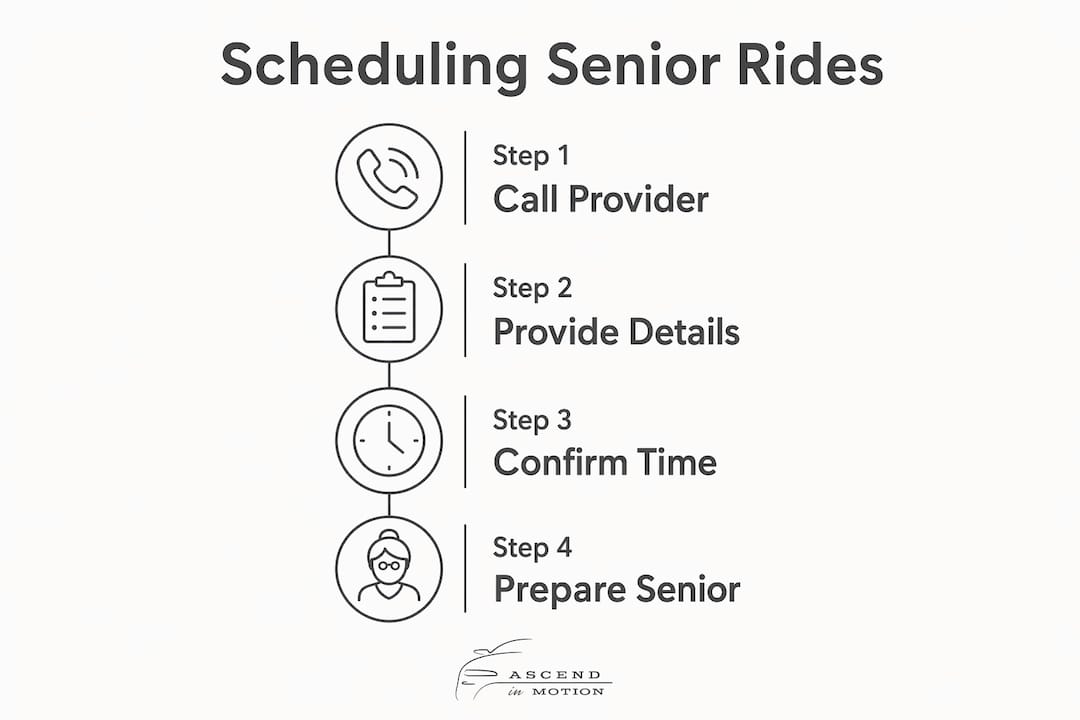
Same-day bookings are sometimes possible with private providers, but availability is not guaranteed. Families relying on same-day transport for recurring medical appointments take on unnecessary scheduling risk. Planning ahead is the single most effective way to avoid a missed ride.
Follow these steps when booking a senior transport ride:
- Book 24–48 hours ahead. Confirm the exact pickup time and allow a 15-minute buffer before any appointment start time.
- Communicate mobility needs clearly. Tell the provider whether your loved one uses a walker, cane, or scooter, and whether door-through-door escort is required.
- Confirm driver and vehicle details. Request the driver’s name and vehicle description before the pickup day so your loved one knows who to expect.
- Prepare documents and medications. Gather insurance cards, appointment paperwork, and any medications needed for the trip the night before.
- Inform the destination. Call the clinic or facility to confirm the appointment and let them know the senior is arriving by private transport, especially for hospital discharges.
Pro Tip: For recurring appointments such as weekly therapy or dialysis, ask your provider about a recurring ride program. Consistent scheduling with the same driver reduces anxiety for seniors with cognitive impairments and simplifies the caregiver’s weekly planning.
What features should you look for in a senior transport provider?
Selecting the right provider requires looking beyond price. The features below directly affect safety, comfort, and reliability for your loved one.
Assistance level and driver training
The provider’s assistance model is the first thing to evaluate. Drivers trained to reduce fall risk and assist during transitions, such as from a home to a vehicle, deliver a measurably safer experience than untrained drivers. Ask whether drivers are employees or independent contractors. Employed drivers typically receive consistent training and are held to higher standards.
Scheduling flexibility and recurring programs
Some providers offer private client programs that give members priority scheduling and consistent drivers for planned, recurring trips. These programs reduce the stress of last-minute bookings and build familiarity between the driver and the senior. For families managing weekly medical appointments, this model is worth the premium.
Pricing, billing, and reimbursement
Pricing for private elderly transportation varies by distance, assistance level, and vehicle type. Key billing considerations include:
- Flat-rate vs. metered pricing: Flat rates are easier to budget for recurring trips.
- Cancellation policies: Understand the notice period required to avoid fees.
- Reimbursement documentation: Providers should supply itemized receipts for FSA or long-term care insurance claims.
- Insurance compatibility: Confirm whether the provider works with any supplemental insurance plans your loved one holds.
Vehicle type and comfort
Vehicle selection matters for seniors with limited mobility. Black minivans and Mercedes-Benz Sprinters offer ample interior space, easy entry, and comfortable seating for longer trips. Confirm the vehicle type when booking, especially for trips involving medical equipment or companions traveling alongside the senior.

Communication and customer service
A quality provider offers 24/7 contact options for scheduling changes, driver delays, or emergencies. Clear communication protocols, such as a driver call or text 30 minutes before arrival, reduce anxiety for seniors waiting alone at home.
What destinations do private senior transport services cover?
Private senior transportation typically supports a wide range of trip types. Common destinations include:
- Medical appointments: Primary care visits, specialist consultations, lab work, and imaging
- Therapy sessions: Physical therapy, occupational therapy, and speech therapy on recurring schedules
- Hospital discharges: Coordinated pickup after inpatient stays, often requiring advance notice to the facility
- Personal errands: Grocery shopping, pharmacy pickups, and banking
- Social outings: Family visits, religious services, senior center activities, and dining
These services also accommodate seniors with cognitive impairments, not just physical mobility challenges. A driver trained in respectful communication with a passenger experiencing dementia provides a fundamentally different ride than a standard taxi. That specialized attention supports the senior’s independence and reduces caregiver burden at the same time.
For families in Southern California, senior independence through private rides covers both local point-to-point trips and longer regional travel, giving seniors access to destinations across the area without depending on family members for every outing.
Group or multi-passenger trips are also available through some providers, useful when a senior attends a group therapy session or travels with a companion or family member.
Key Takeaways
Private senior transportation services deliver safety, dignity, and reliable scheduling that standard rideshare options cannot match for elderly individuals with mobility or cognitive needs.
| Point | Details |
|---|---|
| Door-through-door matters | Escort from home interior to destination interior is critical for seniors with mobility or cognitive challenges. |
| Book 24–48 hours ahead | Most providers and all Medicaid NEMT programs require advance scheduling to guarantee availability. |
| Verify driver training | Employed drivers with fall-prevention and mobility device training provide a safer ride than untrained contractors. |
| Confirm payment options | Medicare rarely covers these rides; request itemized receipts for FSA or long-term care insurance reimbursement. |
| Recurring programs reduce stress | Private client programs with consistent drivers and priority scheduling simplify caregiving for weekly appointments. |
What families often get wrong about senior transport
When I talk with families who have struggled with transportation for a parent or grandparent, the most common mistake is treating senior transport like a standard rideshare booking. They open an app, request a ride, and assume the driver will handle the rest. That assumption leads to real problems: a driver who waits at the curb while a senior with a walker tries to navigate three porch steps alone, or a last-minute cancellation the morning of a dialysis appointment.
The second mistake is focusing entirely on price. Affordable senior transport is a legitimate goal, but the cheapest option often cuts corners on driver training or assistance levels. I have seen families save $20 on a ride and spend the next week managing the consequences of a fall during an unassisted transfer.
The detail most families overlook is the emotional dimension. A senior who rides with the same driver every Tuesday to physical therapy builds a small but meaningful relationship. That consistency reduces anxiety, especially for seniors with early-stage dementia. Concierge-level private client programs exist precisely because that continuity has real value. It is not a luxury add-on. For many seniors, it is the difference between a ride they dread and one they look forward to.
My practical advice: call the provider before booking, ask specific questions about driver training and assistance levels, and request a trial ride before committing to a recurring program. The right service will answer every question clearly and without hesitation.
— Sirus
Ascendinmotion: premium private rides across Southern California
Families and caregivers across Los Angeles trust Ascendinmotion for reliable, chauffeur-driven transportation that treats every passenger with care and professionalism. Ascendinmotion operates a fleet of black minivans and Mercedes-Benz Sprinters, offering spacious, comfortable rides for seniors traveling to medical appointments, therapy sessions, social outings, and point-to-point destinations throughout Southern California.
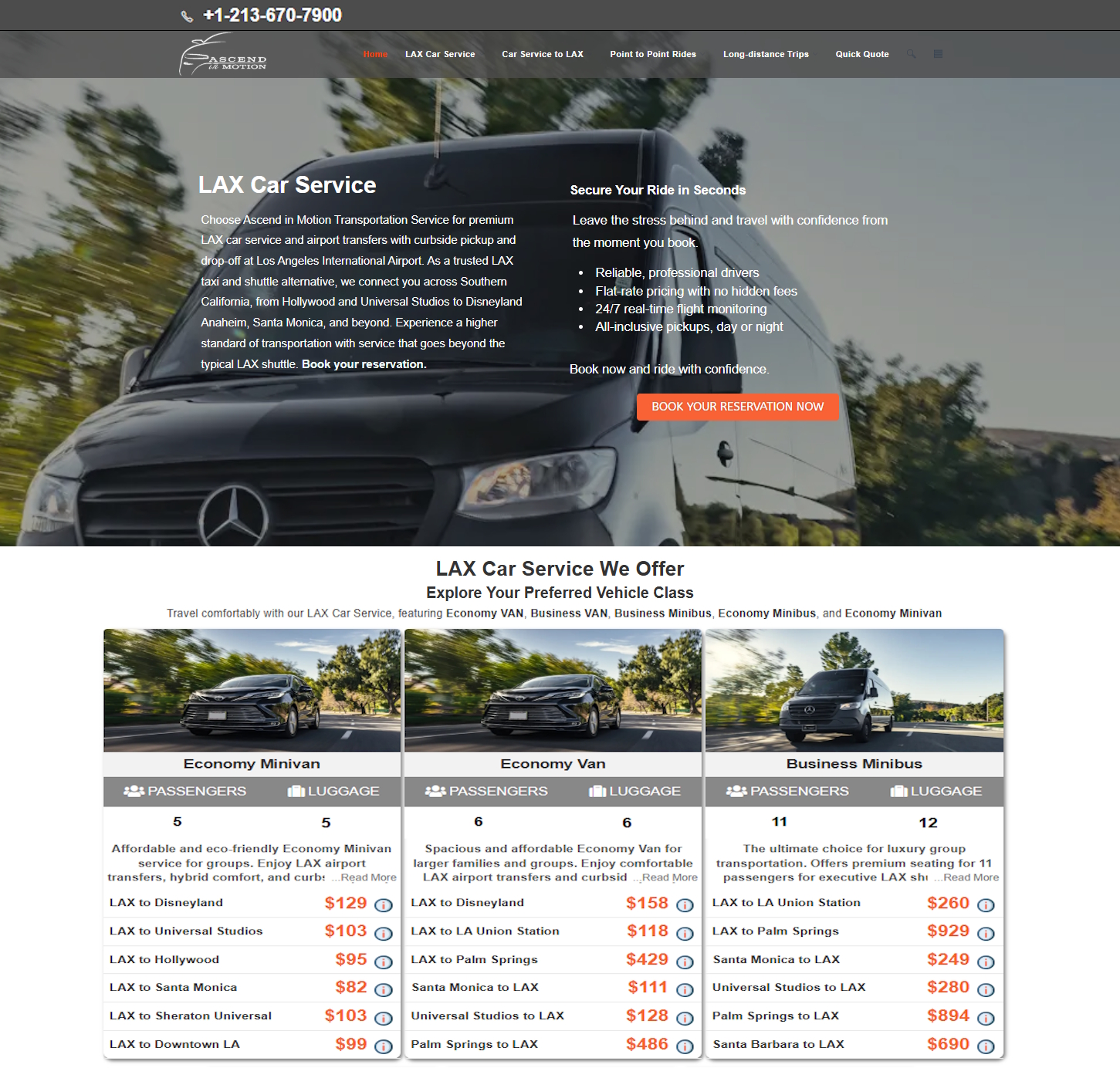
Every Ascendinmotion driver is vetted and trained to deliver a calm, attentive experience. Advance scheduling is available to lock in your loved one’s ride well ahead of any appointment. For families who want to understand what sets a premium car service apart from standard options, Ascendinmotion’s approach to comfort, punctuality, and personalized attention answers that question directly. Book your ride today and give your loved one the reliable, dignified transport they deserve.
FAQ
What is door-through-door senior transportation?
Door-through-door service means the driver physically escorts the senior from inside their home to the interior of the destination. This is distinct from door-to-curb service, where the driver waits at the vehicle.
Does Medicare cover private senior transportation?
Medicare generally does not cover non-emergency private senior transportation. Some long-term care insurance policies and FSAs may reimburse these costs when you provide an itemized receipt with driver and trip details.
How far in advance should I book a senior transport ride?
Most private providers recommend booking 24–48 hours ahead. State-managed Medicaid NEMT programs require a minimum 48-hour advance booking through state-contracted brokers.
What should I tell the provider when booking?
Communicate your loved one’s mobility equipment needs, whether door-through-door escort is required, and any cognitive considerations. Also confirm the driver’s name and vehicle details before pickup day.
Are private senior transport services available for recurring appointments?
Yes. Many providers offer recurring ride programs or private client models that assign consistent drivers and provide priority scheduling, which is especially helpful for weekly therapy or dialysis appointments.
