
Driving or taking rideshare gets you from LAX to Dana Point fastest, at roughly 55 to 75 minutes for the 63 mile trip. Public transit costs the least, around $25 to $55, but takes 3 or more hours with transfers. For door-to-door reliability without the guesswork, Ascend in Motion’s flat-rate private transfers are the strongest choice for travelers who want a driver waiting, luggage handled, and a set price agreed on before wheels ever touch the runway.
TL;DR:
- Public transit from LAX to Dana Point takes over three hours and costs $26 to $55, involving multiple transfers and less predictability.
- Rideshare or taxi options typically cost around $135 and take roughly 75 minutes, but prices can surge during peak hours or high demand.
- Private car services like Ascend in Motion offer flat-rate, door-to-door transfers with real-time flight monitoring and luggage handling, ideal for tight schedules.
- Shared shuttles cost between $100 and $120 with potential delays over 90 minutes, making them suitable for small groups on a budget.
- Allow at least 90 minutes after domestic flights or more for international arrivals to account for baggage and customs when booking rides.
Table of Contents
- Which LAX to Dana Point Option Fits Your Trip?
- How Do You Take Public Transit From LAX to Dana Point?
- What Does Driving or Rideshare Cost From LAX to Dana Point?
- Are Shared or Private Shuttles Worth It for This Route?
- LAX to Dana Point: Comparing Time, Cost, and Convenience
- How Should You Time Your LAX Pickup?
- What Actually Matters When Choosing Your Ride
- Book Reliable LAX to Dana Point Transfer Service
- Sources
Which LAX to Dana Point Option Fits Your Trip?
Every route to Dana Point trades off speed, cost, and hassle differently, so the right pick usually comes down to what you’re carrying and who’s traveling with you. A solo business traveler with one bag has different needs than a family of five hauling surfboards and car seats. Here’s how the main modes stack up before you dig into the details:
- Drive, rideshare, or taxi: Fastest door-to-door option; cost varies by traffic and demand; works well for solo travelers or small groups with manageable luggage.
- Public transit (FlyAway, then Amtrak, then local bus): Cheapest way to travel, but multiple transfers stretch the trip past three hours; best suited to budget-focused travelers without tight schedules.
- Shared shuttle: Mid-range pricing with occasional extra stops; a reasonable fit for solo travelers or small groups watching their budget.
- Private car service like Ascend in Motion: The most dependable and comfortable option, especially for groups, business travelers, or anyone arriving on a schedule that can’t slip.
How Do You Take Public Transit From LAX to Dana Point?
Getting to Dana Point without a car is possible, but it takes patience and a little planning. The route runs through downtown Los Angeles before heading south along the coast, and travelers should expect several hand-offs along the way.
- Catch the LAX FlyAway bus to Union Station from the LAX transit center, reachable by the free LAX shuttle from any terminal. The ride typically runs under an hour depending on traffic.
- Board the Amtrak Pacific Surfliner at Union Station, which reaches San Juan Capistrano in about 1 hour and 14 minutes, with fares often starting in the mid $20s when booked ahead.
- Transfer for the final leg into Dana Point. Since Pacific Surfliner service stops at San Juan Capistrano rather than Dana Point Harbor directly, most travelers need a short local bus or rideshare to finish the trip.
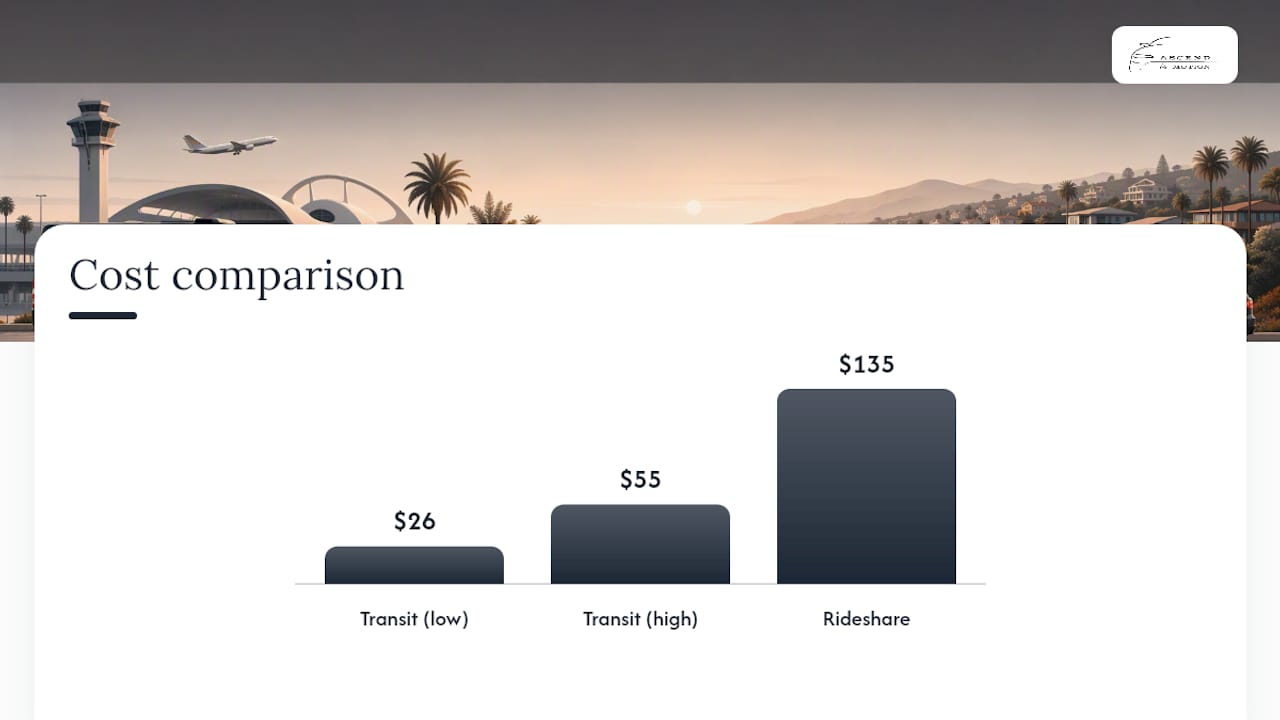
Total travel time and cost: Combined routes across bus and train typically run about 3 hours and 22 minutes and cost $26 to $55. That’s real savings against a $135 rideshare fare, but it comes at the cost of two to three transfers, each with its own timing risk.
Buy Amtrak and FlyAway tickets through their apps before you land. It saves time at the kiosk and locks in your seat during busy travel windows. Keep luggage manageable, since you’ll be carrying it through at least two transfers, and build in slack for any late connection.
What Does Driving or Rideshare Cost From LAX to Dana Point?
If speed matters more than price, a car is still your best bet. The driving distance from LAX to Dana Point runs about 60 miles, and under normal traffic that translates to roughly 55 to 75 minutes on the road.
Uber’s own route estimator prices the trip at around $135 and 74 minutes, though that number swings with surge pricing, time of day, and how many drivers are circling the airport when you land.
- Rideshare pickup: Head to your terminal’s designated rideshare zone; LAX consolidated several pickup points, so check the app for your exact location before walking out.
- Taxi: Flat fares tend to run higher than rideshare estimates, and a tip of 15 to 20% is standard practice.
- Rental car: Makes sense if you plan to explore beyond Dana Point, but factor in fuel, tolls, and parking, which can erase any savings versus a direct transfer.
Traffic on the 405 and 5 freeways can double these estimates during weekday rush hours, so budget extra time if you’re landing between 3 and 7 p.m.
Are Shared or Private Shuttles Worth It for This Route?
Shuttles sit in the middle ground between cheap-but-slow transit and pricier private options, and which one makes sense depends entirely on how many people you’re traveling with.
- Shared shuttle: Advertised flat rates often land between $100 and $120, though extra passenger stops can stretch the ride well past 90 minutes.
- Private shuttle or charter: Costs scale with vehicle size, but you skip the extra stops entirely, a real advantage for groups or anyone on a tight schedule.
- Booking: Most shuttle operators require advance reservation, so confirm your cancellation window and get a direct phone contact for day-of coordination.
LAX to Dana Point: Comparing Time, Cost, and Convenience
| Mode | Typical time | Typical cost | Transfers | Best for |
|---|---|---|---|---|
| Rideshare (Uber) | ~75 minutes | around $135 | None | Solo travelers, speed |
| Driving/rental car | 55 to 75 minutes | $60 to $120 (gas, tolls, rental) | None | Flexibility, side trips |
| Public transit | 3+ hours | $25 to $55 | 2 to 3 | Budget travelers |
| Shared shuttle | 75 to 120 minutes | $100 to $120 | 0 to 1 | Small groups, mid-budget |
| Private car service | ~60 to 75 minutes | Flat rate | None | Groups, reliability |
These figures come from Uber’s route estimator and Rome2Rio’s aggregated transit data, and all ranges reflect typical conditions rather than guaranteed pricing.
How Should You Time Your LAX Pickup?
Arrival logistics matter as much as the ride itself, especially if you’re connecting straight into a transfer.
- Allow 90 to 120 minutes after your domestic flight lands before expecting to be in a vehicle, factoring in baggage claim and walking time to pickup zones.
- International arrivals should add extra time for customs and immigration, since those lines vary unpredictably by flight volume.
- Know your meet point in advance. Rideshare pickups happen at designated curbside zones, while a reserved car service typically meets you at baggage claim with a name sign.
- Keep your confirmation and driver’s number handy on your phone, along with a buffer estimate for traffic delays, since Southern California freeways rarely run predictably.
Pro Tip: Screenshot your reservation confirmation before you land, since airport Wi-Fi can be spotty right as you’re trying to find your driver.
Ascend in Motion tracks incoming flights and adjusts pickup timing automatically, so delays don’t leave you standing at the curb. One limitation worth noting upfront: the service does not currently offer wheelchair accessibility.
What Actually Matters When Choosing Your Ride
Most guides treat this decision as a simple speed-versus-cost tradeoff, and that framing misses the real question. The honest tradeoff is between tolerating unpredictability and paying to remove it. Public transit’s $25 to $55 fare looks great on paper until a missed connection at San Juan Capistrano turns a 3 hour trip into a 5 hour one with two suitcases and a tired kid in tow.
Rideshare solves the predictability problem most of the time, but “most of the time” isn’t the same as “every time.” Surge pricing during a Friday evening arrival bank can push that $135 estimate considerably higher, and there’s no guarantee a driver is even nearby when you land.
What the research actually supports is this: if your schedule has zero slack, whether it’s a wedding, a business meeting, or a boat reservation at the harbor, paying a predictable flat rate up front is worth more than any theoretical savings from a cheaper option. The travelers who regret their choice are rarely the ones who overpaid. They’re the ones who gambled on timing and lost.
— Sirus
Book Reliable LAX to Dana Point Transfer Service
Ascend in Motion is the direct alternative to piecing together buses, trains, and surge-priced rideshare apps for your LAX to Dana Point trip. Instead of transferring twice or watching a fare climb while you wait curbside, you book one flat-rate ride with a chauffeur who already knows your flight number.
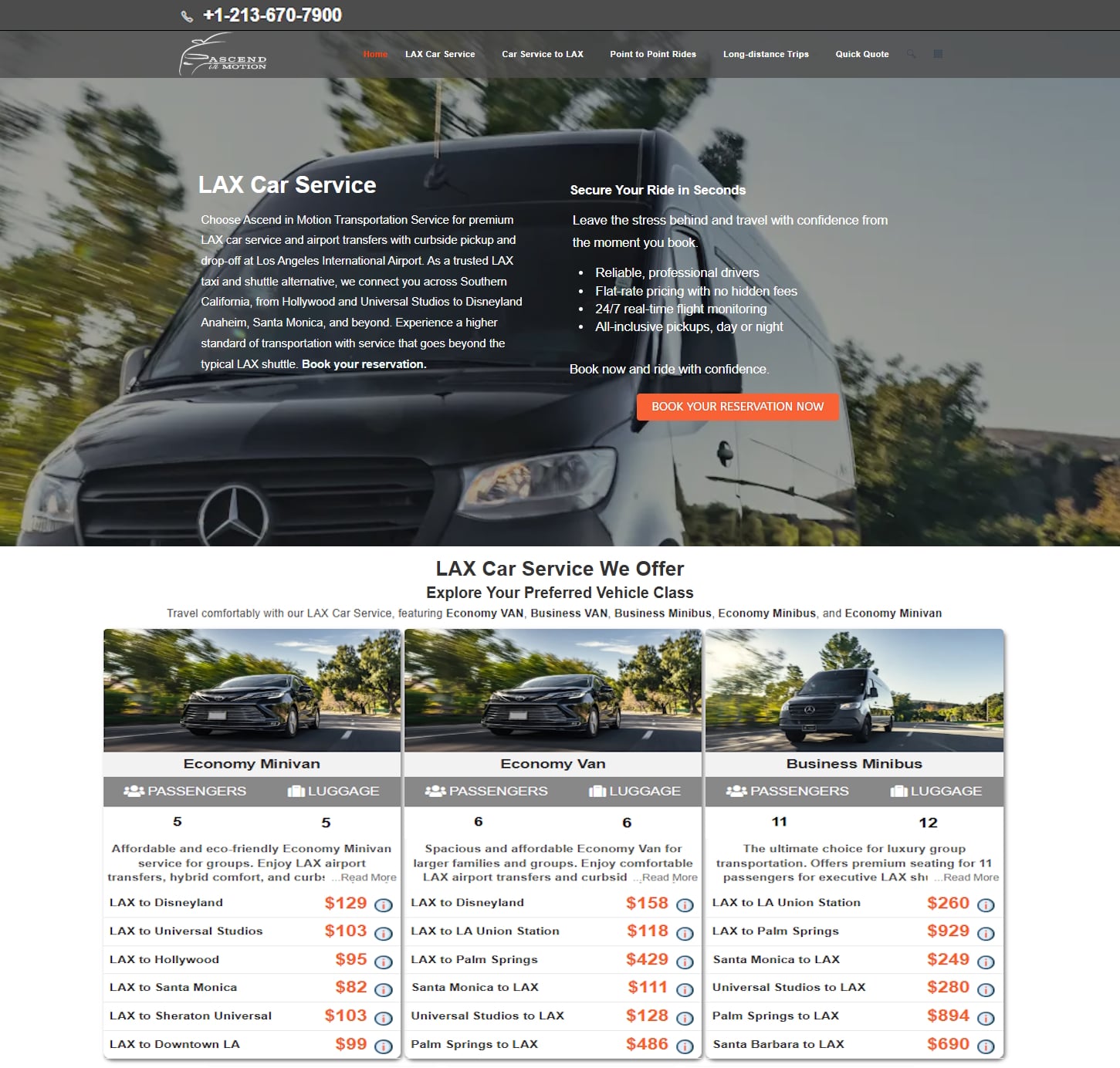
The service runs chauffeur-driven point-to-point pickups in black minivans and Mercedes-Benz Sprinters, with real-time flight monitoring so your driver adjusts automatically if you land early or late. Pricing is set before you ever leave home, meaning no surge multiplier and no guessing what the meter will read by the time you reach Dana Point Harbor. Luggage handling is included, and the same door-to-door approach applies whether you’re traveling solo or coordinating a group transfer. One thing to know upfront: wheelchair-accessible service isn’t currently offered.
Ready to lock in your fare? Reserve your chauffeur online and get a confirmed pickup time before your flight even lands.
Sources
- Los Angeles Airport (LAX) to Dana Point – 6 ways to travel …
- How to get from LAX Airport to Dana Point, CA | Uber
- Los Angeles, CA to Dana Point, CA train with Amtrak – Omio

