
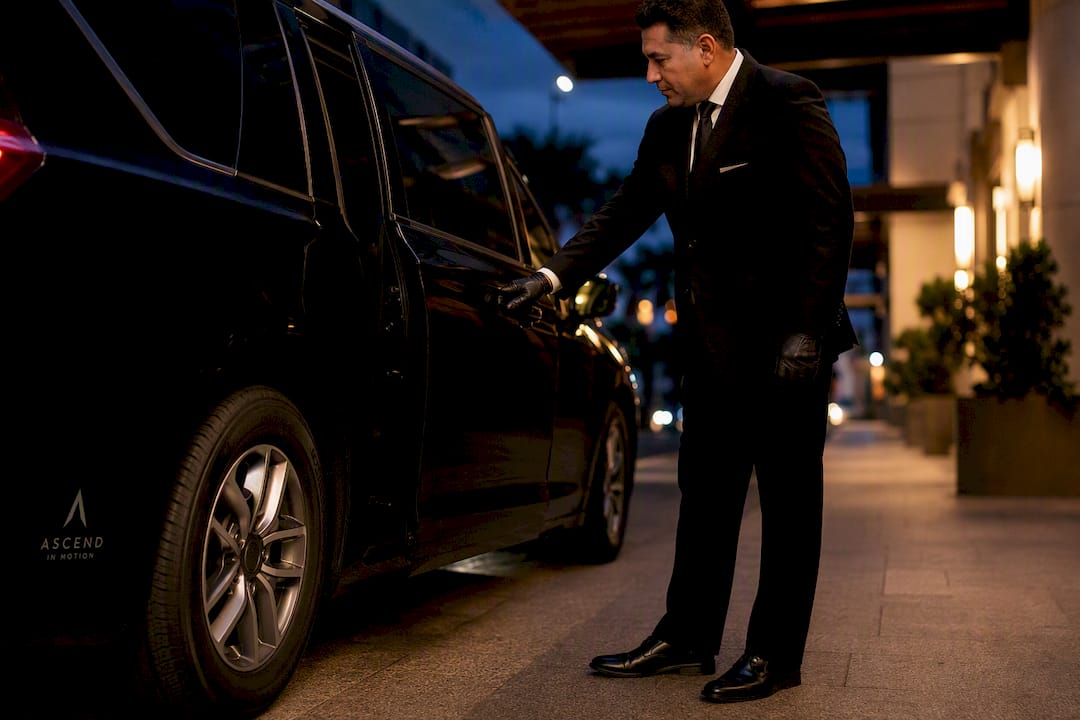
Expect a range of pricing for a single luxury sedan or SUV airport transfer in Los Angeles, and higher rates for a 4-hour charter depending on vehicle size. For multi-stop event days, book hourly “as-directed” service instead of stacking separate transfers. For one confirmed pickup and drop-off, a flat-rate transfer usually costs less. Either way, confirm whether gratuity, parking, and tolls are already baked into the total before you sign off.
TL;DR:
- Flat-rate transportation is straightforward for single transfers, but costs can rise significantly with multi-stop or long-duration bookings once time and overtime fees are included.
- The dominant factor in the final invoice is travel time, not distance, especially during peak traffic hours, which often favors hourly charters over stacking multiple point-to-point rides.
- Confirm whether gratuity, tolls, parking, and wait time are included in the quote, and always request a written, all-inclusive total before finalizing the reservation.
- Booking early during peak seasons or for multi-day events helps lock in lower rates and avoids surcharges from increased demand and stricter minimums.
- Choosing a licensed direct operator provides more transparency and the best chance for an accurate, predictable price compared to brokers or app-based ride services.
Table of Contents
- What Does Event Transportation Cost in Los Angeles?
- What Actually Drives Your Final Invoice?
- Three Real Event Budget Examples
- How Do You Get an All-Inclusive Quote?
- How Ascend in Motion Handles Event Pricing
- Hourly Charter or Point-to-Point: Which Saves More?
- Does Booking Early Actually Save Money?
- Direct Operator, Broker, or App: Which Booking Option Wins?
- How Do You Choose a Reliable Provider?
- What Are Typical Cancellation Policies?
- How Long Does Booking Take From Inquiry to Pickup?
- What the Numbers Actually Tell You
- Ready to Book Your Event Transportation?
- Sources
- FAQ
What Does Event Transportation Cost in Los Angeles?
Getting a straight answer on event transportation LA cost starts with separating two pricing models: flat-rate point-to-point and hourly charter. Each behaves differently once you factor in Los Angeles traffic, venue logistics, and fees operators tack onto a bare quote.
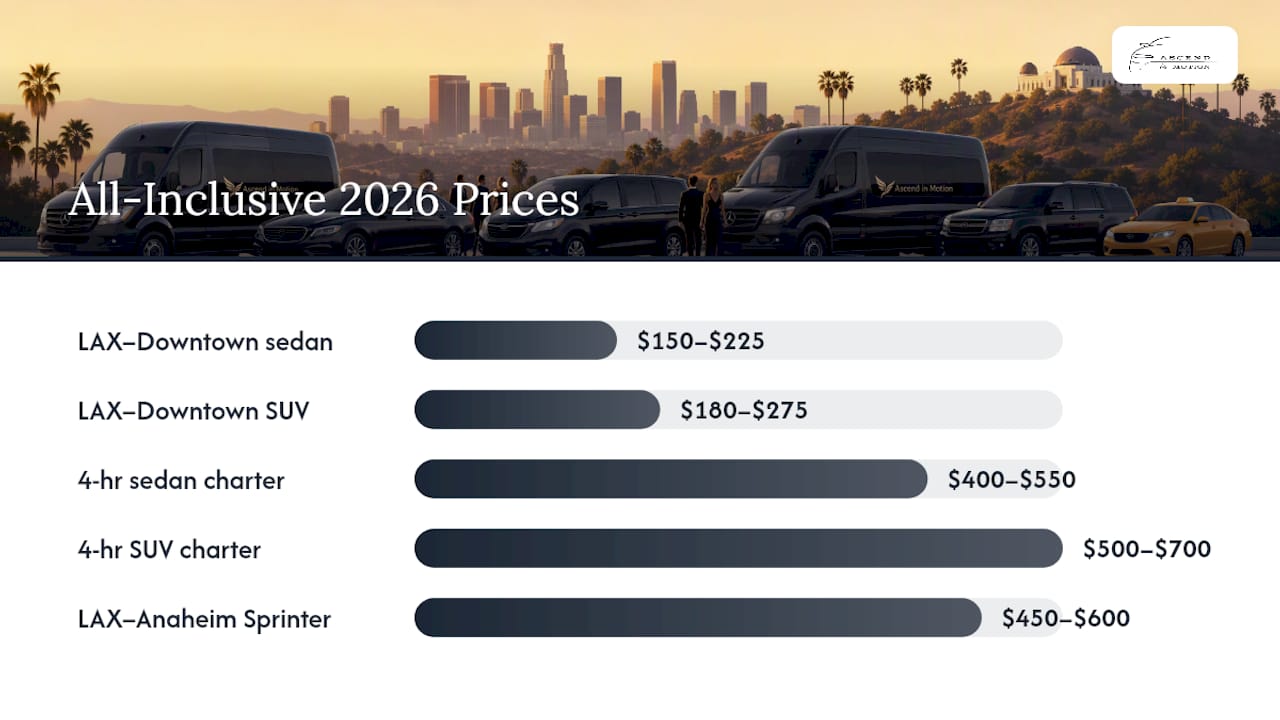
A representative industry benchmark puts all-inclusive 2026 sample ranges at $150 to $225 for a luxury sedan from LAX to Downtown, $180 to $275 for a premium SUV on the same route, $400 to $550 for a 4-hour sedan charter, $500 to $700 for a 4-hour SUV charter, and $450 to $600 for a Sprinter van running LAX to Anaheim, according to a Los Angeles car service cost guide. Those figures already account for gratuity and the fees a reputable operator typically applies, which is exactly why “all-inclusive” matters more than the sticker rate you see on a booking form.
| Service Type | Vehicle | All-Inclusive Estimate |
|---|---|---|
| LAX to Downtown LA | Luxury sedan | $150 to $225 |
| LAX to Downtown LA | Premium SUV | $180 to $275 |
| 4-hour hourly charter | Sedan | $400 to $550 |
| 4-hour hourly charter | Premium SUV | $500 to $700 |
| LAX to Anaheim | Sprinter van | $450 to $600 |
Hourly minimums matter as much as the per-hour rate. Most operators set 2 to 5 hour minimums for charter bookings, and that minimum can climb on weekends or during major events, per guidance from True North VIP’s cost breakdown. Overtime kicks in the moment you run past your booked window, usually billed in 15 or 30 minute increments at the same hourly rate.
Sample figure worth remembering: a 4-hour SUV charter in the $500 to $700 range works out to $125 to $175 per hour, which lines up closely with published executive SUV rates. Knowing that hourly baseline lets you sanity-check any quote you receive against a real market figure instead of guessing.
What Actually Drives Your Final Invoice?
Time, not distance, is the dominant cost factor in Los Angeles. A 12-mile trip across town during rush hour can eat more billable minutes than a 40-mile freeway run at midnight, and industry observers point to traffic congestion as the reason hourly charters often beat stacking multiple point-to-point bookings on event days with several stops, according to the same Los Angeles cost analysis.
Beyond time, watch for these common line items:
- Gratuity typically 18 to 22%, sometimes already folded into the “all-inclusive” quote
- Fuel, toll, and airport access fees that vary by route and pickup location
- Parking charges at venues, hotels, or event centers
- Wait time and overtime, billed once you exceed the agreed window
- Late-night or holiday surcharges, common around New Year’s Eve, award season, and major concerts
Operators also differ on how they define “wait time” versus “hourly time.” Some charge wait time in 15-minute increments separately, while others simply count it toward your hourly block. That distinction alone can shift a quote by $50 or more on a long event day, so get the definition in writing before you book.
Pro Tip: Ask directly: “How do you bill wait time, and what triggers overtime?” A reputable operator will answer in one sentence. If you get a vague response, treat that as a red flag and ask another provider.
Three Real Event Budget Examples
Concrete numbers beat abstract ranges. Here’s how three common Los Angeles scenarios shake out once gratuity and fees are folded in.
- Single airport transfer, LAX to Beverly Hills. A premium SUV for two passengers with standard luggage typically lands in the $180 to $250 all-inclusive range, assuming no flight delay pushes the pickup into a wait-time charge.
- Half-day multi-stop event, 4 hours. A group of six moving between a hotel, a venue, and a dinner reservation usually books a Sprinter or SUV charter. Expect $500 to $700 all-inclusive, with overtime billed per 15-minute block if the schedule runs long.
- Evening event with a late finish. A wedding or gala with a 6-hour hold plus a possible 1-hour overtime buffer, parking at the venue, and standard gratuity often lands between $750 and $950 all-inclusive.
| Scenario | Vehicle | Duration | Estimated Total |
|---|---|---|---|
| Airport transfer | Premium SUV | One-way | $180 to $250 |
| Multi-stop event | Sprinter/SUV | 4 hours | $500 to $700 |
| Evening gala with overtime | Sprinter/SUV | 6 hours | $750 to $950 |
Larger groups or heavy luggage push you toward a Sprinter rather than a sedan, and pricing scales accordingly. For five or more passengers with bags, a single dedicated vehicle is almost always simpler and often cheaper than splitting the group across two cars, a point echoed in comparative research on car service versus rideshare for group travel.
How Do You Get an All-Inclusive Quote?
A written quote protects you from invoice surprises, but only if you supply the right details upfront and ask the right questions in return.
Give the operator: pickup and drop-off addresses, exact times, passenger and luggage counts, preferred vehicle type, flight number for airport pickups, the event schedule including expected hold times, and any parking constraints at the venue.
Then ask these four questions before confirming:
- “Is gratuity already included in this total?”
- “Are tolls, parking, and fuel surcharges included, or billed separately?”
- “What’s your policy on wait time and overtime, and how is it billed?”
- “Can you send a written all-inclusive total along with your cancellation terms?”
A limo industry guide backs this exact approach, recommending travelers always request a written breakdown covering the hourly rate, minimum booking period, gratuity policy, and fuel or toll treatment before confirming a reservation, per Limousine Rental 101. Once you have that written total, save it and confirm your pickup method, curbside or meet-and-greet, so there’s no confusion on the day of your event.
How Ascend in Motion Handles Event Pricing
Ascend in Motion runs LAX transfers, point-to-point trips, and hourly charters across destinations including Disneyland, Universal Studios, Santa Monica, and Las Vegas, with real-time flight monitoring built into every airport pickup.
A traveler booking event transport shouldn’t have to guess what the final number will look like. Flat-rate pricing on common routes and clear hourly minimums on charters exist specifically so a quote today matches the invoice on event day.
The fleet includes Sprinter vans and SUVs sized for groups, detailed on the fleet page, and every vehicle on the road for a client stays a plain black minivan or Mercedes-Benz Sprinter, since branding only appears on Ascend in Motion’s own service vehicles. For big events, booking early and requesting the all-inclusive invoice upfront remains the single most reliable way to lock in pricing.
Hourly Charter or Point-to-Point: Which Saves More?
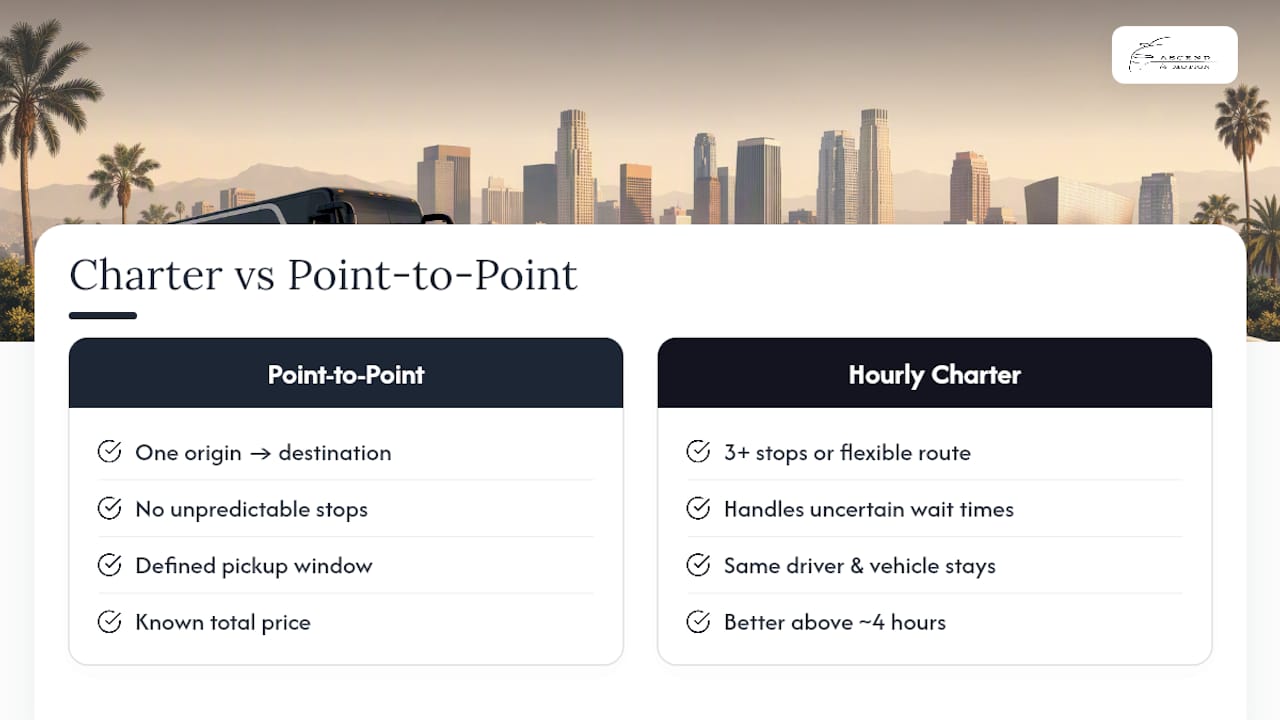
Point-to-point flat-rate pricing wins when your itinerary has one clear origin and destination, no unpredictable stops, and a defined pickup window, like a single LAX transfer to a hotel. You know the total before the car arrives, and there’s no risk of overtime.
Hourly charter service becomes the better deal the moment your day includes more than two stops, uncertain wait times, or an event schedule that could run long. Booking three separate point-to-point rides for a wedding day, for instance, often costs more than one hourly block once you add up each transfer’s minimum fare. An hourly booking also means the same driver and vehicle stay with your group the entire time, which removes the coordination headache of scheduling multiple pickups.
The break-even point generally sits around three stops or four hours of total movement. Below that threshold, point-to-point transfers tend to be cheaper. Above it, hourly charters usually pull ahead, particularly once you factor in the convenience of not re-explaining your route to a new driver each time. Corporate groups managing a conference agenda with several venue changes almost always come out ahead with an hourly as-directed booking rather than piecing together individual rides.
Does Booking Early Actually Save Money?
Booking lead time matters more in Los Angeles than in most cities because event density drives real demand spikes. Awards season, major conferences, and holiday weekends all compress available vehicle inventory at the same time everyone else is trying to book.
Operators frequently raise hourly minimums and tighten overtime penalties during these peak windows, and confirming your reservation early locks in pricing before that happens, according to guidance on seasonal booking patterns. A wedding or corporate gala booked six weeks out during a slow month might see a completely different rate than the same booking made three days before a major LA event.
For multi-day events, ask specifically about a bundled multi-day rate or a dedicated “day driver” arrangement. Contracting a single driver across several days of a conference or film shoot can produce meaningful savings compared to booking a fresh reservation each morning. This kind of package rarely appears on a standard quote form, so it only surfaces if you ask directly.
Meanwhile, demand spikes around holidays and major events increase both minimums and overtime penalties industry-wide. Locking in your rate early and getting written confirmation is the most dependable way to sidestep that markup entirely.
Direct Operator, Broker, or App: Which Booking Option Wins?
Booking directly with an operator like a licensed LA car service typically gives you the clearest pricing, since you’re negotiating with the company that owns the vehicle and employs the chauffeur. You get a direct line for changes, and the quote you receive reflects that specific fleet’s rates rather than a marked-up resale.
Brokers aggregate multiple operators and can be useful for last-minute availability in a pinch, but they add a markup layer you can’t always see, and you lose direct accountability if something goes wrong with the actual vehicle that shows up.
App-based rideshare services offer convenience and surge-free predictability is rare during high-demand event windows, when multipliers can spike fares well past a fixed hourly rate. For groups or multi-stop days, a professional car service tends to outperform rideshare or a rental car once parking, insurance, and unpredictable pricing enter the equation, per comparative research on LA transportation options. Rental cars introduce their own costs, too, from parking at every venue to the mental load of navigating unfamiliar LA freeways during an event.
How Do You Choose a Reliable Provider?
Start with licensing. A legitimate Los Angeles operator carries LAWA and CPUC credentials, which confirm the company is authorized for both airport pickups and commercial passenger transport. Ask for this upfront rather than assuming it.
Red flags to watch for including a quote that seems dramatically lower than every other operator you contacted, reluctance to put pricing in writing, no clear answer about insurance coverage, and vague responses about who actually owns and maintains the vehicles.
Questions worth asking every provider you’re considering:
- “Are your chauffeurs LAWA and CPUC licensed?”
- “Do you carry commercial insurance, and can you confirm coverage limits?”
- “Will the same vehicle and driver arrive as described in my confirmation?”
- “What happens if my flight is delayed or my event runs long?”
A provider that answers all four without hesitation and backs it up with a written confirmation email is generally a safe bet. One that dodges the insurance question or won’t specify chauffeur licensing deserves a second look before you hand over a deposit.
What Are Typical Cancellation Policies?
Cancellation terms vary more than most travelers expect, and they matter just as much as the base rate when you’re budgeting for an event that could shift dates. Most operators require 24 to 48 hours notice for a full refund on standard point-to-point bookings, with shorter windows sometimes triggering a partial fee.
Hourly charter bookings, especially for larger events like weddings or corporate functions, often carry stricter terms: 72 hours to a full week of notice for penalty-free cancellation, since the operator has blocked out a vehicle and chauffeur specifically for your date. Cancelling within that window can mean forfeiting a deposit or the full estimated charter cost.
Always ask for the cancellation policy in writing at the same time you request your all-inclusive quote. If your event date has any chance of shifting, ask whether the provider allows a date change instead of a straight cancellation. That flexibility, when available, usually costs nothing and saves you from losing a deposit entirely.
How Long Does Booking Take From Inquiry to Pickup?
Most Los Angeles event bookings follow a predictable timeline. Initial inquiry to written quote typically takes a few hours to one business day, depending on how complex your itinerary is and whether you’re requesting a multi-vehicle group booking.
Once you approve the quote, confirmation and a written all-inclusive total usually arrive within 24 hours. For standard transfers or single-day charters, that’s the entire pre-event process. For multi-day events, corporate conferences, or weddings involving several vehicles, expect an additional round of coordination to finalize pickup windows, driver assignments, and any day-of contact details.
On the actual event day, chauffeurs typically arrive 10 to 15 minutes before the scheduled pickup for point-to-point transfers, and airport pickups include real-time flight tracking so the driver adjusts for delays automatically. Building in this timeline, especially for events with multiple stakeholders or a tight event schedule, keeps you from scrambling the week of your event.
What the Numbers Actually Tell You
The conventional advice on event transportation LA cost usually stops at “get multiple quotes,” which sounds reasonable but misses the real lesson buried in these numbers: the gap between a flat rate and an hourly charter isn’t really about vehicle type. It’s about how well your itinerary is defined before you call.
A confirmed single transfer with a known pickup time is nearly impossible to overcharge on. A loosely planned event day with unclear stops and no estimated hold time is where costs balloon, not because operators are dishonest, but because uncertainty gets priced in as risk. That’s the piece most budgeting guides skip.
If you take one thing from this guide, make it this: define your itinerary to the level of detail a chauffeur could execute without calling you, then request the all-inclusive total against that exact plan. The provider’s hourly rate matters less than how precisely you’ve scoped the day you’re asking them to cover.
— Sirus
Ready to Book Your Event Transportation?
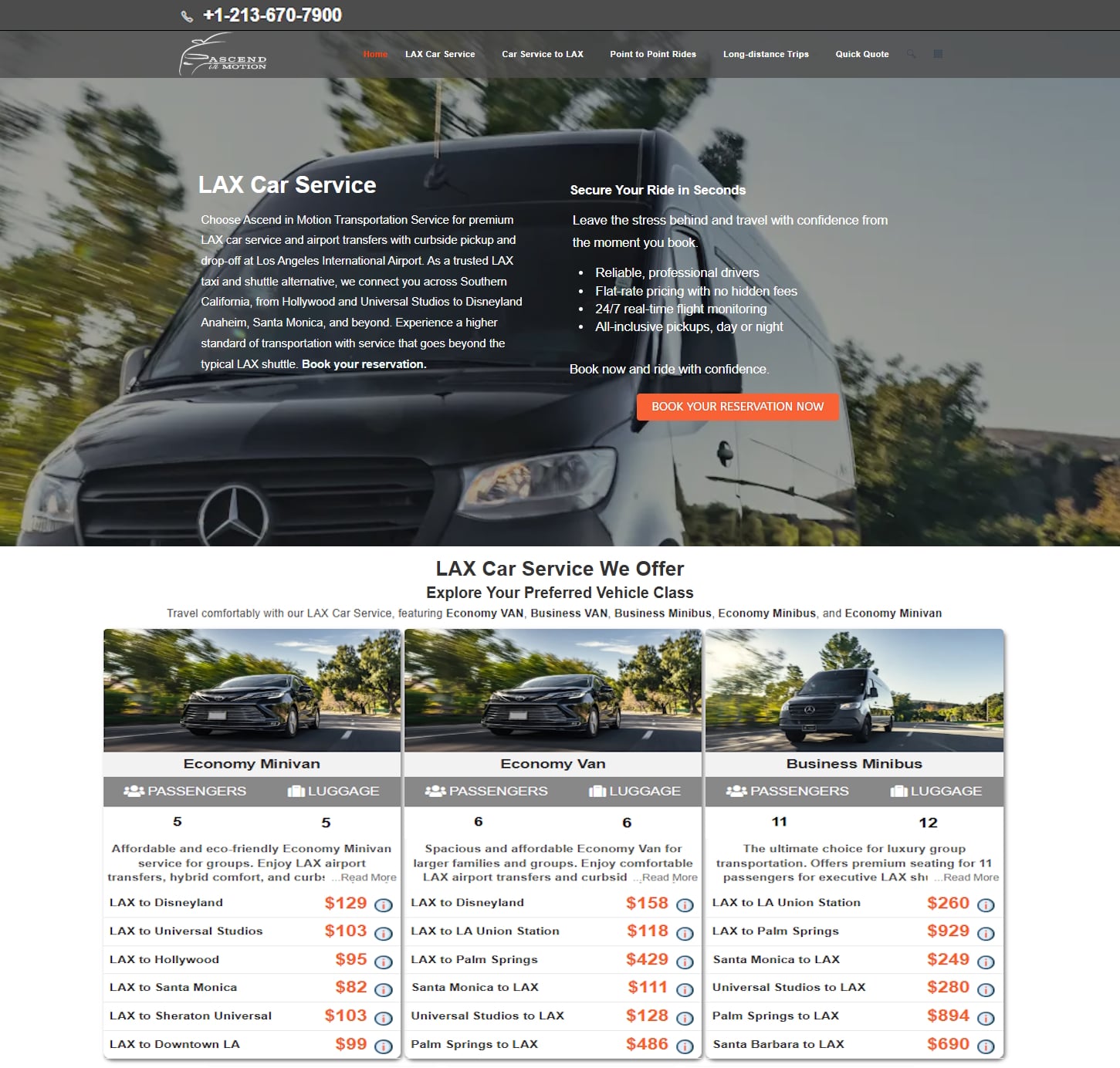
Ascend in Motion runs flat-rate LAX transfers, hourly as-directed charters, and dedicated Sprinter and SUV service for groups, with pricing built to match the exact itinerary you give us rather than a generic estimate you have to negotiate down.
Alt text: A black Mercedes-Benz Sprinter van parked curbside for an Ascend in Motion airport pickup in Los Angeles.
Whether you’re coordinating a single LAX transfer for out-of-town guests or need hourly coverage for a multi-stop wedding day, request a written all-inclusive quote before your event date locks in. For a single confirmed pickup and drop-off, our point-to-point service gives you a fixed total with no surprise line items at drop-off. Reach out through the site to get your route, passenger count, and event timeline turned into a real number, not a rough guess.
Sources
- How Much Does Los Angeles Car Service Usually Cost?
- Limousine Rental 101: From Quote to Drop-Off in Los Angeles
- LA Car Service vs. Rideshare vs. Rental Car: What Actually Makes Sense for Your Trip
FAQ
Is Gratuity Usually Included in the Quoted Price?
Not always. Many quotes list gratuity separately at 18 to 22%, so always ask whether your total is truly all-inclusive before booking.
How Far in Advance Should I Book Event Transportation in LA?
Book at least two weeks ahead for standard events, and allow more lead time during peak seasons like awards season or major holidays when demand and minimums increase.
Does Ascend in Motion Offer Flat-Rate Pricing?
Yes, Ascend in Motion offers flat-rate options for common routes like LAX to Disneyland and Universal Studios, alongside hourly charters for multi-stop event days.
What Happens if My Event Runs Longer Than Planned?
Overtime is typically billed at your hourly rate in 15 or 30 minute increments once you exceed the booked window, so confirm the exact billing increment when you request your quote.
Is a Sprinter Van Cheaper Than Booking Multiple Cars for a Group?
For five or more passengers with luggage, a single Sprinter or SUV is usually more cost-effective and far more convenient than splitting the group across two or three separate vehicles.

