
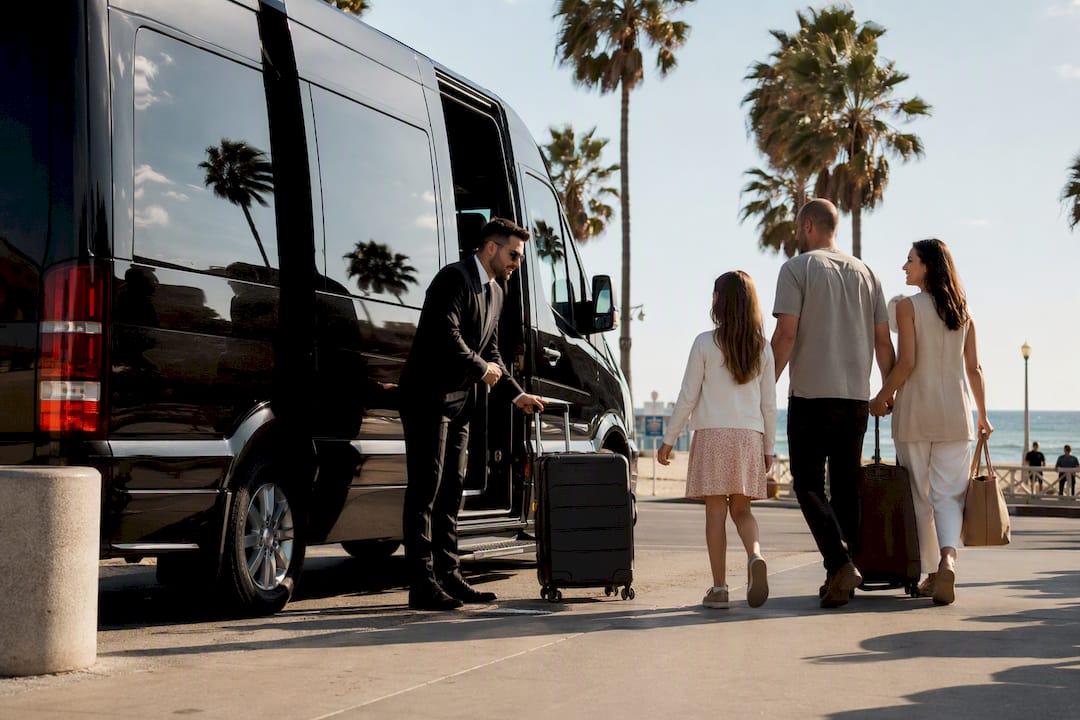
Fastest: a private car or taxi, door to door in as little as 27 minutes with no traffic. Cheapest: the Big Blue Bus Route 3, reached by way of the free LAX shuttle. Most convenient for the average arriving traveler is a pre-booked private transfer or a rideshare picked up at LAX-it. Each pick has a trade-off worth knowing before you land.
- Private car/taxi: Fast and flexible, but pricier and subject to traffic on I-405.
- Big Blue Bus Route 3: Low fare and TAP-friendly, but the slowest option once you count the shuttle to the LAX/Metro Transit Center.
- Pre-booked transfer or rideshare: Predictable pickup and easy with luggage, though rideshare pricing swings with demand while a private transfer locks in a flat rate.
The Metro E Line is worth knowing about too, since it connects through the transit center for travelers who want a car-free route without waiting on a single bus.
Key Takeaways
The fastest way to reach Santa Monica from LAX is a private car or rideshare at 25 to 40 minutes, while Big Blue Bus Route 3 remains the cheapest at roughly $1 to $2.
| Point | Details |
|---|---|
| Fastest option | Private car or rideshare via LAX-it covers the trip in 25 to 40 minutes. |
| Cheapest option | Big Blue Bus Route 3, reached by the free LAX shuttle, costs roughly $1 to $2. |
| Public transit alternative | The Metro K Line to E Line connection uses a two-hour TAP transfer window. |
| Late-night limitation | Bus and rail frequency drops sharply after midnight, favoring rideshare or private cars. |
| Most convenient for luggage | Ascend in Motion’s pre-booked private transfers offer flat rates, flight monitoring, and door-to-door pickup. |
Where to Check Official Schedules and Fares
- LAX ground transportation and pickup guidance
- Metro schedules and fares
- Big Blue Bus Route 3 details
- Santa Monica transportation resources
Check live schedules before you travel, since fares and frequency can change seasonally.
Table of Contents
- What Are the Best Ways to Get Transport From Los Angeles Airport to Santa Monica?
- How Do You Take Public Transit From LAX to Santa Monica?
- How Much Does a Taxi or Rideshare Cost From LAX to Santa Monica?
- Should You Rent a Car and Drive From LAX to Santa Monica?
- Are Shared Shuttles a Good Option From LAX to Santa Monica?
- What’s the Best Transport Option for Your Situation?
- How Do You Navigate the LAX/Metro Transit Center Step by Step?
- What Should You Know About Luggage and Accessibility?
- Why Book a Private Transfer With Ascend in Motion
- Sources
What Are the Best Ways to Get Transport From Los Angeles Airport to Santa Monica?
Every traveler weighs the same three things: time, money, and how much hassle they’re willing to tolerate with bags in tow. Here’s a quick scan of what’s realistic.
- Big Blue Bus (Route 3 / Rapid 3): 50 to 80 minutes, roughly $1 to $2, cheapest option by far.
- Metro rail (K Line + E Line): about forty-five to seventy minutes, low fare, reliable outside of major service disruptions.
- Rideshare or taxi via LAX-it: approximately twenty-five to forty minutes, fares vary with demand, typically moderate to higher range.
- Private pre-booked transfer: typically around twenty-five to forty minutes, flat rate, meet-and-greet included.
- Shared shuttle/van: usually between forty-five and seventy-five minutes, fares are moderate per person, multiple stops.
- Rental car/drive yourself: usually twenty-five to forty-five minutes plus rental pickup time, cost varies by company and season.
One thing that trips people up: late-night arrivals. Bus and rail frequency drops sharply after midnight, and some shuttle services stop running entirely, which pushes most red-eye travelers toward rideshare or a private car by default.
How Do You Take Public Transit From LAX to Santa Monica?
Public transit is the cheapest route to Santa Monica, and it’s more manageable than it sounds once you know the sequence.
- Find the free LAX shuttle. Head to the lower level of your terminal and look for purple signage marked “LAX Shuttle” or “Transit Center.” These shuttles run about every 10 minutes and drop you at the LAX/Metro Transit Center, where you’ll also find TAP card vending machines.
- Board Big Blue Bus Route 3 (or Rapid 3 on weekdays). Big Blue Bus runs directly from the transit center to Downtown Santa Monica, and fares are low with contactless payment accepted onboard.
- Or transfer to Metro rail. From the transit center, board the K Line and connect to the E Line, which terminates in Downtown Santa Monica. Metro fares apply a two-hour transfer window when you tap with a TAP card, so one fare often covers the whole trip.
Travel time estimates from aggregator tools like Rome2Rio suggest the full trip, shuttle included, generally takes up to around an hour or more depending on traffic and connection timing.
Pro Tip: Choose Big Blue Bus when you’re traveling light and arriving midday. Choose the Metro E Line when you’d rather sit through one clean transfer instead of hopping between bus stops, especially during rush hour when surface streets slow buses down.
How Much Does a Taxi or Rideshare Cost From LAX to Santa Monica?
Rideshare and taxis remain the fastest budget-friendly option, and the process at LAX is more structured than it used to be.
- Exit baggage claim and follow signage for LAX-it, the designated pickup lot for rideshare and taxis. Most terminals require a short walk or a quick shuttle ride to reach it.
- Request your ride through the app once you’re inside the LAX-it lot, not before, since drivers can’t queue at individual terminals anymore.
- Match your pin to the LAX-it waiting area, then locate your assigned pickup zone by letter and number.
Uber’s own route data lists an average price around $43 and an average duration of about 27 minutes for this trip, though both numbers swing with surge pricing and traffic.
A few things make this smoother:
- Set your destination pin to the Santa Monica Pier or your hotel address before requesting, not after.
- Budget extra time during evening rush hour, when I-405 traffic routinely doubles the trip length.
- Private transfers skip LAX-it entirely. A driver monitors your flight, meets you at baggage claim, and quotes one flat price before you land, which makes them worth considering if you’re traveling with a group or a stack of luggage.
Should You Rent a Car and Drive From LAX to Santa Monica?
Renting works if Santa Monica is one stop on a longer road trip. Rental facilities sit off-airport, but a free shuttle connects every terminal to the consolidated Rental Car Facility, and the drive to Santa Monica typically takes 25 to 45 minutes via I-405 or surface streets like Lincoln Boulevard.
- Parking in Santa Monica runs on metered streets (hourly rates) or public structures near the pier, often $2 to $4 per hour.
- Driving makes sense for multi-day itineraries with stops beyond Santa Monica.
- The downside is real: weekend beach traffic and limited parking near the pier can eat up the time you saved by skipping transit.
Are Shared Shuttles a Good Option From LAX to Santa Monica?
Shared shuttles sit in the middle: cheaper than a private car, slower than a direct ride.
- Vans pick up from designated curbside zones at LAX and typically run door-to-door, though you’ll share the ride with other passengers headed to different stops.
- Expect to pay $15 to $25 per person for a trip that runs 45 to 75 minutes, depending on how many stops come before yours.
- Pick a shuttle when your budget matters more than your schedule. Pick a private transfer when you have a flight connection, meeting, or reservation riding on an exact arrival time.
What’s the Best Transport Option for Your Situation?
Matching the mode to your actual trip matters more than chasing the “best” option in the abstract.
- Business travelers on a tight schedule: private transfer or rideshare, 25 to 40 minutes, $35 to $55.
- Budget travelers with light luggage: Big Blue Bus Route 3, 50 to 80 minutes, $1 to $2.
- Families or groups with lots of bags: private transfer or a larger shared van, since bus and rail have no dedicated luggage space.
- Late-night arrivals: rideshare or private car, since bus and rail frequency drops sharply after midnight.
Keep in mind that peak-hour traffic on I-405 can add 20 minutes or more to any road-based option, so a rideshare quoted at 27 minutes midday can easily stretch past 45 during evening rush hour. Travel guides comparing all the modes consistently rank private transfer as fastest, bus as cheapest, and rideshare as the flexible middle ground, which lines up with what LAX’s own transportation data shows.
How Do You Navigate the LAX/Metro Transit Center Step by Step?
This is the hub that makes car-free travel to Santa Monica possible, and knowing the layout in advance saves real time.
- From baggage claim, follow lower-level signage marked “Free Shuttle to Metro/Rental Cars/LAX-it” and wait at the designated shuttle stop.
- Board the free shuttle to the LAX/Metro Transit Center, which arrives roughly every 10 minutes according to LAWA’s own transportation data.
- At the transit center, look for clearly marked bus bays. Big Blue Bus Route 3 and Rapid 3 depart from designated bays, while Metro’s K Line platform sits nearby.
- Buy or reload a TAP card at the vending machines inside the transit center, or tap a contactless card directly if your bus or train supports it.
- If you’re taking Metro, remember the two-hour transfer window covers your connection from the K Line to the E Line without an extra fare.
Service runs on reduced frequency late at night, so check current schedules through Metro’s trip planner before you rely on the last connection of the evening. A Hilton travel guide covering this exact route recommends building in a 15-minute buffer for the shuttle-to-platform walk alone.
Pro Tip: If you’re catching a train, event, or work meeting on a fixed schedule, add at least 20 minutes of buffer beyond the posted transit time. Shuttle timing and boarding lines are the two places delays quietly stack up.
What Should You Know About Luggage and Accessibility?
A few details rarely make it into the standard rundown but matter once you’re actually at the airport.
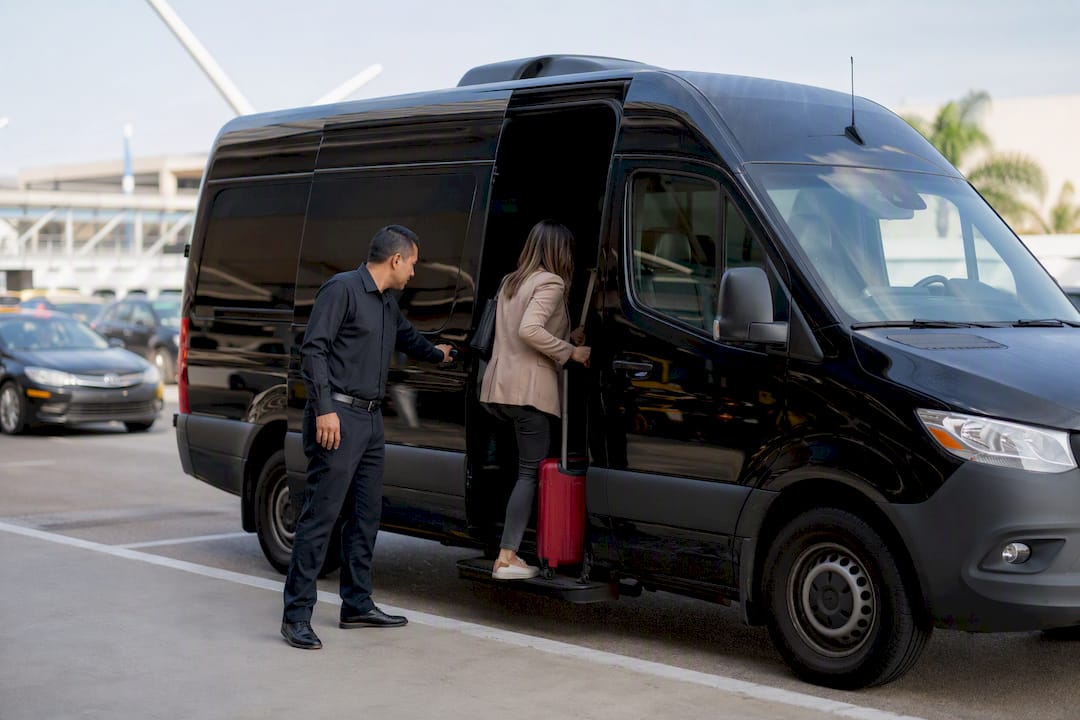
- Buses and rail have no dedicated luggage racks, so oversized suitcases can be awkward during crowded periods. Rideshare and private transfers handle bags without restriction.
- The LAX/Metro Transit Center has elevator access, and Big Blue Bus vehicles use low-floor boarding.
- If you need mobility assistance, request it directly through your rideshare app notes or when booking a private transfer in advance.
Pro Tip: If your flight lands late or gets delayed, update your private transfer booking or rideshare pickup time immediately. Real-time transit apps like Metro’s Transit app or Google Maps can flag service changes before you’re stuck waiting on a platform.
A Practical Recommendation for Arriving Travelers
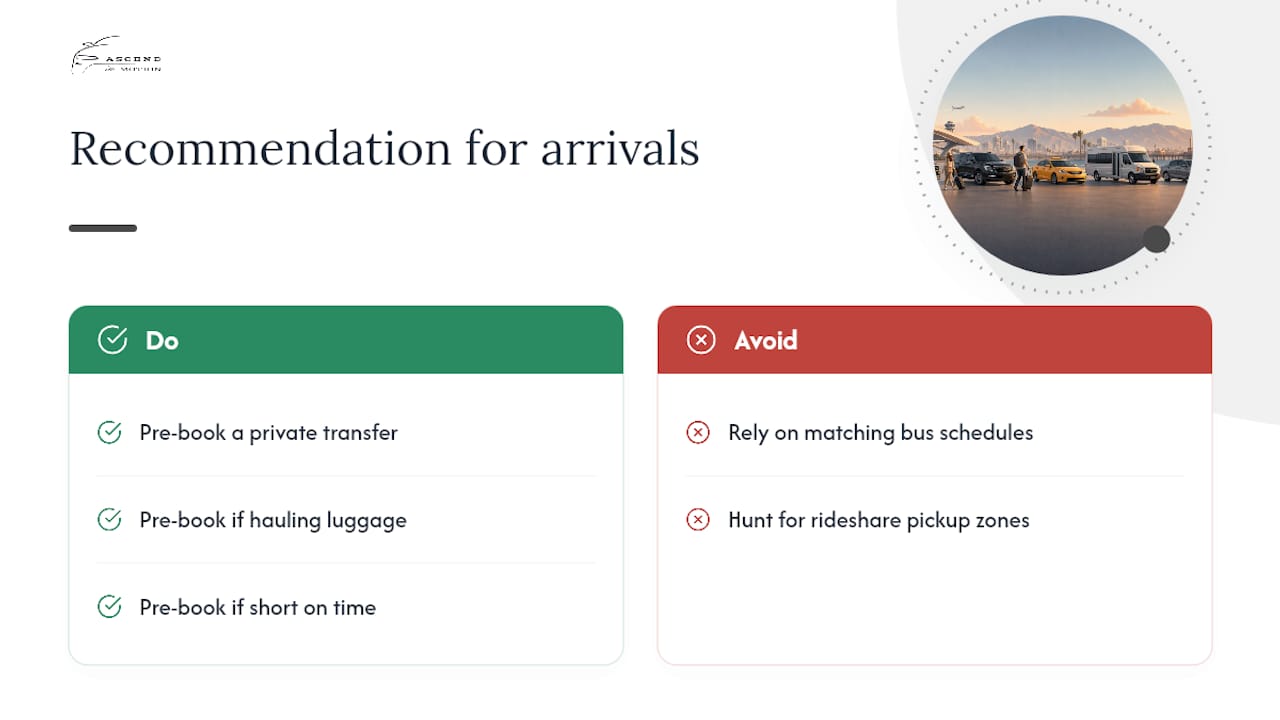
For most travelers hauling luggage or working against a tight schedule, a pre-booked private transfer beats the alternatives on punctuality and door-to-door ease. It removes the guesswork of matching bus schedules or hunting for a rideshare pickup zone after a long flight.
Why Book a Private Transfer With Ascend in Motion
Rideshare pricing swings with demand, and public transit means managing shuttle transfers with your luggage in tow. Ascend in Motion gives you a fixed price and a driver waiting at baggage claim, so there’s no app to check and no bus schedule to track.
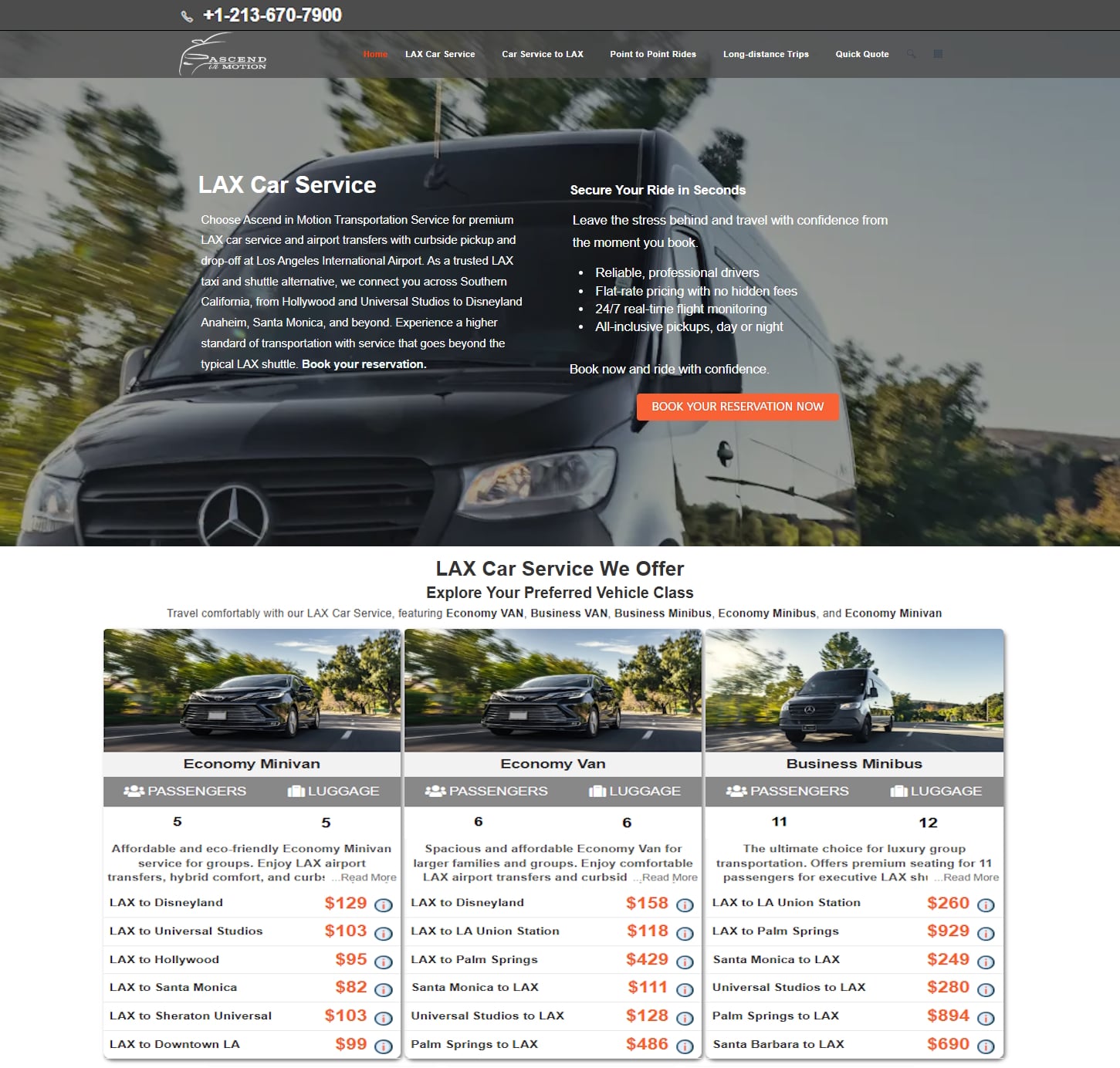
Alt text: Black Mercedes-Benz Sprinter van from Ascend in Motion waiting for airport pickup.
Every LAX airport transfer starts with real-time flight monitoring, so your chauffeur adjusts your pickup time automatically if your flight lands early or late. You’ll be met at arrivals, your bags handled, and driven to Santa Monica in a black minivan or Mercedes-Benz Sprinter, the only vehicles carrying the Ascend in Motion name.
Booking takes a few minutes online, and the flat-rate quote you get at checkout is the price you pay, no surge, no meter running — consider using a luxury travel agency for short getaways and more vacation packages for added convenience and bundle options. Whether you’re headed to a hotel, the pier, or a business meeting, this premium airport car service is built around punctuality and door-to-door convenience for travelers who’d rather skip the terminal shuffle entirely. Check availability and get a quote for your arrival date to lock in your ride before you land.

