
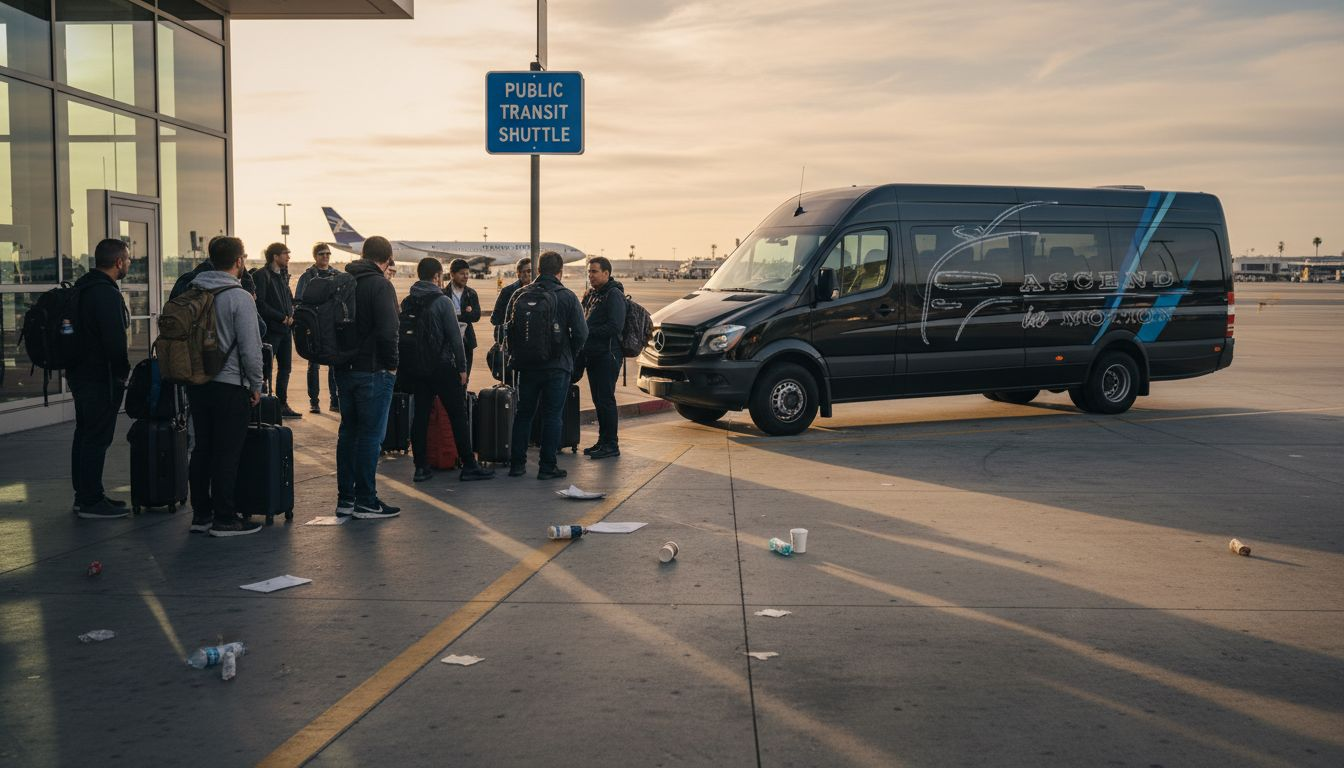
Getting around Los Angeles International Airport can feel overwhelming, especially if you’re expecting to hop on a Metro train right at your terminal. The truth? No direct Metro station exists inside LAX. Instead, travelers navigate free shuttles, transfer points, and multiple transit modes to reach Southern California destinations. This guide clarifies every public transportation option serving LAX, helping you optimize travel time, costs, and convenience for trips to Disneyland, Santa Monica, Universal Studios, and beyond.
Table of Contents
- Major Public Transportation Options Serving LAX
- How To Reach Popular Southern California Destinations Using Public Transit
- Common Misconceptions About LAX Public Transit
- Ticketing, Costs, And Travel Time Comparisons
- Practical Tips For Travelers Using LAX Public Transportation
- Future Developments And Upgrades In LAX Public Transit
- Conclusion And Choosing Between Public Transit And Private Services
- Explore Premium Airport Transfer Options With Ascend In Motion
- Frequently Asked Questions
Key takeaways
| Point | Details |
|---|---|
| No direct Metro Rail access | Free shuttle buses connect Aviation/LAX Metro station to all terminals, adding 10-15 minutes to your journey. |
| FlyAway Bus offers predictable routes | Direct service to Downtown LA, Van Nuys, and Long Beach with fixed fares and fewer traffic delays than other buses. |
| TAP card saves frequent travelers money | Daily fare capping at $7 makes multiple trips cost-effective across Metro Rail and bus networks. |
| Peak hour delays impact shuttles significantly | Traffic congestion can add 20-40 minutes to bus and shuttle travel times during morning and evening rush periods. |
| Future Metro extensions improve access | The Crenshaw/LAX line opening by 2028 will provide direct rail service to terminals, reducing transfer hassles. |
Major public transportation options serving LAX
LAX ranks among the world’s busiest airports, yet many travelers remain confused about transit access. Understanding your options transforms airport navigation from stressful guessing into strategic planning.
The Metro Green Line stops at Aviation/LAX station, requiring a free shuttle to reach airport terminals. These shuttles arrive every 5 minutes during peak hours, though wait times extend to 10-15 minutes during quieter periods. The shuttle stops at each terminal in sequence, meaning your total transfer time varies based on your destination terminal.
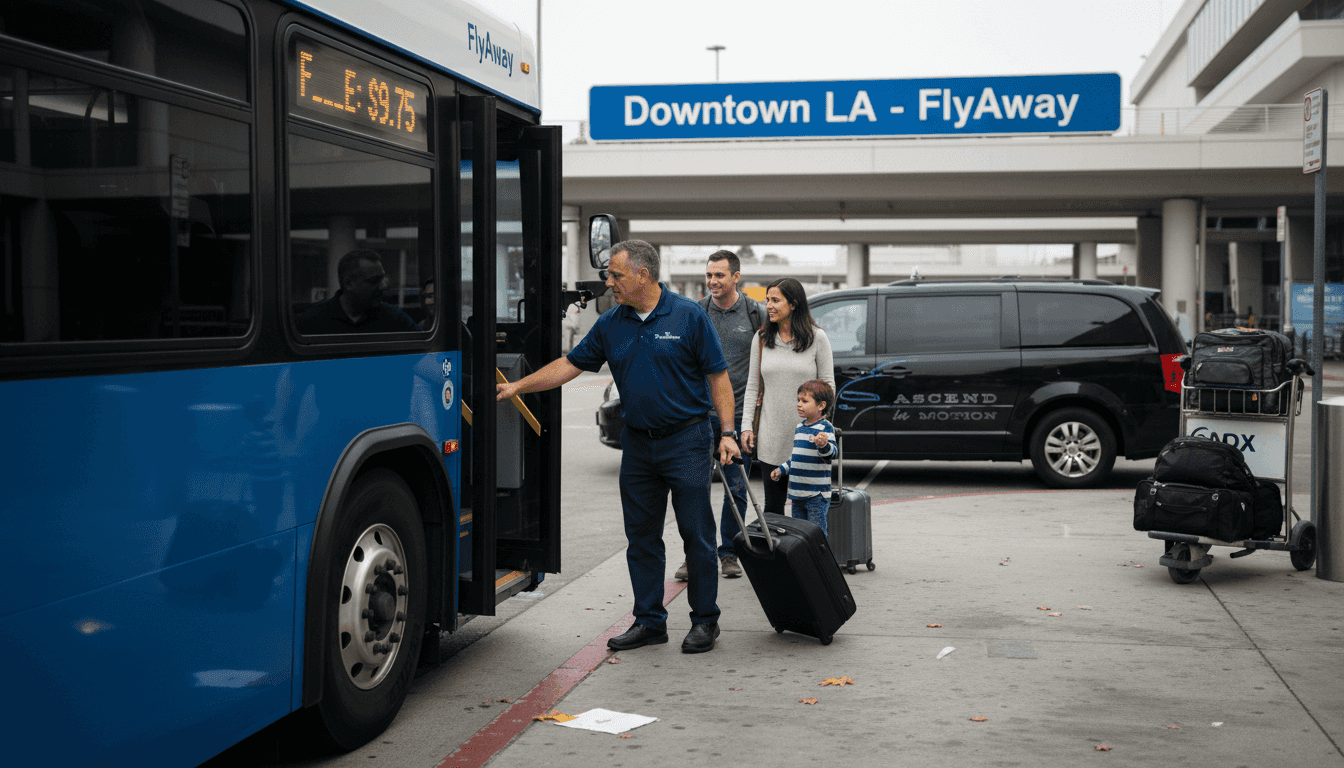
FlyAway Bus services provide direct, non-stop connections between LAX and major locations throughout Los Angeles. Routes include Downtown LA (Union Station), Van Nuys, Long Beach, Hollywood, and Santa Monica. These buses skip intermediate stops, reducing travel time compared to standard Metro buses. Fixed fares typically range from $9.75 to $15 depending on your destination, and vehicles offer luggage storage beneath passenger seating.
LAX operates multiple free shuttle routes circulating between terminals, parking structures, rental car facilities, and transit connection points. The LAX-it shuttle specifically serves rideshare pickup zones, while the Economy Lot shuttle connects budget parking areas. These shuttles complement paid transit options by bridging gaps between services. Our LAX ground transportation guide provides detailed shuttle route maps and schedules.
Several Metro bus lines serve areas adjacent to LAX, including routes 40, 102, 111, 117, and 232. However, these buses stop outside airport property, requiring additional shuttle connections to reach terminals. This layered approach adds complexity but offers flexibility for travelers familiar with LA’s bus network.
Service frequency fluctuates dramatically throughout the day. Metro Green Line trains arrive every 8-12 minutes during rush hours but slow to 20-minute intervals late at night. FlyAway buses maintain more consistent schedules, departing every 30 minutes regardless of time. Check the Metro Green Line Aviation/LAX schedule before your trip to avoid extended waits.
How to reach popular Southern California destinations using public transit
Planning routes to major attractions requires understanding transfer points, travel times, and potential complications. Real-world examples illustrate what to expect.
-
LAX to Disneyland (Anaheim): Take the free LAX shuttle to Aviation/LAX station, board the Green Line toward Norwalk, transfer at Willowbrook/Rosa Parks to the Blue Line toward Long Beach, then catch OCTA bus 460 from Long Beach Transit Mall to Disneyland. Total time ranges from 2.5 to 3.5 hours depending on connections. Our LAX to Disneyland transportation guide outlines faster alternatives.
-
LAX to Universal Studios: Ride the LAX shuttle to Aviation/LAX Metro station, take the Green Line to Willowbrook/Rosa Parks, transfer to the Red Line toward North Hollywood, exit at Universal City/Studio City station. Walk 10 minutes uphill or catch the free Universal Studios shuttle. Expect 90 minutes to 2 hours total.
-
LAX to Santa Monica: Board FlyAway Bus direct to Santa Monica (approximately 40-50 minutes), or take LAX shuttle to Aviation/LAX, ride Green Line to Redondo Beach, transfer to Metro bus 127 or 217 toward Santa Monica (75-100 minutes total depending on traffic). The Santa Monica to LAX shuttle guide explains reverse routes. Explore more about this coastal destination in our Santa Monica travel guide.
-
LAX to Downtown LA: FlyAway Bus provides the simplest route, delivering passengers to Union Station in 35-55 minutes for $9.75. Alternatively, combine Metro Green Line, Blue Line, and Red Line with two transfers for similar travel time at lower cost using a TAP card.
Multiple transfers increase total journey time but significantly reduce fares when using TAP card fare capping. A single FlyAway ticket costs $9.75, while unlimited Metro transfers within one day cap at $7. Budget-conscious travelers with flexible schedules benefit from Metro combinations, while time-sensitive passengers prefer FlyAway’s directness.
Rush hour congestion between 7-9 AM and 4-7 PM adds unpredictability to bus routes. Trains maintain more consistent schedules since they avoid street traffic. Plan buffer time accordingly, especially when catching flights.
Pro Tip: Download the Transit app or Google Maps with offline LA maps before arriving. Real-time updates show actual shuttle arrival times, helping you adjust routes when delays occur.
Common misconceptions about LAX public transit
Travelers frequently arrive at LAX expecting transit experiences that don’t match reality. Correcting these myths prevents frustration and missed connections.
Many assume a Metro station sits inside LAX terminals, similar to airports in New York, Chicago, or San Francisco. The Aviation/LAX station actually sits 2 miles east of the airport, requiring a free shuttle transfer that adds 10-20 minutes minimum to every Metro journey. This shuttle makes multiple stops at each terminal, meaning passengers heading to Terminal 1 wait while the bus serves Terminals 2 through 8 first.
Travelers often believe FlyAway buses and airport shuttles maintain train-like punctuality regardless of traffic. Reality proves different. During peak commute hours, buses share congested freeways with regular traffic, potentially adding 20-40 minutes to advertised travel times. The 405 freeway corridor serving LAX ranks among America’s most congested roads, especially between 7-10 AM and 3-7 PM.
Some visitors expect shuttle buses to arrive every few minutes like clockwork. Frequency varies dramatically by route and time. The LAX terminal shuttle maintaining 5-minute peak intervals slows to 10-15 minutes overnight. Metro Green Line trains stretch from 8-minute to 20-minute gaps between late-night arrivals. Always check current schedules rather than assuming constant service.
The assumption that all bus routes offer equal safety and reliability at night misleads travelers. Metro reduces service frequency after 10 PM, and certain bus routes travel through areas less comfortable for tourists with luggage. LAX curbside pickup information suggests alternatives during overnight hours when public transit proves less practical.
Travelers booking early morning flights sometimes plan Metro trips matching advertised travel times exactly. This risky strategy ignores potential shuttle delays, missed connections, or service disruptions. Build 45-60 minute buffers for airport-bound trips involving multiple transfers.
Pro Tip: If your flight departs before 7 AM or arrives after 11 PM, consider private transportation. Public transit runs limited schedules during these hours, and the time saved justifies the cost difference for most travelers.
Ticketing, costs, and travel time comparisons
Understanding fare structures and actual travel times helps you choose the most efficient option for your budget and schedule.
FlyAway Bus charges fixed fares ranging from $9.75 (Downtown LA) to $15 (other destinations) per one-way trip. These buses make zero intermediate stops, proceeding directly from LAX to destination terminals. Travel time remains relatively predictable since routes use express lanes when available. No transfers required means simpler navigation with luggage.
Metro Rail with a TAP card offers daily fare capping at $7, making it extremely cost-effective for travelers taking multiple trips. Each individual boarding costs $1.75, but once you spend $7 in a day, all subsequent rides are free. Two-hour transfer windows allow free connections between buses and trains within that timeframe. This system rewards travelers visiting multiple destinations in one day.

Shuttle buses connecting Aviation/LAX Metro station to terminals run free, but they add 10-20 minutes minimum to every trip. This time increases during terminal traffic congestion when dozens of buses, taxis, and rideshare vehicles compete for curb space. Your total travel time includes shuttle wait, shuttle ride, and walking between shuttle stops and your specific gate or baggage claim.
Traffic patterns dramatically affect ground transportation. Buses and shuttles traveling between 7-10 AM or 3-7 PM face severe congestion on the 405, 110, and I-10 freeways. Metro Rail trains maintain consistent schedules since they run on dedicated tracks. For time-sensitive travel during rush hours, trains prove more reliable than buses despite requiring additional transfers. Review our LAX ground transportation guide for detailed route planning.
| Transit Mode | Base Fare | Total Travel Time to Downtown | Transfers Required | Traffic Impact |
|---|---|---|---|---|
| FlyAway Bus | $9.75 | 35-55 minutes | None | High during rush hour |
| Metro Green + Red Lines | $1.75 per ride ($7 daily cap) | 50-75 minutes | 2 transfers + shuttle | Low (trains) / Medium (shuttle) |
| Metro Bus Routes | $1.75 per ride ($7 daily cap) | 60-90 minutes | 1-2 transfers + shuttle | High |
| LAX Shuttle (to Metro) | Free | 10-20 minutes (to Aviation/LAX) | Required for all Metro options | Medium |
Cost-conscious travelers making 4+ trips in a day benefit enormously from the $7 TAP card cap. A family of four traveling to Disneyland and back would spend $60+ on FlyAway buses ($15 each way per person) versus $28 total using Metro Rail ($7 daily cap per person). However, Metro adds 60-90 minutes to the round trip and requires managing multiple transfers with luggage and children.
Pro Tip: Purchase TAP cards at Aviation/LAX Metro station vending machines, not inside airport terminals. Load $20 initially to cover the daily cap plus extra for additional days, avoiding the need to reload mid-trip.
Practical tips for travelers using LAX public transportation
Applying these strategies improves your public transit experience and reduces common frustrations.
Always use TAP cards instead of cash for Metro services. Cash payments on buses require exact change with no refunds, and you lose transfer benefits. TAP cards work across all Metro buses and trains, automatically calculating your daily fare cap and applying free two-hour transfer windows. Reload cards at any Metro station vending machine or online before your trip.
Build extra time into airport-bound schedules. Add 60 minutes beyond advertised travel times when catching flights, especially during morning or evening rush hours. This buffer absorbs shuttle delays, missed connections, or unexpected service disruptions. Arriving early beats missing your flight because a shuttle sat in traffic.
Avoid late-night public transit travel when possible. Metro reduces train frequency after 10 PM, and some bus routes stop service entirely. Waiting 20-30 minutes for trains in empty stations proves uncomfortable with luggage. Consider rideshare or private car services for arrivals after 10 PM or departures before 6 AM when transit runs limited schedules.
Download real-time transit tracking apps before leaving home. The official Metro app, Google Maps, and Transit App all provide live updates showing actual train and bus locations. These tools help you make informed decisions about route changes when delays occur, rather than waiting indefinitely at stations.
Plan routes around traffic patterns when using buses. Morning westbound traffic toward LAX peaks between 7-9 AM, while afternoon eastbound traffic from LAX to downtown maxes out between 4-7 PM. If your schedule allows flexibility, travel during mid-morning (10 AM-2 PM) or evening (after 7 PM) to avoid worst congestion.
Pro Tip: Store your confirmation numbers, boarding passes, and hotel addresses in your phone’s notes app before relying on public transit. You’ll maintain access even if your mobile data connection drops in Metro tunnels or during travel.
Future developments and upgrades in LAX public transit
Major infrastructure projects currently underway will transform LAX public transportation accessibility by 2028.
The Crenshaw/LAX Metro Line extension represents the most significant improvement to airport transit access in decades. This new rail line will provide direct service from LAX terminals to downtown Los Angeles, eliminating the need for shuttle transfers to Aviation/LAX station. Expected completion in 2028 will cut total travel time by 15-25 minutes compared to current Green Line connections.
New stations planned for this extension include stops at Aviation Boulevard, Inglewood, Hyde Park, Leimert Park, and connections to the Expo Line. These additions dramatically expand the number of destinations reachable by train from LAX without transfers. Travelers heading to USC, the Coliseum, or South Los Angeles neighborhoods will benefit most.
Metro plans to increase train frequency across all lines serving airport connections. The Green Line currently operates 8-12 minute intervals during peak hours, but planned improvements target 6-8 minute gaps by 2027. More frequent service reduces total travel time by minimizing wait periods at transfer stations.
The LAX Automated People Mover, a 2.25-mile elevated train system, will connect all terminals to the new Crenshaw/LAX Line station when both projects complete. This automated system eliminates bus shuttle delays and provides consistent 24/7 service regardless of traffic conditions. The People Mover will also connect passengers to rental car facilities and parking structures more efficiently than current shuttle systems.
Understanding these coming improvements helps current travelers set realistic expectations. While 2028 completion dates seem distant, they inform long-term travel planning for frequent LAX users and Southern California residents considering future transit options.
Conclusion and choosing between public transit and private services
Deciding between public transportation and private car services depends on your specific travel priorities, schedule constraints, and budget flexibility.
Public transit makes excellent sense for budget-conscious travelers with flexible schedules and light luggage. The $7 daily TAP card cap delivers exceptional value for tourists planning multiple destinations in one day. Solo travelers or couples without tight flight connections save substantial money using Metro Rail combinations despite longer travel times and multiple transfers.
Private chauffeur services prove invaluable for business travelers, families with children, late-night arrivals, or anyone with luggage exceeding carry-on size. The time saved avoiding shuttle transfers and the comfort of direct door-to-door service justify higher costs for many passengers. Early morning departures before 6 AM or late-night arrivals after 10 PM particularly benefit from private transportation since public transit runs limited schedules. Explore airport transfer benefits and our car service to LAX guide for detailed comparisons.
Consider these factors when choosing your airport transportation mode:
- Schedule flexibility: Can you absorb 30-60 minute delays without stress, or do you need guaranteed arrival times?
- Luggage volume: Navigating stairs, escalators, and crowded trains with multiple suitcases proves challenging.
- Travel party size: Groups of 3-4 passengers often find private services cost-competitive with individual transit fares.
- Time of day: Public transit operates reduced schedules overnight when private services maintain full availability.
- Physical mobility: Elderly travelers or those with disabilities face accessibility challenges on some Metro routes.
Many travelers use hybrid approaches, taking FlyAway Bus for predictable daytime airport transfers while booking private services for late-night returns. Others rely on Metro Rail for exploring Los Angeles neighborhoods between reliable private airport pickups and drop-offs.
The optimal choice balances cost savings against time value, convenience preferences, and trip-specific circumstances. Understanding all options empowers you to make informed decisions matching your unique travel needs.
Explore premium airport transfer options with Ascend in Motion
While public transportation offers budget-friendly LAX access, many travelers discover that private chauffeur services deliver superior value through time savings, comfort, and reliability.
Ascend in Motion provides luxury airport transfers that eliminate shuttle wait times, transfer hassles, and traffic uncertainty. Our professional chauffeurs monitor flight schedules in real time, adjusting pickup times automatically when delays occur. You’ll never worry about missing your connection or rushing through terminals.
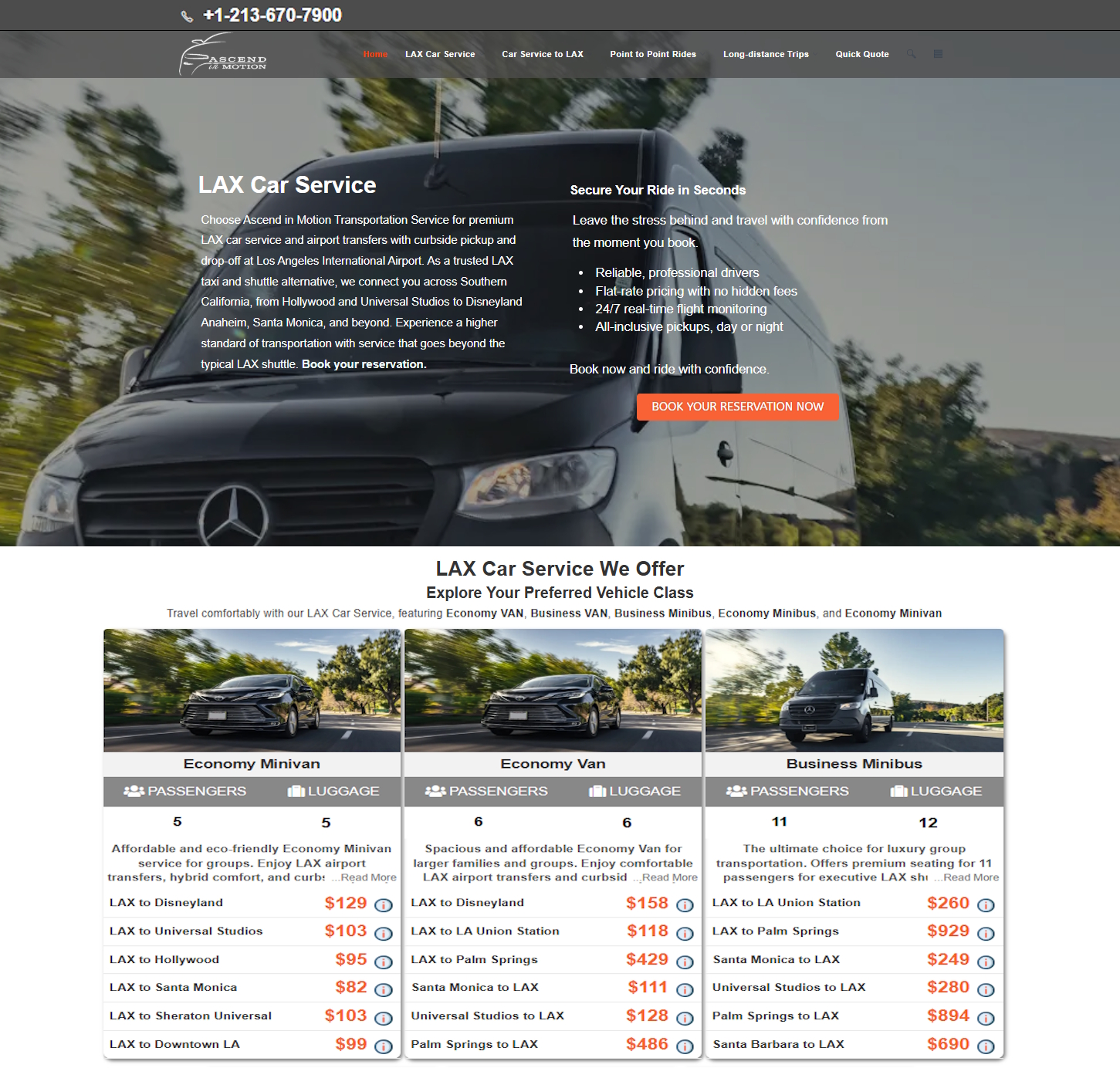
Early morning departures and late-night arrivals particularly benefit from private service. While Metro runs limited schedules after 10 PM, Ascend in Motion operates 24/7 with consistent availability. Business travelers appreciate direct transportation that respects tight schedules, while families value the convenience of door-to-door service with ample luggage space.
Our services extend beyond LAX, offering comfortable transportation to Disneyland, Universal Studios, Santa Monica, and throughout Southern California. Explore chauffeur service benefits and connect with experienced Los Angeles chauffeur drivers who know the fastest routes regardless of traffic conditions. Discover comprehensive airport transfer options tailored to your schedule.
Pro Tip: Book your Ascend in Motion airport transfer at least 24 hours in advance to guarantee availability during peak travel periods. Our advance reservation system locks in your rate and ensures a chauffeur is assigned to your trip.
Frequently asked questions
What public transit options are available directly at LAX terminals?
No Metro Rail station exists inside LAX terminals. Travelers must take free shuttle buses from terminals to the Aviation/LAX Metro station located approximately 2 miles east of the airport. These shuttles run every 5-15 minutes depending on time of day. FlyAway Bus services operate from dedicated LAX stops, providing direct routes to Downtown LA, Van Nuys, and other destinations without requiring additional transfers.
How does the TAP card benefit travelers using public transit to and from LAX?
TAP cards provide daily fare capping at $7 with unlimited transfers, making them extremely cost-effective for multiple-trip days. After spending $7 on Metro services, all subsequent rides that day are free. Each tap also includes a two-hour transfer window allowing free connections between buses and trains. Families or travelers visiting multiple destinations in one day save significantly compared to paying individual fares or FlyAway tickets for each trip.
What are the safest and most reliable options for late-night airport travel?
Late-night travelers should strongly consider private chauffeur services or rideshare options rather than public transit. Metro reduces train frequency to 20-30 minute intervals after 10 PM, and some bus routes stop service entirely overnight. Waiting alone at stations or bus stops with luggage presents safety concerns. Professional airport transfer services operate 24/7 with guaranteed pickup times and door-to-door convenience.
How long does it actually take to reach LAX terminals using Metro Rail?
Total travel time includes three components: your origin to Aviation/LAX Metro station, shuttle wait time, and shuttle ride to your specific terminal. From Downtown LA, expect 45-60 minutes on the Metro Red and Green Lines to Aviation/LAX, plus 10-20 minutes for the shuttle connection. From Santa Monica, plan 75-100 minutes total. Always add 15-20 minutes buffer for potential delays, missed connections, or traffic affecting the airport shuttle.
Will future Metro improvements eliminate the need for shuttle transfers at LAX?
Yes. The Crenshaw/LAX Metro Line extension scheduled for 2028 completion will provide direct rail service to LAX terminals via an automated people mover system. This eliminates the current shuttle requirement and reduces total travel time by 15-25 minutes. The automated people mover will connect all terminals to the new Metro station, operating 24/7 regardless of traffic conditions. These improvements will make LAX public transit significantly more convenient and competitive with private transportation options.
