
LA to Las Vegas A Complete Guide
Millions travel between Los Angeles and Las Vegas every year, chasing neon lights and epic desert views. Most people think it is a quick four-hour shot down Interstate 15 and they barely plan what to bring or when to leave. But missing a single detail can leave you stranded in the Mojave, where summer temperatures can soar past 110 degrees and cell service drops out for miles. One overlooked step can turn this road trip from fun to frantic in minutes.
Table of Contents
- Step 1: Plan Your Route And Stops
- Step 2: Prepare Your Vehicle For The Journey
- Step 3: Pack Essential Items For The Trip
- Step 4: Set Off: Follow Your Planned Route
- Step 5: Monitor Travel Time And Adjust As Needed
- Step 6: Arrive In Las Vegas And Celebrate Your Journey
Quick Summary
| Key Point | Explanation |
|---|---|
| 1. Plan Your Route Strategically | Use Google Maps or Waze for navigation, and consider offline maps for desert areas with limited coverage. |
| 2. Prepare Your Vehicle Thoroughly | Conduct a comprehensive vehicle inspection to ensure your car is ready for harsh desert conditions. |
| 3. Pack Essential Items | Bring extra water and non-perishable snacks to stay hydrated and nourished during your drive. |
| 4. Monitor Travel Time Closely | Use real-time navigation tools to adapt your route based on traffic conditions and travel time. |
| 5. Celebrate Your Arrival in Las Vegas | After your trip, find ways to relax and celebrate, whether it’s dining out or exploring the Strip. |

|
Step 1: Plan Your Route and Stops
Successful road trips between Los Angeles and Las Vegas start with strategic route planning. Your journey will primarily follow Interstate 15, a direct highway connecting Southern California to Nevada, spanning approximately 270 miles and taking around 4 to 5 hours depending on traffic and stops.
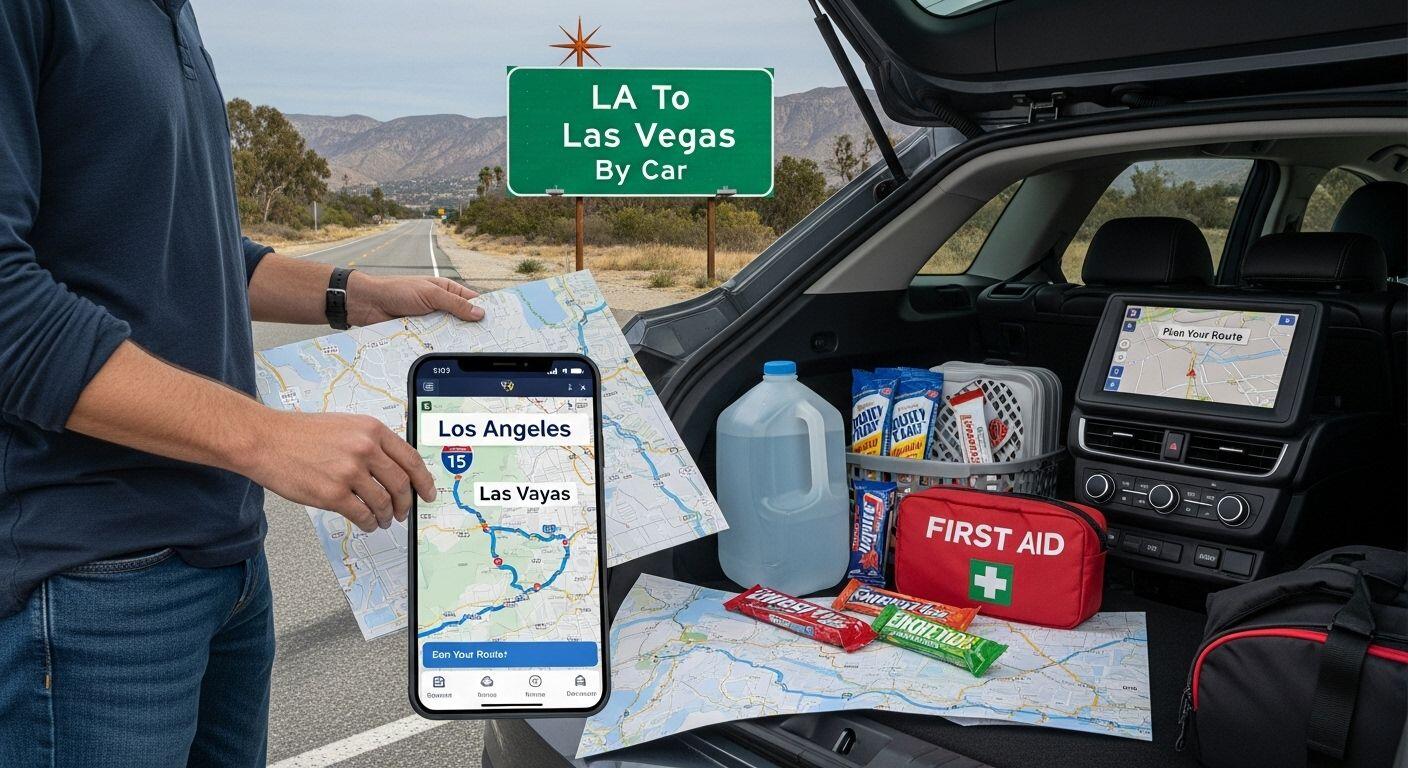
Your route preparation involves several critical considerations. Google Maps or Waze are excellent navigation tools for real-time tracking, but downloading offline maps is recommended since cellular coverage can become spotty in desert regions. The primary route takes you through the Mojave Desert, passing through key cities like Barstow and Baker, which offer convenient stopping points for rest, refueling, and quick meals.
Careful planning means anticipating potential challenges. Summer temperatures in the desert can exceed 110 degrees, making vehicle preparation essential. Ensure your car has a recently serviced cooling system, sufficient engine oil, and properly inflated tires. Pack emergency supplies including:
- Extra water (at least one gallon per person)
- Basic automotive repair kit
- Fully charged mobile phone and portable battery charger
- First aid kit
- Lightweight, breathable clothing
Consider timing your travel to avoid peak traffic periods. Weekends and holidays see significant congestion, particularly Friday afternoons and Sunday evenings when many Los Angeles residents make weekend trips to Las Vegas. Early morning departures or midweek travel can provide smoother, less stressful journeys.
For travelers seeking additional guidance on traveling between Los Angeles and Las Vegas, explore our comprehensive travel recommendations. Proper route planning transforms a potentially challenging drive into an enjoyable adventure across Southern California’s stunning desert landscape.
Step 2: Prepare Your Vehicle for the Journey
Vehicle preparation is a critical step in ensuring a safe and smooth road trip from Los Angeles to Las Vegas. Your car needs to be in top condition to handle the challenging desert terrain and long highway stretches that characterize this journey.
Begin with a comprehensive vehicle inspection at least one week before your trip. Professional mechanics can perform a thorough diagnostic check, but if you are comfortable with basic automotive maintenance, you can conduct several key checks yourself. Focus on critical systems that experience significant stress during desert driving: cooling, electrical, and tire performance.
Your vehicle inspection should include checking several essential components. Engine oil is particularly crucial for desert travel. Ensure you have fresh oil with the correct viscosity for high-temperature conditions. Low or degraded oil can cause significant engine strain when temperatures exceed 100 degrees. Tire pressure demands special attention, as desert heat can cause dramatic air pressure fluctuations. Check and adjust tire pressure to manufacturer specifications, paying close attention to spare tire condition.
Additional critical pre-trip vehicle checks include:
- Coolant levels and condition
- Battery charge and connection integrity
- Brake pad thickness and brake fluid levels
- Windshield wiper fluid
- Air filter cleanliness
- All exterior and interior lights functionality
Beyond mechanical checks, pack an emergency roadside kit tailored for desert conditions. Include items like jumper cables, a basic tool set, extra water, a tire inflator, and a portable battery charger. Our comprehensive travel guide offers additional insights on vehicle preparation for long-distance desert journeys.
Successful vehicle preparation means entering your journey with confidence, knowing your car is ready to handle the demanding LA to Las Vegas route. A thorough inspection dramatically reduces the likelihood of unexpected breakdowns and ensures a more enjoyable travel experience.
Below is a checklist to help ensure your vehicle is ready for the demands of a desert road trip from Los Angeles to Las Vegas.
| Check Item | Description | Recommended Action |
|---|---|---|
| Engine Oil | Check oil level and quality | Top off or change if needed |
| Tire Pressure | Check all tires, including the spare | Adjust to manufacturer specs |
| Coolant Level | Inspect coolant reservoir and radiator | Fill or flush as necessary |
| Battery Charge | Ensure battery is fully charged and terminals clean | Replace if weak or corroded |
| Brake System | Check brake pads and fluid | Service if worn or low |
| Air Filter | Inspect for dust or clogging | Replace if dirty |
| Lights & Signals | Verify all lights and indicators work | Replace any faulty bulbs |
| Windshield Washer Fluid | Fill fluid reservoir | Top off before trip |
Step 3: Pack Essential Items for the Trip
Packing for a road trip from Los Angeles to Las Vegas requires strategic planning to ensure comfort, safety, and preparedness across the desert landscape. Your packing strategy should balance practicality with anticipation of potential challenges unique to this specific route.
Personal comfort and safety form the foundation of your packing approach. Lightweight, breathable clothing is crucial for managing extreme desert temperatures that can fluctuate dramatically between air-conditioned vehicle interiors and scorching exterior environments. Pack layers that can be easily added or removed, including a light jacket for cooler evening temperatures and sun-protective clothing for daytime travel.
Hydration and nutrition demand special consideration on this journey. Carry significantly more water than you anticipate needing – at least one gallon per person, stored in sturdy containers that won’t leak or degrade in high heat. Pack non-perishable snacks that won’t melt or spoil, such as trail mix, energy bars, and sealed protein packages. These provisions become critical if unexpected delays occur or your vehicle experiences mechanical issues.
Your emergency preparedness kit should include:
- Fully charged portable battery pack and charging cables
- Basic first aid supplies
- Bottled water and non-perishable snacks
- Lightweight emergency blanket
- Flashlight with extra batteries
- Basic tool kit
- Spare phone charger
- Physical road map
Technology preparation is equally important. Download offline maps before departing, as cellular coverage becomes intermittent in desert regions. Ensure your smartphone is fully charged and bring a car charger or portable battery pack. Consider a physical road atlas as a backup navigation method in areas with limited digital connectivity.
Our comprehensive travel guide offers additional insights on trip preparation for those seeking more detailed recommendations. Thoughtful packing transforms a potentially challenging desert journey into a comfortable and enjoyable experience.
Step 4: Set Off: Follow Your Planned Route
Leaving Los Angeles for Las Vegas requires careful navigation and strategic driving approach. Interstate 15 serves as your primary route, a direct highway cutting through the Mojave Desert that connects Southern California to Nevada. Your initial departure should prioritize early morning timing to avoid peak traffic and maximize comfortable driving conditions.
Maintaining situational awareness becomes crucial during this desert journey. High wind conditions are common in the desert, particularly through the open stretches between Barstow and Baker. Keep both hands firmly on the steering wheel, reduce speed if winds become intense, and remain alert to sudden gusts that can impact vehicle stability. The landscape transitions rapidly from urban sprawl to expansive desert terrain, demanding constant driving concentration.
Planning your stops strategically helps manage fatigue and ensures a smoother trip. Baker, located roughly midway between Los Angeles and Las Vegas, offers an ideal rest point. This small desert town provides necessary services like fuel stations, basic restaurants, and quick restroom breaks. The famous World’s Tallest Thermometer marks your arrival, serving as a memorable landmark and reminder of the desert’s extreme temperatures.
Critical driving considerations for this route include:
- Maintaining consistent speed
- Watching for sudden desert wildlife crossings
- Monitoring fuel levels carefully
- Staying hydrated
- Taking regular short breaks
Technology can significantly enhance your navigation experience. Use GPS navigation with offline maps downloaded, as cellular coverage becomes intermittent in desert regions. Waze and Google Maps provide real-time traffic updates, but having a physical road map serves as a reliable backup.
Our comprehensive travel recommendations offer additional insights for your journey, ensuring you navigate this iconic route with confidence and preparedness. Your successful passage through the Mojave Desert transforms from a simple drive into an memorable adventure connecting two remarkable destinations.
Step 5: Monitor Travel Time and Adjust as Needed
Effective travel between Los Angeles and Las Vegas requires constant awareness of your journey’s progression and willingness to adapt to changing conditions. Real-time route monitoring becomes your most valuable skill during this desert crossing, helping you manage travel time, avoid potential delays, and maintain a comfortable driving experience.
Utilize smartphone navigation applications like Google Maps and Waze to track your progress dynamically. These tools provide live traffic updates, alternate route suggestions, and estimated arrival times that adjust based on current road conditions. Pay special attention to potential bottlenecks around major intersections and urban areas like Barstow, where highway traffic can unexpectedly slow down.
Fatigue management represents a critical aspect of monitoring your journey. Desert driving demands heightened concentration, and recognizing early signs of driver exhaustion is crucial. Plan to take short breaks every two hours or 100 miles, whichever comes first. These brief stops allow you to stretch, hydrate, and reset your mental focus. Baker offers an ideal midpoint rest location, providing fuel, restrooms, and a chance to recuperate before continuing your drive.
Critical travel monitoring strategies include:
- Tracking actual driving time versus estimated arrival
- Monitoring fuel consumption
- Checking vehicle temperature gauges
- Evaluating personal energy levels
- Assessing road and weather conditions
Unexpected circumstances might require route adjustments. Construction, accidents, or severe weather can impact your original travel plan. Remain flexible and prepared to modify your route or schedule if necessary. Having offline maps downloaded and a physical road atlas provides backup navigation options in areas with limited cellular coverage.
Check out our comprehensive travel recommendations for additional insights on managing long-distance journeys. Successful travel is about balance: maintaining your schedule while staying adaptable to the dynamic conditions of desert highway driving.
Step 6: Arrive in Las Vegas and Celebrate Your Journey
Successfully navigating the desert highway from Los Angeles to Las Vegas marks the culmination of a remarkable road trip adventure. Arrival strategies play a crucial role in transitioning smoothly from your long drive to enjoying the vibrant energy of Las Vegas. As you approach the city, the landscape transforms dramatically from desert expanses to the iconic neon-lit skyline that signals your journey’s end.
Prioritize vehicle and personal recovery upon reaching Las Vegas. Find a secure parking location at your hotel or designated parking area, and take time to stretch and rehydrate. The desert journey demands physical and mental reset. Check your vehicle for any signs of wear from the long drive, ensuring everything remains in good condition after traversing challenging terrain.
Hotel and accommodation check-in requires careful attention. Have your reservation details readily accessible, and confirm your booking before arrival. Many Las Vegas hotels offer express check-in services that can streamline your transition from traveler to guest. If you’ve booked through a travel platform, keep digital or printed confirmation documents handy to expedite the process.
Critical arrival considerations include:
- Confirming hotel reservation details
- Checking vehicle condition after desert drive
- Hydrating and resting after long journey
- Securing parking arrangements
- Organizing personal belongings
Las Vegas offers numerous ways to celebrate completing your road trip. Consider treating yourself to a memorable meal, exploring the famous Strip, or simply relaxing in your hotel room. The city provides endless entertainment options that can serve as a perfect reward for your successful journey.
Explore our comprehensive guide to Las Vegas travel options for additional insights on making the most of your arrival. Your drive from Los Angeles represents more than just a trip between cities it’s an adventure through California’s stunning desert landscape, culminating in the excitement of Las Vegas.
Here’s an overview of each step for planning and completing your LA to Las Vegas road trip, with the main focus and outcome of each stage.
| Step | Main Focus | Key Outcome |
|---|---|---|
| Plan Your Route and Stops | Navigation tools, choosing rest points | Efficient and safe travel planning |
| Prepare Your Vehicle for the Journey | Inspection and readiness | Reliable vehicle for desert journey |
| Pack Essential Items for the Trip | Comfort, hydration, emergency prep | Well-prepared and comfortable travel |
| Set Off: Follow Your Planned Route | Strategic departure, safe driving | Smooth start and safe navigation |
| Monitor Travel Time and Adjust | Route updates, fatigue management | Flexible and timely arrival |
| Arrive in Las Vegas and Celebrate | Transition from driving to relaxation | Smooth arrival and recovery |
Turn Your Road Trip into a Stress-Free Luxury Journey
Dreaming of a smooth drive from Los Angeles to Las Vegas but worried about long hours behind the wheel, extreme desert heat, and unexpected delays? Many travelers find planning routes, preparing their vehicles, and managing fatigue on the open road overwhelming. You deserve to enjoy your trip without distraction and arrive refreshed, not exhausted. Why let car concerns or traffic stress limit your experience?

Let Ascend in Motion handle the details so you can focus on what matters most. Choose our premium chauffeur-driven service to transform your journey into a relaxing and memorable part of your trip. Our professional drivers take care of everything, from route planning and vehicle preparation to punctual arrivals at your Las Vegas destination. Book now and take advantage of our commitment to comfort, safety, and reliability. Secure your seamless long-distance transfer today and arrive in Las Vegas refreshed and ready to explore. Your perfect road trip starts with one easy step—visit Ascend in Motion and reserve your ride now.
Frequently Asked Questions
What is the best route to take from Los Angeles to Las Vegas?
The primary route is Interstate 15, which connects Southern California to Nevada. This highway spans approximately 270 miles and typically takes around 4 to 5 hours, depending on traffic and stops.
How do I prepare my vehicle for a road trip to Las Vegas?
Perform a comprehensive vehicle inspection at least a week in advance, checking critical components like engine oil, coolant levels, tire pressure, battery charge, and brake functionality. Ensure your vehicle is in top condition to handle the desert terrain.
What should I pack for a road trip from LA to Las Vegas?
Pack lightweight, breathable clothing, extra water (at least one gallon per person), non-perishable snacks, an emergency roadside kit, and a fully charged portable battery pack. Don’t forget to download offline maps for navigation.
How can I manage fatigue during the drive?
Take regular breaks every two hours or 100 miles to stretch, hydrate, and reset your focus. Strategic stops, such as in Baker, can help manage fatigue and ensure a smoother trip.
Recommended
- Best Ways to Travel from LA to Las Vegas Easily – Ascend in Motion – LAX Car Service
- Los Angeles to Las Vegas from, San Diego, or Palm Spring.
- Long Distance Car Service in Los Angeles: Your Guide – Ascend in Motion – LAX Car Service
- Best Way to Get to Disneyland: A Complete Travel Guide – Ascend in Motion – LAX Car Service
